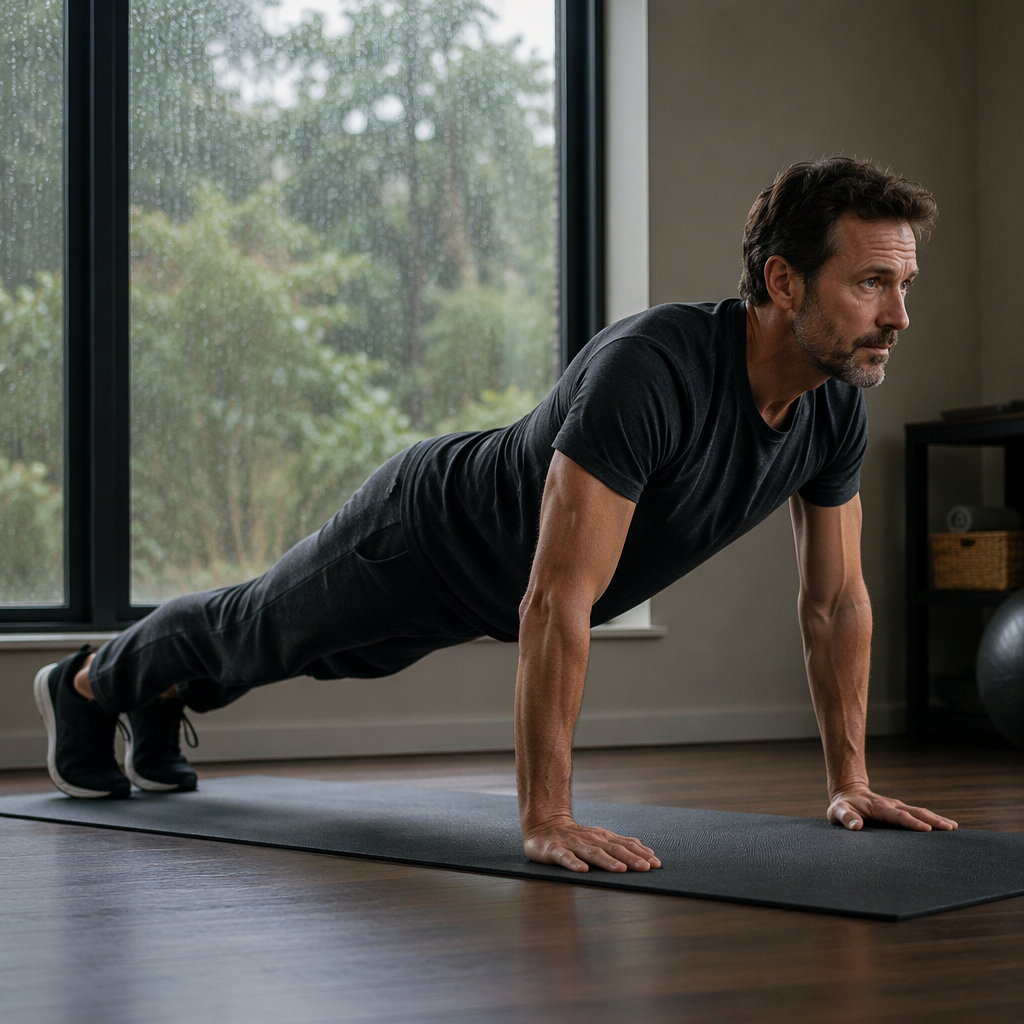

Medical researchers have long searched for practical screening methods to evaluate physical longevity without expensive laboratory equipment. Among the most validated tools is the sitting-rising test, widely recognized as a simple fitness test that predicts your risk of death by assessing fundamental musculoskeletal strength, balance, and motor coordination.
Originally developed by Brazilian physician Dr. Claudio Gil Araújo and his team at the Clinimex Exercise Medicine Clinic in Rio de Janeiro, the assessment requires zero equipment. Clinicians have used it for years to evaluate middle-aged and older adults, finding that a person’s ability to sit on the floor and stand back up correlates directly with all-cause mortality rates.
Also read: Microsoft AI Beats Doctors in Simulated Diagnosis Test, Study Shows
What Is the Simple Fitness Test That Predicts Your Risk of Death?
The sitting-rising test (SRT) is an observational clinical assessment. It measures how effectively an individual can lower their body to a seated cross-legged position on the floor and then return to a standing position using minimal physical support.
Unlike aerobic treadmill evaluations or blood panels, the test looks specifically at musculoskeletal fitness. This includes lower-body muscle power, joint flexibility, core stability, and balance—four critical physical components that tend to decline as people age.
How the Sitting-Rising Test Is Performed and Scored
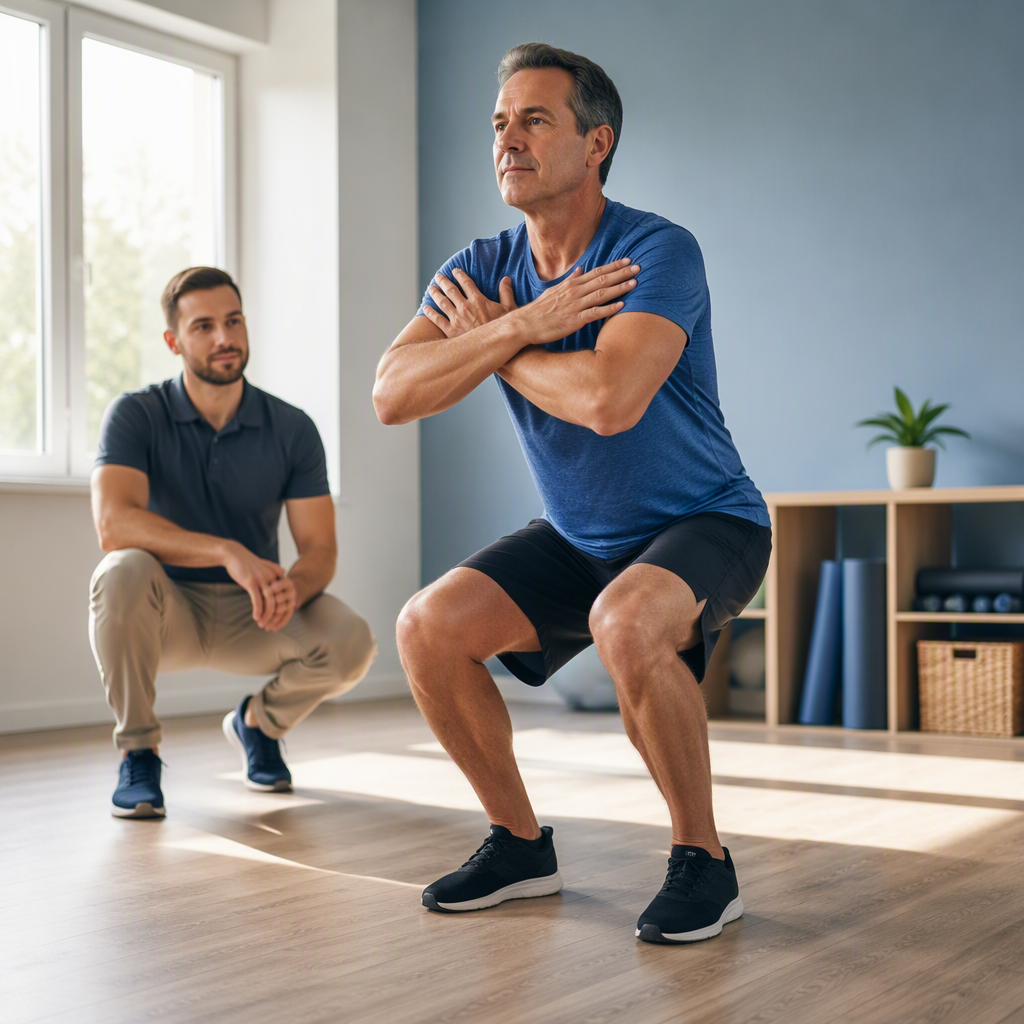
The test begins from a standing position on a flat, non-slip surface, wearing comfortable clothing and bare feet. Participants are instructed to cross their feet, lower themselves into a sitting position on the floor, and then stand back up, relying as little as possible on external support.
The scoring system operates on a 10-point scale—5 points for sitting down and 5 points for standing up:
- Full Score (10 Points): Sitting and standing without touching the floor with any hand, forearm, knee, or the side of the leg.
- Deductions (-1 Point each): One point is subtracted every time a participant uses a hand, arm, knee, or thigh for support.
- Instability Deductions (-0.5 Points): Half a point is subtracted for an unsteady execution or loss of balance.
A score between 8 and 10 points reflects robust musculoskeletal function, while scores below 8 indicate varying degrees of physical limitation.
What the Clinical Science Reveals About Mortality Risk
The connection between this exercise and life expectancy was solidified in a landmark study published in the European Journal of Preventive Cardiology. Researchers followed more than 2,000 men and women aged 51 to 80 over an average period of 6.3 years.
The findings demonstrated a clear statistical link between performance and longevity. Participants with the lowest scores (0 to 3 points) had a five- to sixfold higher risk of death during the follow-up period compared to those who scored in the highest range (8 to 10 points).
Notably, each single-point increase in an individual’s score was associated with a 21 percent reduction in all-cause mortality. The study accounted for confounding variables, including age, sex, and body mass index, reinforcing the test’s validity as an independent predictor of health outcomes.
Why Musculoskeletal Fitness Directly Influences Longevity
Physicians emphasize that failing the test does not mean death is imminent. Instead, the test serves as a proxy for functional reserve—the body’s ability to maintain physical independence, recover from illnesses, and avoid accidents.
As individuals age, sarcopenia (the gradual loss of skeletal muscle mass) and decreased joint mobility heighten the likelihood of falls. Falls remain a primary cause of accidental injury, hospitalization, and mortality among older adults worldwide. A strong performance on the test signals sufficient muscle-to-bodyweight ratio and balance reflexes, both of which protect against debilitating injuries.
How to Safely Improve Your Score and Mobility
Musculoskeletal fitness is modifiable at any age. Health experts recommend focused interventions for individuals struggling with the movement:
- Strength Training: Bodyweight squats, lunges, and calf raises strengthen the quadriceps, glutes, and core.
- Balance Exercises: Practicing single-leg stands, yoga postures, or tandem walking sharpens neuromuscular control.
- Hip and Ankle Mobility: Regular stretching of the hip flexors, hamstrings, and Achilles tendons improves joint range of motion.
Individuals with existing joint conditions, such as severe knee osteoarthritis or spinal issues, should consult a physical therapist or physician before attempting the test.
What Happens Next in Longevity Research
Preventive cardiologists and gerontologists are increasingly advocating for the integration of basic functional evaluations into routine annual checkups. Because traditional clinical visits often prioritize blood pressure and lab work, mobility deficits can go unnoticed until a serious fall occurs.
Ongoing clinical trials are currently examining whether combining movement screening tools with digital wearable metrics can help physicians flag early physical decline years before serious symptoms manifest.
Conclusion
The sitting-rising test remains an effective, accessible diagnostic indicator of functional aging. By highlighting the mechanical foundations of movement, this simple fitness test that predicts your risk of death provides clear, actionable insight into physical health, showing that maintaining mobility and strength is essential for long-term survival.