
What Modern Science Can Learn from Hunter-Gatherer Sleep Habits
While millions of modern adults toss, turn, and battle chronic insomnia, contemporary research reveals that traditional societies experience virtually none of these nocturnal struggles. Anthropological and physiological investigations into hunter-gatherer sleep habits show that chronic sleep disorders are extraordinarily rare in pre-industrial communities. By examining how ancestral populations rest, scientists are uncovering vital clues about human circadian biology and how modern environments disrupt natural sleep architecture.
Hunter-Gatherer Sleep Habits Defy the Eight-Hour Myth
For decades, public health guidelines have urged individuals to log a strict eight hours of sleep each night. However, landmark studies led by UCLA neuroscientist Jerome Siegel and evolutionary anthropologists studying groups such as the Hadza of Tanzania, the San of Namibia, and the Tsimane of Bolivia paint a different picture.
Also read: How to Sleep Better: Science-Backed Strategies for Quality Rest
Researchers fitted members of these communities with actigraphy devices to track movement and ambient light exposure. The data showed that adults in these traditional groups sleep an average of 5.7 to 7.1 hours per night. Despite averaging less than eight hours, these individuals exhibit high physical fitness, low cardiovascular disease rates, and minimal cognitive complaints associated with sleep deprivation.
Crucially, chronic insomnia is almost non-existent in these populations. While Western nations report insomnia prevalence rates between 10% and 30%, researchers found that words for “insomnia” rarely even exist in indigenous dialects.
Temperature and Natural Light as Biological Drivers
Modern society often treats sleep as an event governed purely by darkness and clocks. In contrast, hunter-gatherer rest cycles correlate strongly with ambient outdoor temperature and solar cycles.
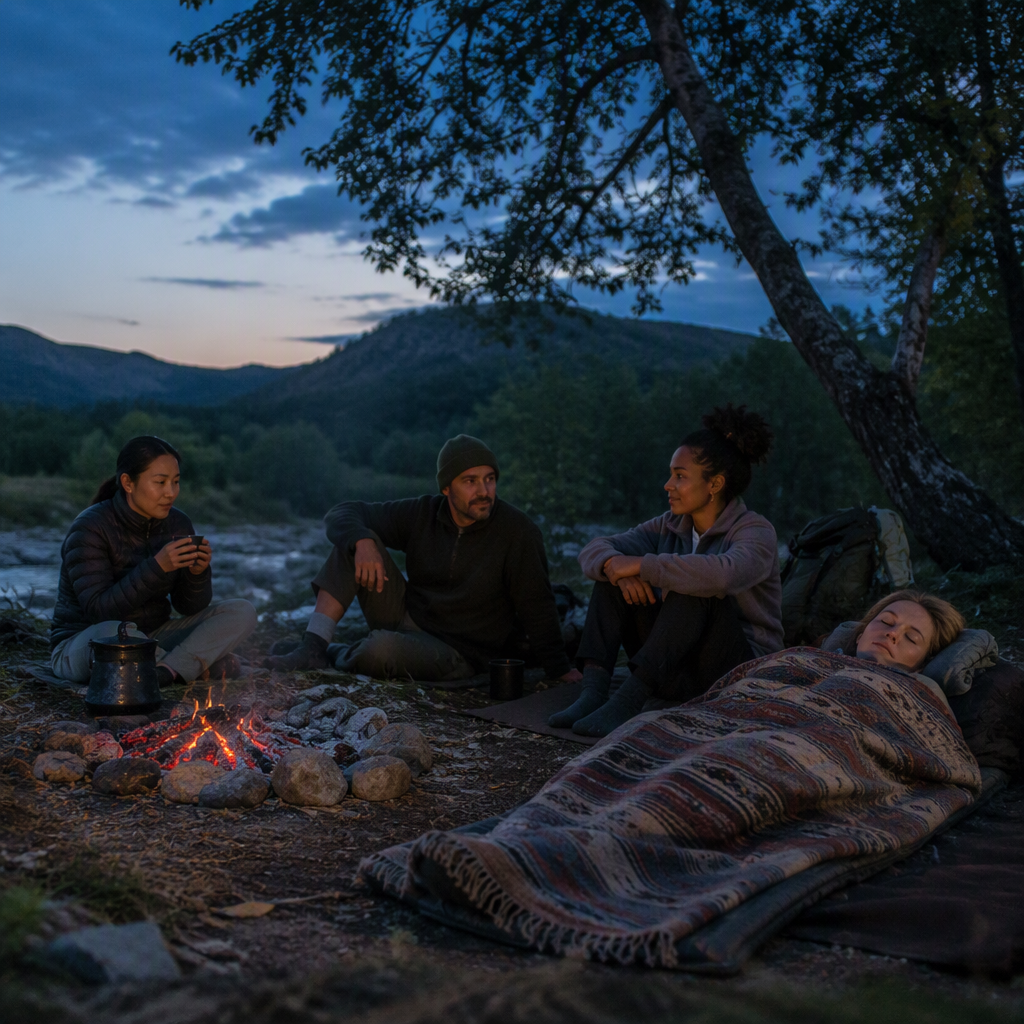
Contrary to the common belief that ancestral humans slept immediately at sundown, hunter-gatherers typically stay awake for three to four hours after sunset. They gather around fires, talk, prepare food, and share stories. Their sleep onset aligns closely with falling evening temperatures rather than the immediate absence of sunlight.
Key environmental triggers identified by researchers include:
- Ambient Temperature Drop: Sleep onset consistently tracks the nightly cooling of the environment, with awakening synchronized to the coldest point of the dawn cycle.
- Abundant Daylight Exposure: Hunter-gatherers spend their days outdoors, receiving thousands of lux of full-spectrum natural sunlight, which powerfully anchors circadian timing.
- Absence of Artificial Blue Light: Without screens or high-intensity LED fixtures, evening melatonin production proceeds naturally without biological disruption.
The Social Nature of Rest and Low Insomnia Rates
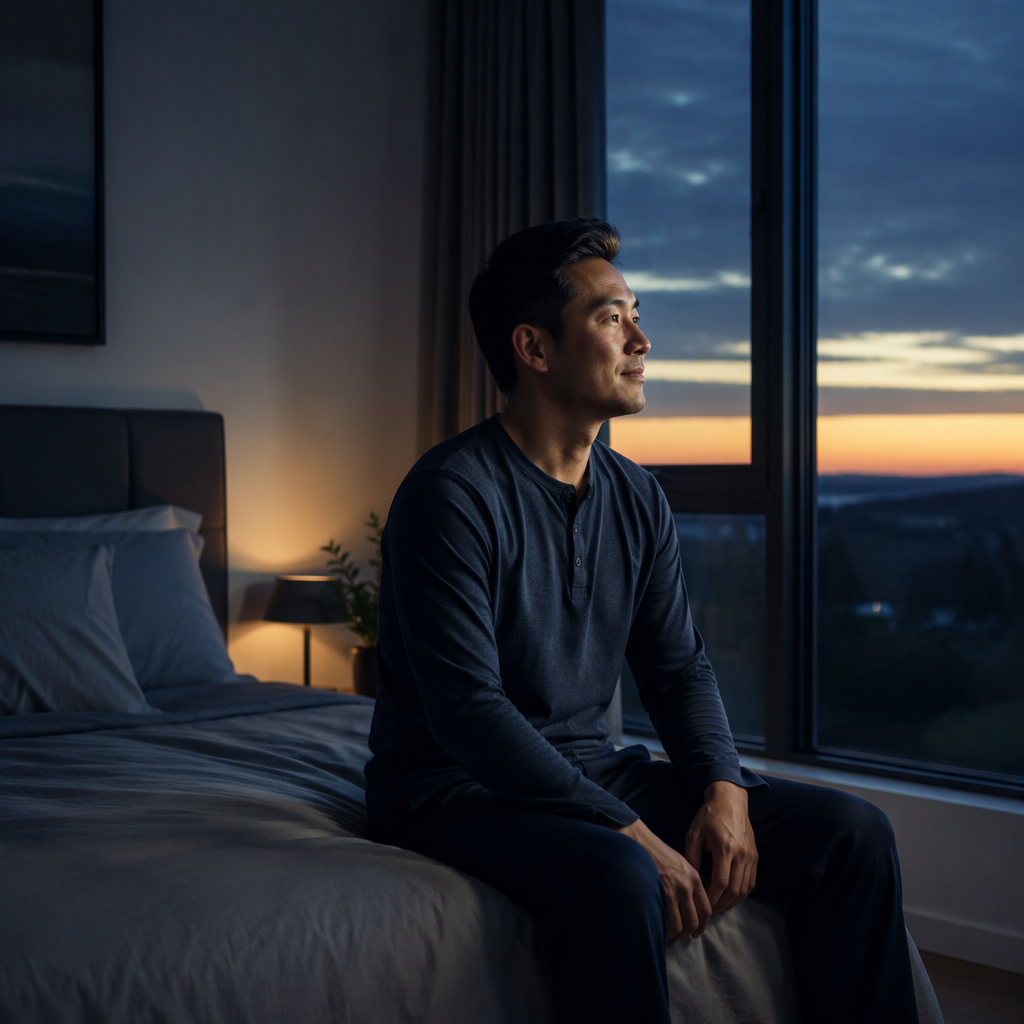
Modern architecture isolates sleepers in soundproofed, private bedrooms. For hunter-gatherers, sleep is an inherently social and communal experience. Families and groups sleep in close proximity, often in open-air shelters or around communal hearths.
Anthropologists suggest this communal dynamic reduces the anxiety and hyperarousal that fuel modern sleep disorders. In ancestral environments, sentinel behavior—where individuals wake briefly during the night—ensures group security. Because brief awakenings are expected and normal within a group, individuals do not experience the frustration or panic common among modern insomniacs who wake at 3:00 a.m.
Furthermore, daily physical exertion across rough terrain provides natural sleep pressure. Physical fatigue, combined with lower psychological stress related to deadlines and artificial schedules, creates an optimal physiological state for restorative rest.
Applying Pre-Industrial Sleep Wisdom to Modern Life
While returning to a nomadic lifestyle is neither practical nor desirable for most people, medical professionals say the core principles of ancestral sleep can be adapted into modern routines:
- Prioritize Morning Sun: Get at least 20 to 30 minutes of natural outdoor light shortly after waking to set your circadian master clock.
- Cool the Bedroom: Lower your thermostat in the evening to mimic the natural nocturnal temperature decline that signals sleep to the brain.
- Dim Evening Lights: Switch off overhead illumination two hours before bed and replace screen time with lower-stimulation activities.
- Reframe Nighttime Awakenings: Understand that waking during the night is biologically normal and not an immediate sign of clinical sleep dysfunction.
What Happens Next in Circadian Science
Evolutionary medicine and sleep laboratories are increasingly collaborating to design modern living spaces that mimic natural environmental cues. Urban planners, architects, and device manufacturers are now developing smart lighting and dynamic climate control systems that replicate natural solar and thermal shifts.
As researchers continue studying traditional communities, the broader medical community is shifting away from rigid sleep quotas. By understanding hunter-gatherer sleep habits, health professionals hope to help modern societies align their high-tech lives with ancient biological realities.