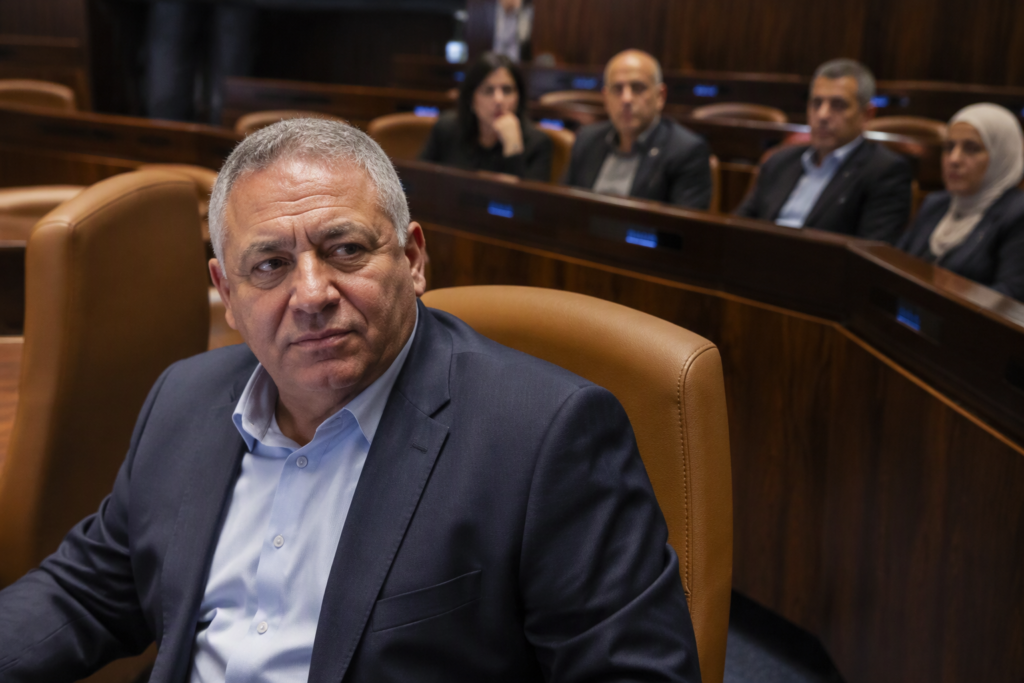

In a notable political maneuver, the Joint List has declared that it will recommend former military chief Gadi Eisenkot to build the country’s next governing coalition, marking a significant development as the Joint List backs Eisenkot to lead efforts in the Knesset.
The decision positions the alliance of Arab-majority parties as a potential key factor in shaping the future leadership of Israel. By offering its support to Eisenkot, the faction aims to influence the direction of coalition building and the eventual formation of the administration.
Also read: Israeli Forces Kill Four in Gaza as Fifth Palestinian Dies of Wounds
Why the Joint List Backs Eisenkot
The move to endorse Eisenkot reflects ongoing efforts among opposition and centrist blocs to establish an alternative governing arrangement. Under Israel’s parliamentary system, factions recommend a prospective prime minister to the president, who then tasks a candidate with securing a majority of parliamentary seats.
Political analysts view the alliance’s backing as a strategic initiative to prevent hardline factions from consolidating authority. Support from the Joint List could provide Eisenkot with crucial leverage during negotiations with other potential coalition partners.
Challenges in Coalition Building
Securing recommendations is only the first step in a complex political process. Any prospective prime minister must negotiate policy compromises and ministerial appointments to assemble a stable majority of at least 61 seats in the Knesset.
Eisenkot faces the difficult task of bridging ideological divides across diverse political parties. While endorsement from Arab factions adds numerical weight, it often presents friction with right-leaning parties whose participation is typically required to finalize a viable majority.
Next Steps in Government Formation
Consultations among party leaders are expected to intensify in the coming days as various factions assess their positions. The formal recommendation process will determine whether Eisenkot receives the official mandate to hold formal coalition talks.
As negotiations progress, the political landscape remains fluid, with parties weighing the implications of a government formed with the support of the Joint List.
Source: Al Jazeera