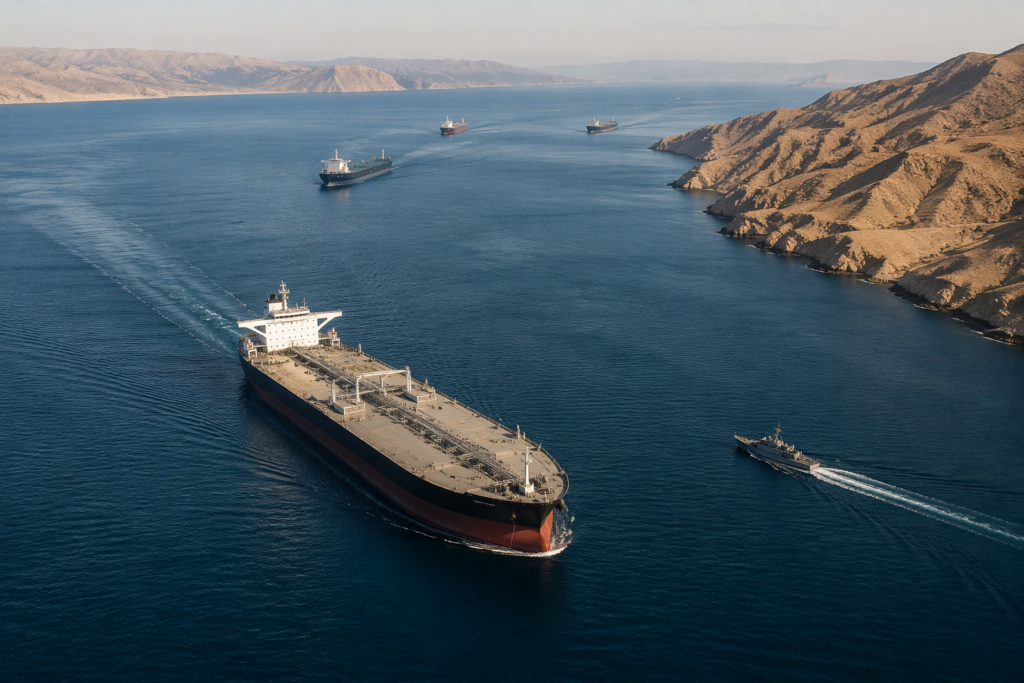

Tehran has announced that commercial vessels from India, China, Qatar, and Iraq will be allowed to navigate the Strait of Hormuz freely, creating a targeted waiver under current Iran Hormuz restrictions.
Selective Exemptions for Key Asian and Regional Partners
The Strait of Hormuz is one of the world’s most critical maritime chokepoints, handling a significant share of global petroleum and liquefied natural gas shipments. By granting unimpeded passage to these four specific nations, Iranian authorities appear focused on protecting critical economic corridors and maintaining essential partnerships across Asia and the Middle East.
Also read: Iran’s Security Chief Meets Putin to Deliver Message from Khamenei
China remains a primary economic partner and the largest buyer of Iranian oil, while India holds major commercial and energy interests across the Persian Gulf. Meanwhile, Iraq shares extensive geographic and economic ties with Tehran, and Qatar shares the vast offshore South Pars/North Dome gas field with Iran, making uninterrupted navigation vital for bilateral stability.
Political Risks Associated with Iran Hormuz Restrictions
Despite providing immediate maritime relief to designated vessels, analysts warn that selective transit agreements carry notable political risks. Granting passage to preferred partners while restricting others may aggravate diplomatic friction with excluded nations, including Western governments and other regional stakeholders that depend heavily on free transit through the strait.
Maritime experts also observe that preferential shipping access challenges international freedom-of-navigation principles. Beneficiary governments could face international scrutiny or diplomatic pressure from allies advocating for open and equitable rules governing international waterways.
Outlook for Regional Maritime Stability
As international markets and shipping companies monitor navigation throughout the Gulf, the durability of bilateral passage guarantees remains uncertain. While Tehran aims to protect vital trade flows, establishing divided transit conditions in one of the world’s busiest energy arteries may introduce fresh complexities to regional diplomacy and maritime security.
Source: Al Jazeera