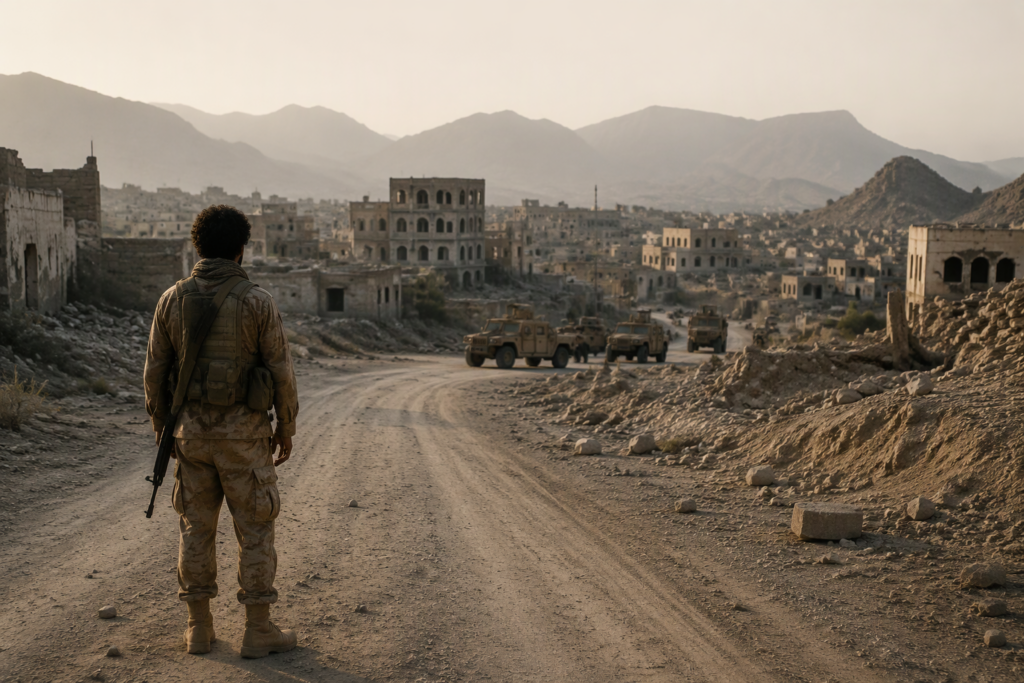

One month after a major Yemen government offensive began, military operations have largely bogged down, transforming what was intended as a swift push into a protracted war of attrition. Contested frontlines across the country have settled into a tense deadlock, with neither side securing decisive territorial breakthroughs.
Frontline Stalemate and Shifting Dynamics
The military push initially aimed to break entrenched positions and reclaim strategic territory. However, fortified defensive networks, difficult topography, and heavy minefields have slowed progress significantly. Both sides now rely increasingly on reciprocal artillery exchanges, localized skirmishes, and static defense tactics.
Also read: Trump Calls Iran Conflict a ‘Soft War,’ Insists US Holds the Cards Ahead of Midterm Elections
Rather than rapid battlefield advances, combat operations have transitioned into localized clashes. Forces on both sides continue to trade fire across rugged terrain, absorbing casualties and expending substantial ammunition without altering the broader balance of power.
Challenges Facing the Yemen Government Offensive
Military analysts note that sustaining an offensive over several weeks requires extensive logistical support, continuous resupply routes, and steady troop rotations. The Yemen government offensive faces mounting pressure as supply chains stretch thin across contested valleys and arid highlands.
Adversaries have utilized counter-battery fire and tactical ambushes to blunt forward momentum. This resistance has forced government units to shift their focus from territorial gains toward consolidating defensive perimeters and protecting fragile supply corridors.
Humanitarian and Strategic Implications
The transition to a war of attrition carries severe consequences for the local civilian population. Protracted artillery fire and persistent military activity continue to restrict civilian movement, disrupt aid deliveries, and heighten instability in adjacent communities.
Prolonged standoffs also strain municipal resources and essential infrastructure, compounding an already fragile humanitarian situation in frontline areas. With military options yielding diminishing returns, pressure is mounting on regional and international stakeholders to seek renewed diplomatic pathways to de-escalate hostilities.
Outlook for the Conflict
As the campaign enters its second month, static frontlines indicate that a rapid military resolution remains unlikely. Unless either side secures significant logistical reinforcements or introduces new strategic elements, the conflict appears set to remain locked in an exhausting war of attrition.
Source: Al Jazeera