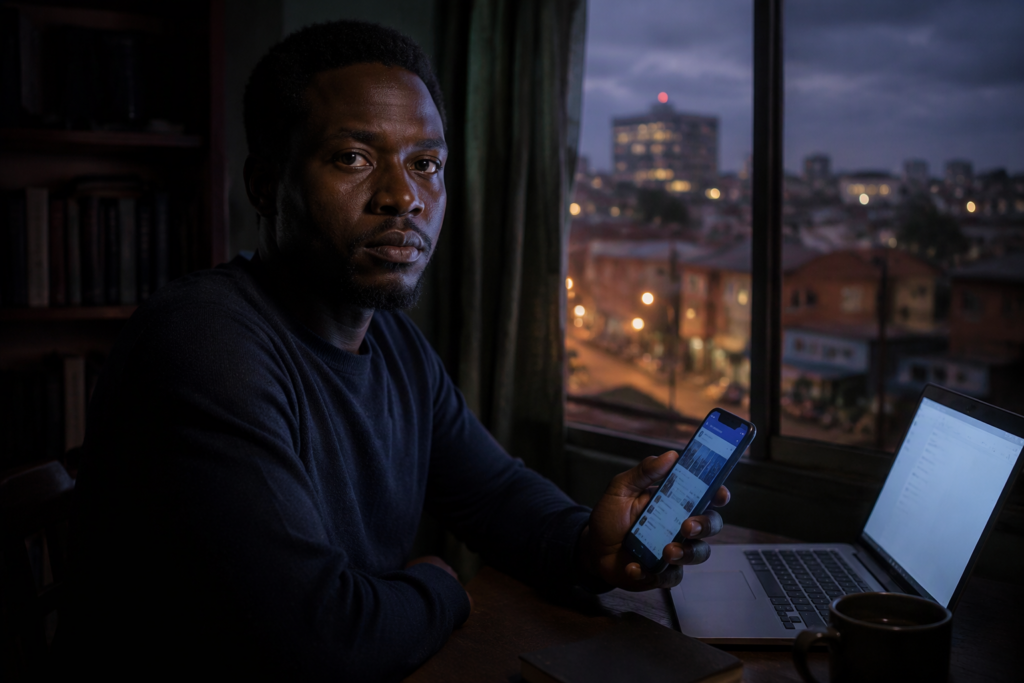

The Uganda crackdown on online critics has intensified as digital activists, writers, and political commentators face mounting pressure from authorities to take down social media posts critical of state leadership and governance. Despite increasing threats of interrogation, detention, and legal charges, several prominent online voices are openly defying government orders and refusing to scrub their accounts.
The Scope of the Uganda Crackdown on Online Critics
Over recent years, digital platforms have emerged as vital arenas for political discourse in Uganda, offering citizens an alternative space to voice dissent, expose public corruption, and organize civic campaigns. However, state security apparatuses and regulatory bodies have steadily expanded their oversight of these virtual spaces.
Also read: South Africa’s ANC on Track for New Lows in Local Polls
Authorities have targeted commentators who use platforms like X, Facebook, and TikTok to question policy decisions or criticize high-ranking officials. Those who publish candid commentary often receive direct warnings or formal demands from law enforcement agencies requiring the immediate deletion of targeted publications.
Legal Mechanisms and Digital Surveillance
The tightening grip on cyberspace relies heavily on legal frameworks designed to regulate online speech. Legislation such as the amended Computer Misuse Act has drawn widespread scrutiny from legal scholars and human rights defenders for criminalizing vague offenses, including the spread of unsolicited or allegedly offensive communications.
Law enforcement officials argue that strict measures are necessary to curb disinformation, hate speech, and national security threats. Yet critics contend that these statutes are applied selectively to suppress political opposition, instill self-censorship, and intimidate independent voices seeking institutional accountability.
Defiance in the Face of Intimidation
Despite the growing risks of state scrutiny and prosecution, an increasing number of digital commentators are choosing defiance over compliance. Statements such as “I will not delete my posts” have become rallying cries for individuals who view compliance as an erosion of constitutionally protected speech.
Many critics point out that capitulating to demands for content removal creates a dangerous precedent, further shrinking Uganda’s civic space. By standing by their public remarks, these commentators seek to document the pressure they face while challenging the state to justify its censorship efforts in open court.
Implications for Free Expression in the Region
The ongoing struggle highlights broader regional concerns regarding digital authoritarianism across the African continent. As traditional media outlets face operational restrictions, governments increasingly turn toward regulating social networks to control political narratives.
Civic organizations continue to monitor cases of detained commentators and advocate for the protection of constitutional safeguards. Whether the resistance from online critics will prompt a reassessment of digital regulation or trigger further state clampdowns remains a pivotal question for the future of free speech in Uganda.
Source: Al Jazeera