
The Norwegian Island That Wanted to Abolish Time: Inside the Sommarøy Campaign
In the summer of 2019, global headlines captured the imagination of millions with an audacious proposal: a small Arctic community petitioned to declare itself the world’s first clock-free zone. Sommarøy, the Norwegian island that wanted to abolish time, argued that conventional hours and rigid schedules made little sense where the sun does not set for 69 consecutive days.
Located west of Tromsø, north of the Arctic Circle, Sommarøy experiences the natural phenomenon of the midnight sun from mid-May to late July. During this window, natural day and night boundaries dissolve, altering how residents work, socialize, and rest.
Also read: Who Actually Controls Ukraine’s Access to Starlink? Inside the Strategic Alliance
Living Without Darkness: The Midnight Sun Reality
For the roughly 300 residents of Sommarøy, summer daylight is relentless. Between May 18 and July 26, the sun remains above the horizon around the clock. The prolonged light fundamentally shifts human routines and community norms.
Locals describe mowing lawns at 2:00 a.m., children playing soccer in the early morning hours, and fishermen heading out to sea regardless of what the clock displays. When darkness disappears, biological rhythms naturally adapt to energy levels and weather conditions rather than traditional 9-to-5 schedules.
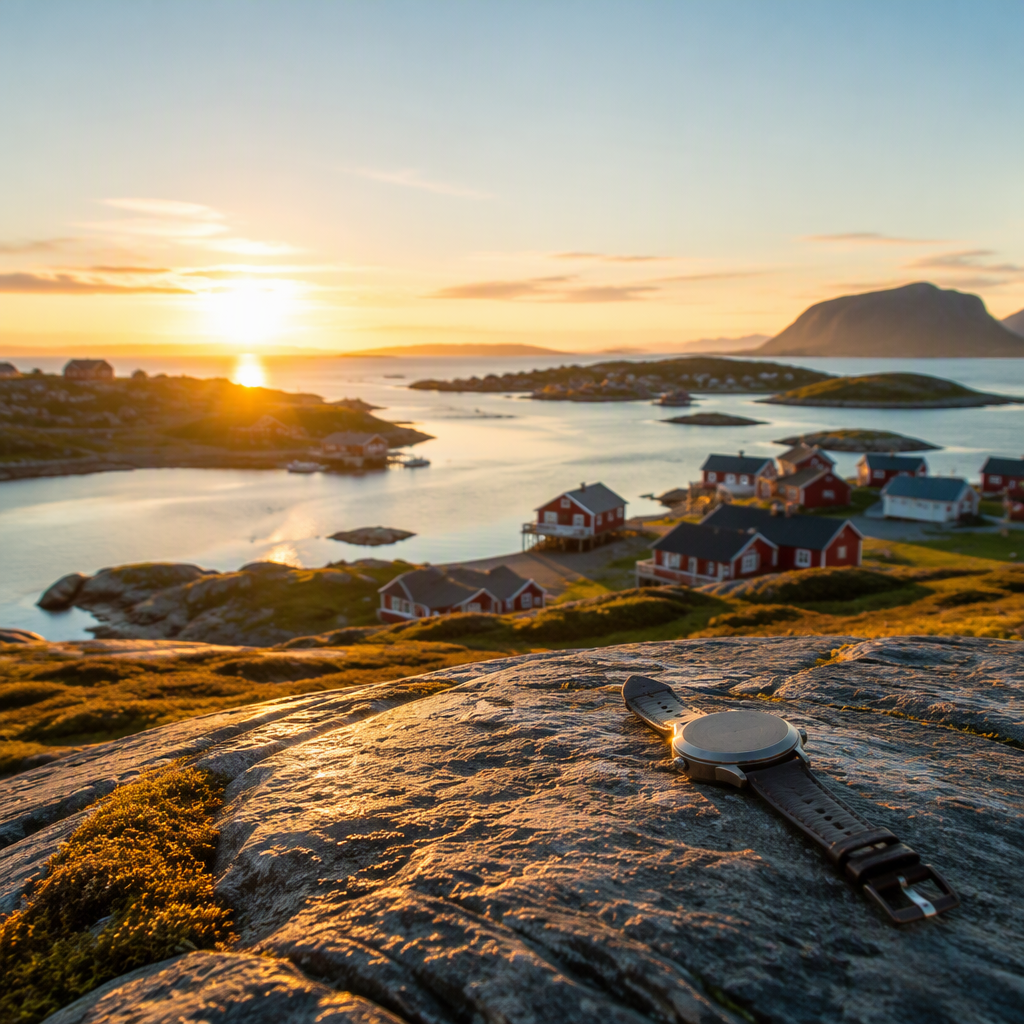
The campaign emerged from this seasonal lifestyle. Island residents symbolically strapped their wristwatches to the bridge connecting Sommarøy to the mainland, signaling an intention to step out of standardized time.
The Proposal: Why the Norwegian Island Wanted to Abolish Time
Local resident Kjell Ove Veding stepped forward as the spokesperson for the movement. Veding presented a petition to a Norwegian member of parliament, requesting formal recognition of Sommarøy as an official time-free territory.
The core goals presented in the petition included:
- Providing flexibility for local workers, particularly in fishing and hospitality.
- Allowing businesses and public services to operate without fixed opening and closing hours.
- Reducing societal stress by liberating residents from conventional deadlines.
Veding told media outlets at the time that modern society suffered from unnecessary pressure tied to the clock. On an Arctic island where daylight never fades, residents argued that clock-watching imposed an artificial constraint on productivity and well-being.
Global Phenomenon and the Tourism Campaign Revelation
The story spread quickly across international publications, television networks, and social media platforms. Millions of readers, exhausted by modern workplace burnout and rigid schedules, resonated with the concept of a society freed from time.
However, within weeks, Norwegian media revealed that the initiative was co-developed by Innovation Norway, the state-owned tourism board. The organization acknowledged that while the sentiments reflected genuine local attitudes, the petition was part of a strategic marketing campaign designed to spotlight northern Norway’s summer tourism.
The disclosure sparked debate regarding public trust and modern public relations ethics. Innovation Norway subsequently issued an apology for failing to disclose its involvement from the outset. Despite the controversy, tourism officials pointed out that the viral interest proved how deeply modern workers crave alternatives to time-pressured lifestyles.
Chronobiology and the Human Clock
While Sommarøy’s formal bid was promotional, the conversation it sparked engaged medical researchers and chronobiologists worldwide.
Scientists noted that completely abandoning time poses significant physiological challenges. Human biology relies heavily on circadian rhythms, which are synchronized by light and darkness cues. In regions with continuous light, maintaining regular sleep patterns requires deliberate discipline, as prolonged exposure to sunlight suppresses melatonin production.
Conversely, sociologists observed that the campaign underscored widespread dissatisfaction with rigid industrial time structures. The concept struck a chord because it challenged the assumption that human life must always conform to mechanical clocks.
Conclusion: The Lasting Legacy of the Sommarøy Experiment
Ultimately, Sommarøy remains subject to the same standard Central European Time as the rest of Norway. Yet, the story of the Norwegian island that wanted to abolish time left a lasting impression on the global cultural conversation.
The campaign demonstrated that Arctic communities operate under natural laws distinct from urban centers. While clocks remain on the wall, the spirit of Sommarøy serves as an enduring reminder that how humanity measures its days is a social construct—one that nature can effortlessly rewrite.