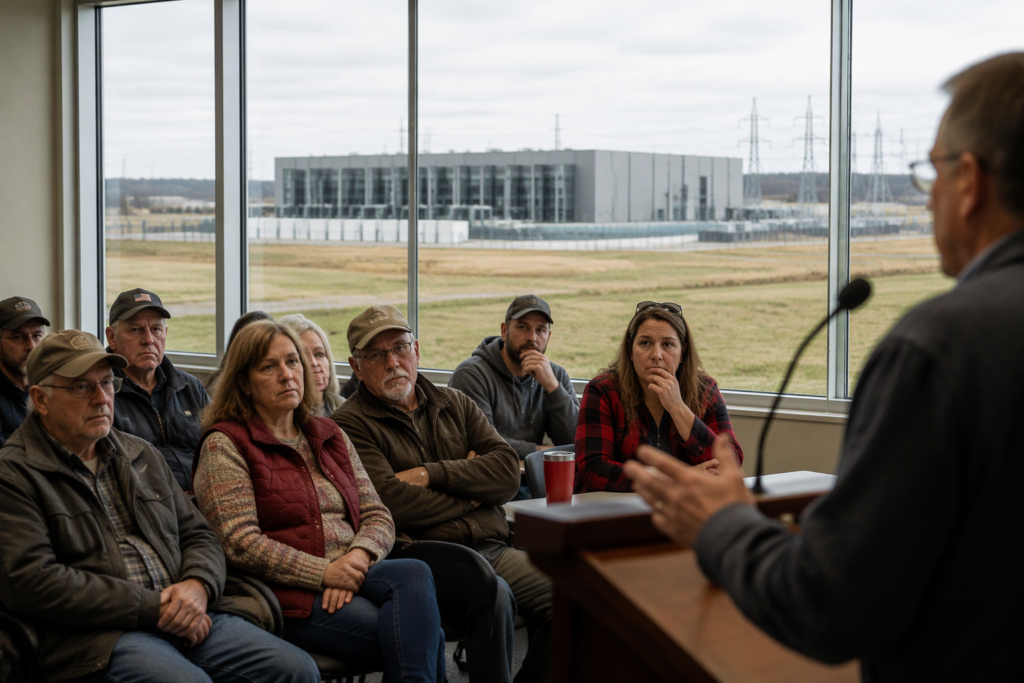

A growing data center backlash is emerging across traditionally conservative communities, presenting an unexpected political challenge for Republicans ahead of upcoming election cycles.
According to an analysis examining voter trends, several red counties with active or proposed data center developments experienced notable political shifts away from the GOP in recent midterm elections. The findings highlight how localized frustration over rapid technological expansion can quickly translate into broader electoral headwinds.
Also read: Asra Nomani Analyzes El-Sayed and the Rise of the Red-Green Alliance
Data Center Backlash Triggers Local Resistance
The rapid growth of cloud computing and artificial intelligence has accelerated the nationwide demand for massive data facilities. Tech firms frequently seek out suburban and rural areas due to land availability and access to power grids, but these large-scale facilities have increasingly met stiff local resistance.
Residents in affected red counties have raised significant concerns regarding the community footprint of these projects. Key issues include heavy strain on municipal power grids, substantial water consumption for cooling systems, ongoing noise disturbances, and dramatic alterations to rural landscapes.
While state and local leaders often promote data centers as valuable sources of property tax revenue and local investment, community pushback has gained traction. In several regions, residents have organized grassroots campaigns to contest zoning changes, tax incentive packages, and expedited environmental reviews.
Electoral Shifts in Republican Strongholds
The political fallout from these developments has started to register at the ballot box. Midterm voting patterns indicate that communities contending with controversial data center proposals saw noticeable shifts away from GOP candidates, even in areas long considered conservative strongholds.
Political observers note that quality-of-life grievances often cut across traditional partisan lines. When voters believe municipal or county officials are prioritizing corporate technology interests over neighborhood preservation, typical voting patterns can break down, leaving incumbents vulnerable.
Balancing Economic Growth and Community Priorities
The situation creates a complex balancing act for Republican officials. Conservative platforms traditionally support business investment, commercial development, and economic expansion. However, those goals are increasingly colliding with local resistance to corporate subsidies and skepticism toward large technology firms among base voters.
Policymakers and party leaders now face the challenge of reconciling regional energy and infrastructure needs with mounting demands for community oversight, zoning protections, and resource management.
Looking Ahead
As energy demands continue to rise across the country, local battles over utility planning and industrial land use are likely to intensify. For Republican campaigns working to protect legislative and local majorities, addressing voter concerns over community impacts could become an essential strategic focus.
Source: Fox News