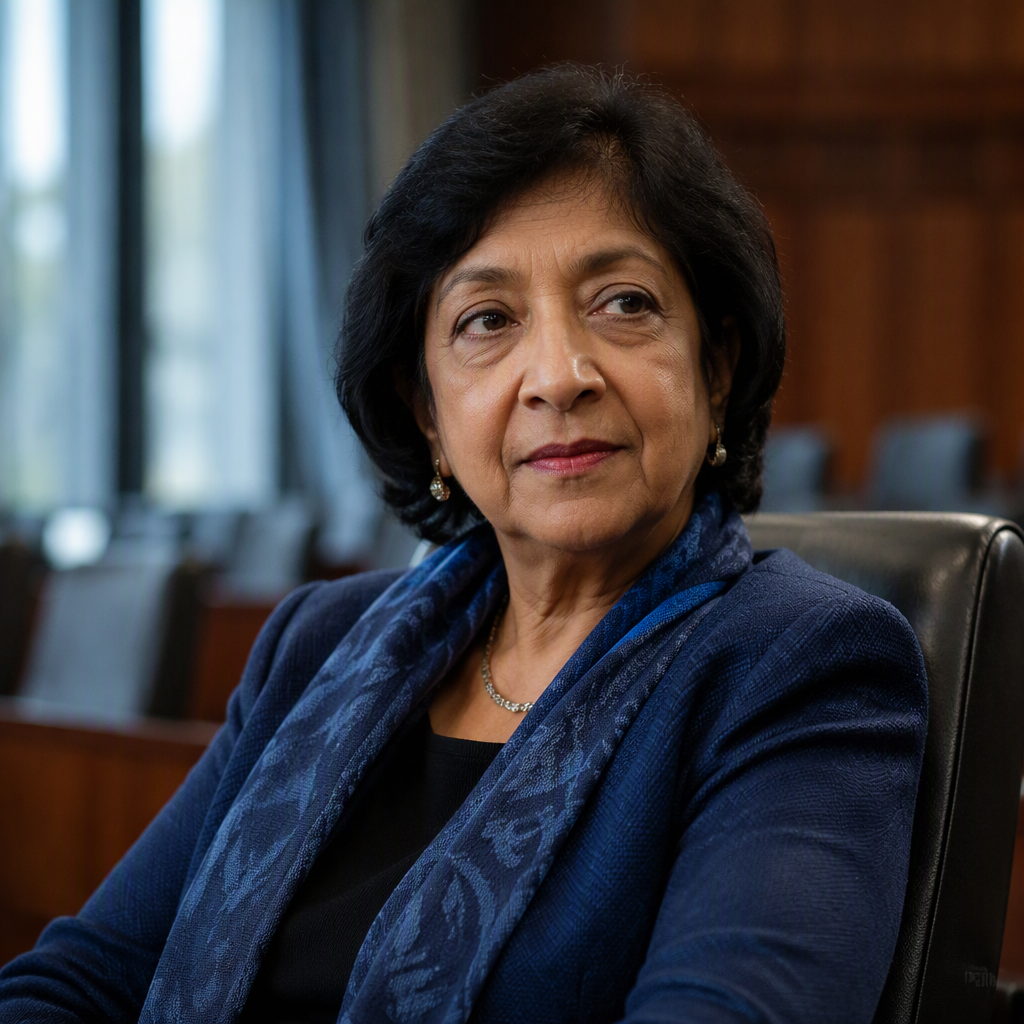

Navanetham ‘Navi’ Pillay Named 2026 Nobel Peace Prize Winner for Global Human Rights Leadership
The Norwegian Nobel Committee has announced South African jurist Navanetham “Navi” Pillay as the 2026 Nobel Peace Prize winner, honoring her extraordinary six-decade commitment to international law, accountability, and the protection of fundamental human rights across the globe.
Announcing the award in Oslo, the committee praised Pillay for her fearless advocacy against systemic oppression, her landmark contributions to international humanitarian jurisprudence, and her enduring defense of victims of conflict and state-sponsored abuse. The historic honor cements the 84-year-old jurist’s position as one of the most influential legal minds and human rights champions of modern history.
Also read: No Clear Winner in Israel Election Results With Nearly 90 Percent of Votes Counted
A Groundbreaking Career Built on Justice and Rule of Law
Born in Durban, South Africa, during the apartheid era, Navi Pillay faced institutional racism and gender discrimination early in her legal journey. Despite severe statutory barriers, she earned legal degrees from the University of Natal and later obtained a Master of Laws and Doctor of Juridical Science from Harvard Law School.
In 1967, Pillay became the first woman of color to open a law practice in South Africa’s Natal Province. During apartheid, she defended anti-apartheid activists, exposed unlawful detention conditions on Robben Island, and fought to secure basic rights for political prisoners, including Nelson Mandela. Following the fall of apartheid, President Mandela appointed her as the first non-white female judge to the High Court of South Africa in 1995.
Shaping International Jurisprudence: The Rwanda Tribunal and the ICC
Pillay’s transition to international justice established precedents that continue to govern international criminal law today. Appointed to the International Criminal Tribunal for Rwanda (ICTR) in 1995, she served as a judge for eight years, including four years as tribunal president.
During her tenure at the ICTR, Pillay presided over the landmark Jean-Paul Akayesu case. The tribunal’s decision set a historic legal precedent by ruling that sexual violence and systemic rape constitute acts of genocide and crimes against humanity under international law. In 2003, Pillay was elected to the inaugural bench of the International Criminal Court (ICC) in The Hague, where she helped establish the operational and judicial frameworks of the permanent international tribunal.
Tenure as United Nations High Commissioner for Human Rights
From 2008 to 2014, Pillay served as the United Nations High Commissioner for Human Rights (OHCHR). Known for her fierce independence and principled neutrality, she frequently challenged powerful member states on civilian protection, freedom of expression, and torture.
Under her stewardship, the OHCHR significantly expanded its global footprint, establishing rapid-response fact-finding missions to investigate war crimes and gross human rights violations in Syria, Libya, Sri Lanka, and the Central African Republic. Pillay also became a pioneering voice within the UN system for LGBTQ+ rights, spearheading the historic 2011 UN Human Rights Council resolution on sexual orientation and gender identity.
Significance of the Navi Pillay Nobel Peace Prize Award
The selection of the veteran jurist comes at a critical juncture when international norms, multilateral bodies, and humanitarian treaties face severe geopolitical pressures. In its citation, the Nobel Committee emphasized that durable peace is impossible without accountability, international justice, and equal dignity under the law.
Pillay has most recently chaired independent United Nations commissions and international inquiries, remaining an outspoken proponent of legal accountability in armed conflicts despite intense political scrutiny. Her selection highlights the vital role independent international jurists play in deterring war crimes and safeguarding civilian populations.
Global Reactions to the Announcement
The announcement triggered widespread praise across international diplomatic and legal communities. United Nations Secretary-General officials hailed the decision, describing Pillay as “a moral beacon whose uncompromising pursuit of justice has defined modern human rights enforcement.”
Human rights organizations, including Amnesty International and Human Rights Watch, commended the Nobel Committee’s recognition of a jurist who has repeatedly prioritized international law over political expediency. South African leaders and civil society groups celebrated the accolade, noting that Pillay’s journey from anti-apartheid defense lawyer to Nobel laureate reflects the best traditions of South Africa’s constitutional democracy.
What Happens Next
Navi Pillay will formally receive the Nobel Peace Prize gold medal, diploma, and monetary award at the traditional Nobel presentation ceremony held at Oslo City Hall on December 10, the anniversary of Alfred Nobel’s death.
International legal scholars anticipate that Pillay’s Nobel lecture will focus on the urgent necessity of reforming multilateral enforcement mechanisms, upholding the jurisdiction of international courts, and protecting civilians caught in contemporary asymmetric conflicts.
Conclusion
The recognition of Navanetham ‘Navi’ Pillay as the 2026 Nobel Peace Prize winner honors an unparalleled career dedicated to eradicating impunity and giving voice to the world’s most vulnerable. By choosing a jurist whose life work transformed international humanitarian law, the Nobel Committee delivers a resounding reaffirmation that genuine peace must always be rooted in justice.




1 Comment
Comments are closed.