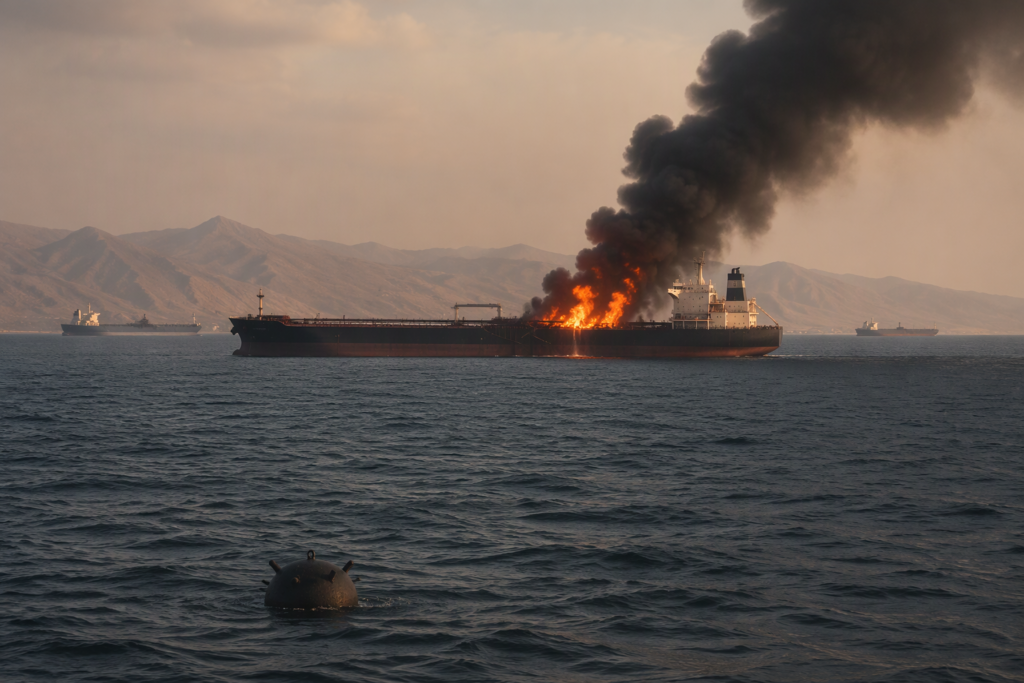
Five commercial vessels caught fire after striking underwater explosives in one of the world’s most sensitive maritime corridors. Reports confirm five tankers ablaze in Hormuz and surrounding waters after striking naval mines, setting off fresh alarms over maritime security. The incident threatens the narrow shipping channel that carries a substantial portion of global seaborne petroleum.
Any disruption in the waterway directly threatens energy supplies and risks drawing naval forces into direct confrontation. If traffic stalls, you could see crude freight rates spike overnight and insurance premiums for Gulf transit soar.
Also read: Ghana Presidential Jet: $61m Falcon 6X Sparks Public Outrage
What happened to the tankers ablaze in Hormuz
The five ships suffered severe damage from underwater munitions placed in and around the waterway. Explosions left the oil tankers on fire, prompting immediate calls to regional emergency tugs and rescue crews.
With multiple tankers ablaze in Hormuz, maritime monitors worked to determine the registry and cargo of each vessel. Emergency alerts warned other commercial traffic to exercise extreme caution across Strait of Hormuz shipping corridors.
IRGC claims over unauthorized route and US jets
The IRGC Navy claims two of the tankers were being escorted by US jets while travelling along an unauthorized route. Iranian officials asserted the vessels had breached navigational protocols before hitting the munitions.
The US jet escort Hormuz allegations remain unconfirmed by American defense officials. Commercial trackers have also not independently verified whether the ships operated outside designated transit lanes before hitting naval mines Hormuz mariners were alerted about.
What to watch next in the waterway
Commercial shipping operators are now monitoring whether international navies deploy mine-countermeasure ships or alter escort protocols. Look for official damage assessments and statements from regional naval commands before trading desks open.
Source: Al Jazeera


