When a gang stormed the Kashiani branch of Bangladesh’s most famous lender, they did not just break locks and loot furniture; they hauled out 40 sacks of loan files and set them on fire in the street. The coordinated strike was one of at least 97 Grameen Bank attacks recorded across the country in just two weeks, plunging the world-renowned institution into a raw political conflict.
The violence threatens to unravel the financial lifeline of more than 10 million rural women who rely on the microcredit lender for basic survival. Between November 10 and November 23, armed groups raided scores of offices, vandalised furniture, and terrorised staff members, according to an internal memorandum from the bank.
Also read: Sudan Drone Attacks Kill Four and Damage UN Building
For ordinary borrowers, the immediate fallout is real. While the attackers promised villagers that burning loan slips meant debts were wiped clean, the chaos has instead frozen local operations and left deposits in limbo.
Machetes, petrol and burning loan files
The raid in Gopalganj district shows how ruthless the raids have become. Solaiman Morol, the manager of the Kashiani branch, said about a dozen men arrived on the afternoon of November 18 carrying machetes, cans of petrol and heavy tools while field officers were out visiting villages.
The intruders tried to cut open the cash vault with an angle grinder. When that failed, they dragged out decades of paperwork, steel cupboards, filing cabinets, chairs, and even a staff member’s rice cooker. They then set the documents ablaze.
Morol reported that the men shouted slogans such as “Joy Bangla” and “Joy Bangabandhu” while calling to torch what they labelled “Yunus’s den”. The branch has been unable to reopen since, with terrified workers receiving regular threats.
“A bank depends on trust. This is impacting our customers’ confidence. People who have deposits with us are becoming frightened,” Morol said.
Why Awami League targets Muhammad Yunus
The bank has landed directly in the crosshairs of national politics because of its founder, Muhammad Yunus. The Nobel laureate served as the head of Bangladesh’s interim government after a student-led uprising ousted former Prime Minister Sheikh Hasina in August 2024.
Under the interim administration, Hasina’s party, the Awami League, was barred from electoral politics. Hasina fled into exile in India and was later convicted by a tribunal of massacres committed against protesters during the uprising, receiving a death sentence.
With Hasina now agitating from exile to stage a comeback, her loyalists have launched a wave of retaliatory violence. Grameen Bank, closely tied to Yunus in the public imagination, became an accessible target.
Mubashar Hasan, a researcher at Western Sydney University, explained that hardline party loyalists view Yunus as the architect of their downfall. Grameen Bank offers an unprotected street-level symbol of his legacy in towns and villages across the nation.
“Her party has spent the week pushing for her return. Grameen Bank is the easiest symbol of Dr Yunus they can reach,” Hasan said. “For the Awami League’s hardliners, Yunus is the face of their fall, so burning his bank is a way of hitting back at him.”
What the Grameen Bank attacks mean for rural women
The irony of the violence is that Grameen Bank does not belong to Yunus or wealthy financiers. Borrower-members own 90 percent of the institution, while the Bangladesh government holds the remaining 10 percent.
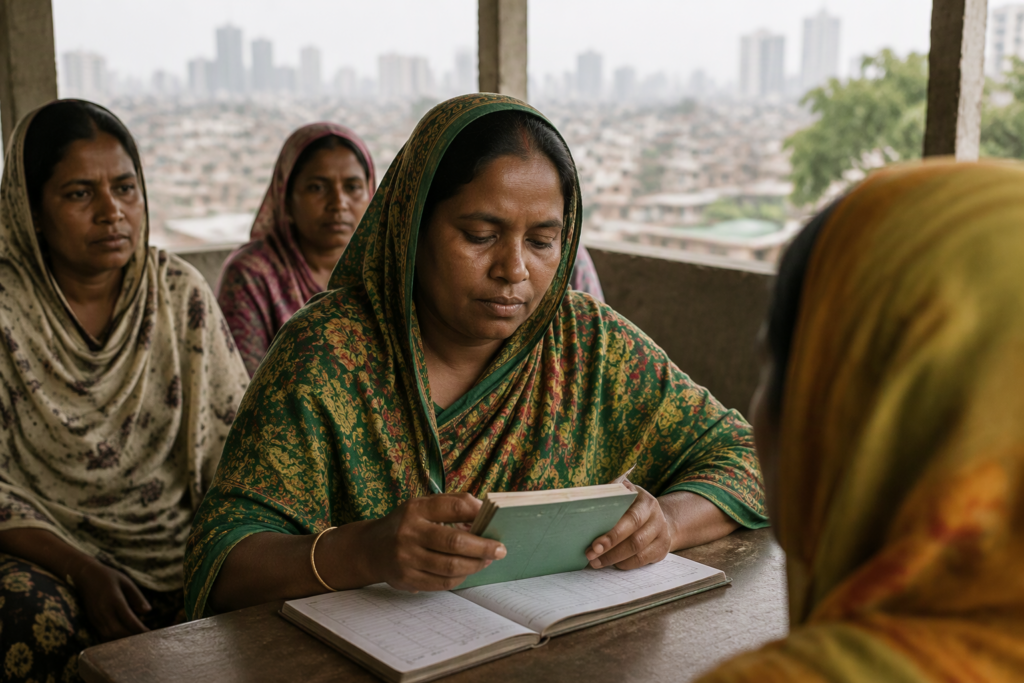
The bank serves 10.6 million members, almost entirely rural women, explained managing director Sarder Akhter Hamed. About 5.5 million borrowers carry outstanding loans totalling over Tk19,000 crore ($1.53bn), while member deposits stand at roughly Tk25,000 crore ($2bn).
“When a branch burns, it’s their loan files, savings records and repayment schedules going up in smoke,” Hasan of Western Sydney University said.
If local branches stay shut, borrowers risk falling into the hands of predatory informal moneylenders. To limit the immediate financial pain, Hamed said the bank has suspended interest accrual on loans at branches disabled by the raids.
Even so, the psychological toll on the bank’s 21,000 employees is heavy. Yunus released a statement describing the wave of violence as unbelievably shocking, pointing out that several branch workers and borrowers narrowly escaped fatal injuries.
A police force stretched thin under Tarique Rahman
The unrest poses a severe operational test for the administration of Prime Minister Tarique Rahman. In Gopalganj, the ancestral stronghold of Hasina, party loyalists have attacked police stations, burned down politicians’ homes, and reportedly killed three opposition figures.
Ziauddin Ahmed, additional secretary at the Ministry of Home Affairs, insisted that authorities are acting, but he acknowledged practical constraints. Police headquarters confirmed that officers have filed eight formal cases and arrested eight suspects tied to the branch assaults.
“The problem is that our police force is somewhat short of manpower,” Ahmed said, denying that authorities had lost control over the countryside.
University of Dhaka professor Asif Mohammad Shahan noted that the attackers want to provoke a harsh state crackdown. A heavy-handed police response would allow the banned party to claim victimhood on the international stage.
For branch staff and rural depositors, the immediate priority remains physical security. Management is relocating vulnerable personnel and hiring private guards, but normal banking cannot resume until local police secure the districts ahead of Hasina’s threatened return date.
Source: Al Jazeera


