
Ted Bundy Linked to Another Homicide Decades After Execution
Decades after his death in Florida’s electric chair, infamous serial killer Ted Bundy linked to another homicide has resurfaced in cold case investigations as law enforcement agencies continue examining unsolved disappearances from the 1970s. Modern forensic technology and detailed archival research have allowed detectives to connect the executed predator to yet another long-standing cold case murder, offering long-awaited answers to a grieving family.
Bundy was executed in January 1989 at the Florida State Prison after confessing to dozens of murders committed between 1974 and 1978. Despite his death nearly four decades ago, authorities across multiple states have long suspected that his true victim count exceeded his known confessions. The latest findings represent a critical breakthrough in closing one of the nation’s many lingering cold cases attributed to his multi-state killing spree.
Also read: 911 Operators Questioned Whether Christa Pike Failed Execution Call Was Prank, Audio Reveals
How Investigators Found Ted Bundy Linked to Another Homicide
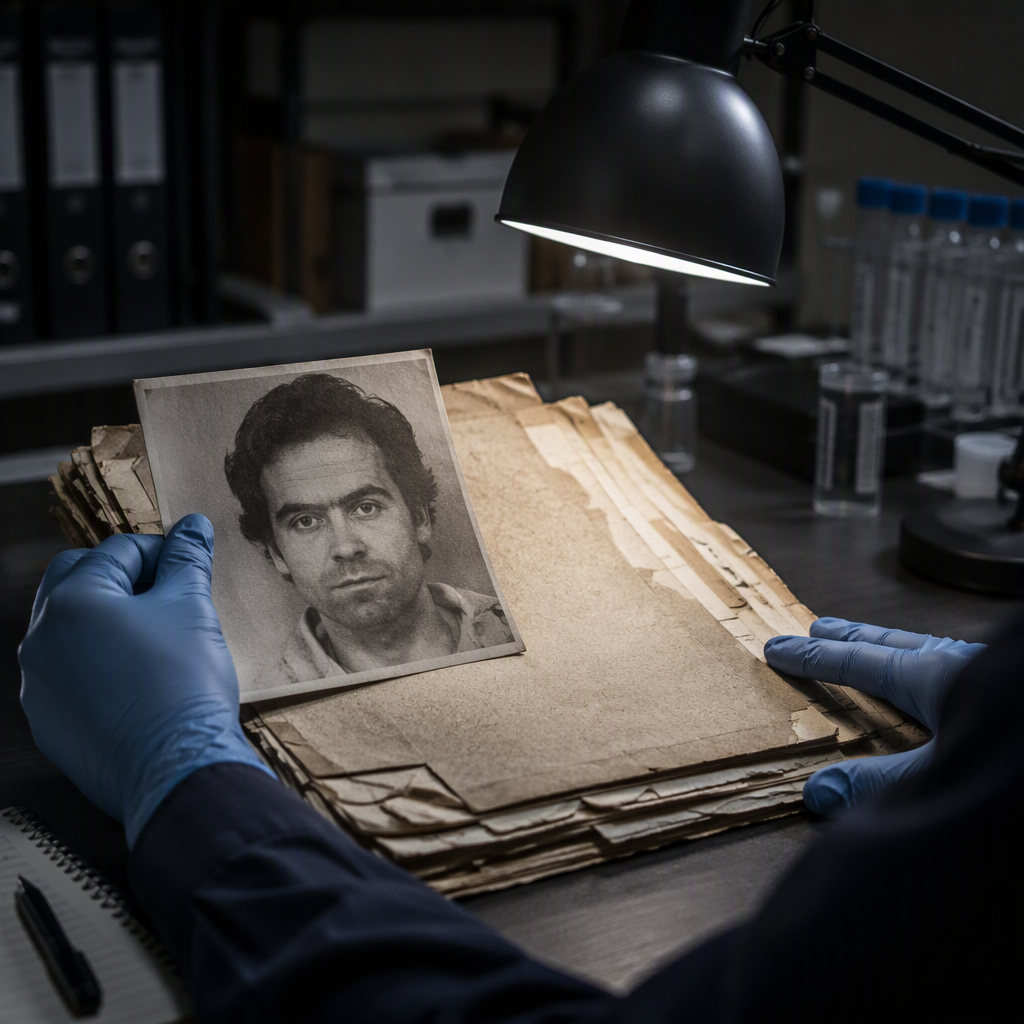
The breakthrough came after cold case detectives revisited unsolved files matching Bundy’s known travel patterns, physical evidence, and signature modus operandi. By combining contemporary DNA testing methods, newly digitized timeline cross-referencing, and witness statements gathered in the 1970s, investigators were able to establish clear evidentiary connections between the victim and Bundy.
During his final days on death row, Bundy confessed to approximately 30 homicides across Washington, Utah, Colorado, Idaho, Oregon, California, and Florida. However, forensic psychologists, criminologists, and detectives who interviewed him have consistently estimated that the actual number of victims could reach 40 or more. Many files remained open due to the lack of biological evidence or unidentified remains at the time of the original investigations.
Advances in Forensic DNA and Cold Case Mapping
Modern forensic genetic genealogy and advanced database queries have revolutionized how historic homicides are resolved. In this case, investigators re-examined archived evidence stored in local property vaults. Sophisticated laboratory techniques extracted minute DNA profiles that were previously untestable, comparing them against existing references and forensic profiles associated with Bundy.
Additionally, specialized cold case teams utilized geographic profiling and detailed gas station receipts, rental vehicle agreements, and credit card records acquired during Bundy’s historic criminal trials. Correlating these logistical records confirmed Bundy’s presence in the immediate vicinity at the exact time of the victim’s disappearance.
A Long Legacy of Unsolved Cold Cases
The announcement underscores the enduring impact of Bundy’s cross-country crimes. Throughout the mid-1970s, Bundy preyed primarily on college students and young women, often exploiting his outwardly charming demeanor and feigning injury to lure victims into his vehicle before abducting them.
While his convictions in Florida for the Chi Omega sorority attacks and the murder of Kimberly Leach brought legal finality and his subsequent 1989 execution, law enforcement jurisdictions in the Pacific Northwest, Rocky Mountain region, and beyond have maintained active inquiries into missing persons from that era. For decades, families have lived without knowing the fate of their loved ones or who was responsible.
What Happens Next in the Investigation
Following this formal link, investigators are preparing comprehensive case reports to officially change the homicide status to cleared by exceptional means. Because Bundy is deceased, no criminal prosecution can take place, but official closure allows the victim’s family to finally close an agonizing chapter.
Authorities also indicated that investigative task forces will continue reviewing unresolved files across adjacent jurisdictions. As biological analysis methods become increasingly sensitive, law enforcement agencies hope additional unsolved killings from the 1970s may finally be resolved.
Conclusion
Having Ted Bundy linked to another homicide nearly 40 years after his execution demonstrates the power of modern forensic science and the persistence of cold case detectives. While justice in a courtroom is no longer possible, uncovering the truth brings crucial closure to families who have spent decades searching for answers.