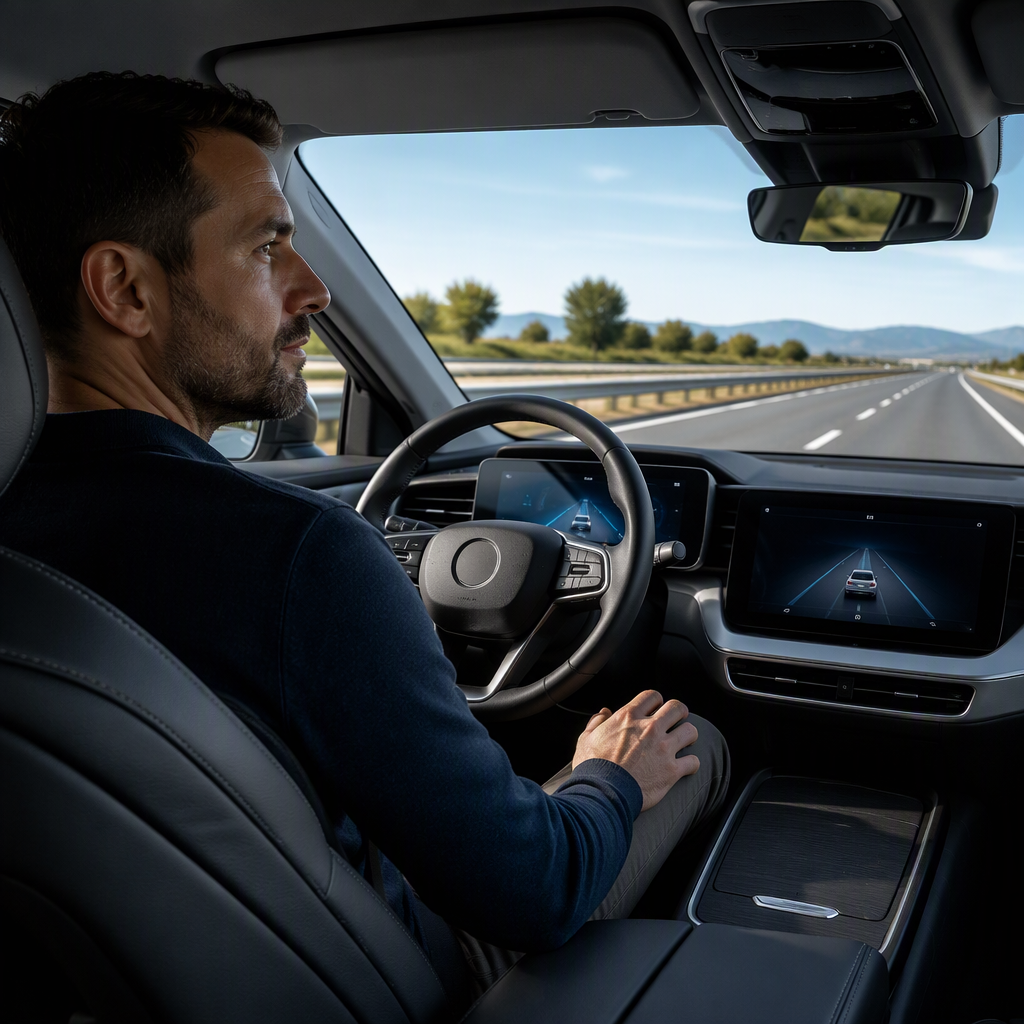

GM Aims for Drivers to Take Their Eyes Off the Road by 2028
General Motors is accelerating its self-driving ambitions with plans to introduce consumer technology that allows motorists to take their eyes off the road by 2028. The automaker aims to advance beyond current hands-free driving capabilities into true Level 3 automation, enabling drivers to redirect their attention away from traffic under specific highway conditions.
The goal represents a critical evolution for GM, which has built a strong reputation in driver-assist software through its Super Cruise system. While Super Cruise permits hands-free driving on hundreds of thousands of mapped highway miles across North America, it still requires the driver’s gaze to remain fixed on the road at all times.
Also read: How U.S. Adversaries Are Preparing to Take War into Outer Space
Transitioning from Hands-Free to Level 3 Autonomy
Under the Society of Automotive Engineers (SAE) autonomy framework, Level 2 systems handle steering, acceleration, and braking, but human drivers remain legally and practically responsible for monitoring the environment. Level 3 systems shift that liability to the vehicle while the feature is active.
By achieving Level 3 capability, GM’s vehicles would handle all dynamic driving tasks in designated operational design domains—such as limited-access highways in fair weather. During these operating windows, drivers could legally text, read, or look away from the windshield until the system prompts them to retake control.
GM executives view this transition as the next essential benchmark for consumer vehicles. Delivering an eyes-off experience requires extensive upgrades in onboard compute power, high-resolution sensor suites, redundant braking and steering architectures, and advanced fallback safety protocols.
How GM Eyes Off the Road by 2028 Reshapes Consumer Autonomy
The commitment to achieve GM eyes off the road by 2028 places the Detroit automaker in direct competition with global luxury brands and tech-focused rivals. Mercedes-Benz currently offers its Drive Pilot system—the first commercially certified Level 3 automated driving feature in select U.S. states—operating under restricted highway speeds.
Meanwhile, Tesla continues to market its “Full Self-Driving” (Supervised) software, which remains firmly classified as a Level 2 driver-assistance product that requires constant driver alertness. GM’s strategy focuses on delivering verified, eyes-off automation backed by automotive-grade hardware and rigorous validation rather than rapid public beta rollouts.
Industry analysts note that personal automated vehicles could offer higher margin potential for legacy automakers than robotaxi fleets, which have faced operational delays, high development expenditures, and heightened regulatory oversight in recent years.
Safety Frameworks and Regulatory Hurdles
Releasing personal vehicles that permit drivers to avert their gaze presents significant technical and legal challenges. State and federal regulators in the United States maintain strict scrutiny over automated vehicle safety, demanding demonstrable evidence that these systems can manage unexpected road obstacles, inclement weather, and hardware malfunctions without incident.
Key development priorities for GM include:
- Driver Handoff Systems: Establishing dependable, multi-second warning intervals so drivers can safely resume control when road conditions deteriorate.
- Sensor Redundancy: Integrating complementary radar, camera, and potential lidar units to prevent single points of system failure.
- Legal Liability: Clarifying manufacturer responsibility during automated driving engagement in coordination with insurance underwriters and traffic safety agencies.
What Happens Next for GM’s Autonomous Drive
Between now and 2028, GM will continue deploying incremental updates to its Super Cruise platform, expanding mapped roadway coverage and improving lane-change automation. Engineers are expected to pilot next-generation hardware architectures on upcoming electric and premium internal combustion models.
Federal regulators, including the National Highway Traffic Safety Administration (NHTSA), are also working on updated guidelines for automated driving systems. GM must satisfy these emerging federal standards before customers can legally disengage from the driving task.
In conclusion, the effort to let drivers take their GM eyes off the road by 2028 marks a defining milestone in the automotive sector’s path toward hands-free, eyes-off transportation. If successful, the rollout will redefine the daily commute and establish a new benchmark for personal vehicle automation.