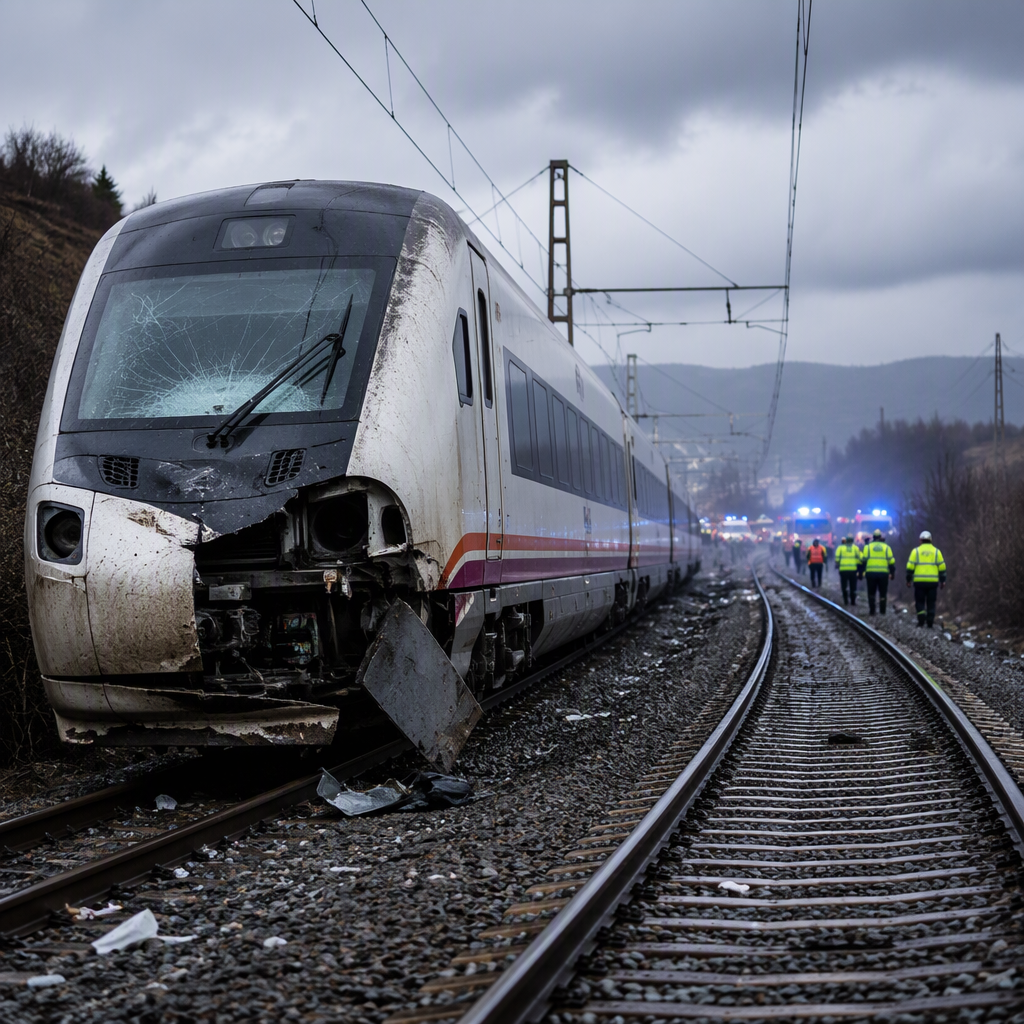

Train Crash in Spain Leaves Dozens Dead and Many Injured in Severe Rail Disaster
Emergency rescue teams are working around the clock after a catastrophic train crash in Spain left dozens dead and scores of passengers injured. The disaster unfolded when a passenger train derailed along a busy transit corridor, triggering one of the country’s most devastating railway tragedies in recent memory.
Local authorities, police units, and medical personnel rushed to the scene shortly after the collision occurred. Paramedics established triage stations along adjacent roadways to treat the injured before transferring critically wounded passengers to nearby regional hospitals.
Also read: Families Desperate for News as Rescuers Work to Identify Spanish Train Crash Victims
Emergency Response and Search Operations
First responders faced treacherous conditions as they navigated twisted metal and damaged carriages to reach trapped survivors. Cranes and heavy cutting equipment were deployed to stabilize overturned train cars and clear debris from the tracks.
Regional health authorities declared a code red across local trauma centers, urging citizens to donate blood to support ongoing medical surgeries. Psychologists and social workers have also been deployed to assist distraught family members gathering at designated reception centers.
“Our immediate priority is saving lives, treating the injured, and supporting the families affected by this heartbreaking event,” an emergency services coordinator stated during an early press briefing.
Investigation Launched into the Train Crash in Spain
Transport officials and the national rail safety commission have initiated a comprehensive, high-level inquiry to determine the exact cause of the tragedy. Investigators are focusing on several technical and environmental factors that may have contributed to the derailment.
Key Focus Areas of the Inquiry
- Data Recorders: Technical teams are working to retrieve and analyze the train’s black boxes to review speed logs, signaling data, and braking system performance.
- Track Infrastructure: Specialists are inspecting the rail lines and switches for structural defects, mechanical failures, or unexpected obstacles on the path.
- Human and Automated Factors: Investigators will assess crew communications, signal compliance, and automated safety overrides along the route.
Spain’s national rail operator announced full cooperation with judicial authorities, pledging complete transparency as forensic analysis of the site begins.
National Mourning and International Reactions
Government leaders declared multiple days of national mourning to honor the victims. Flags on public buildings across the country were lowered to half-staff, and moments of silence were observed in regional parliaments.
Condolences have poured in from European leaders and international officials, offering solidarity and emergency assistance. Diplomatic missions are working alongside local authorities to identify any foreign nationals among the casualties.
What Happens Next
Rescue teams will continue clearing the trackbed over the coming days as search operations formally transition into site remediation and structural repair. Rail traffic along the affected corridor remains suspended, with replacement bus services mobilized to accommodate stranded commuters.
Authorities anticipate delivering an interim safety report within the coming weeks. The findings could prompt immediate regulatory reviews and renewed scrutiny of rail infrastructure protocols following the deadly train crash in Spain.



1 Comment
Comments are closed.