
Inside Sommarøy: The Norwegian Island That Wanted to Abolish Time
In the summer of 2019, global media outlets seized upon an unusual petition emerging from north of the Arctic Circle: Sommarøy, a picturesque community of roughly 300 residents, declared its intention to become the world’s first official time-free zone. The story of the Norwegian island that wanted to abolish time captivated millions of workers worldwide, presenting a utopian escape from strict alarm clocks, rigid office hours, and modern deadline culture.
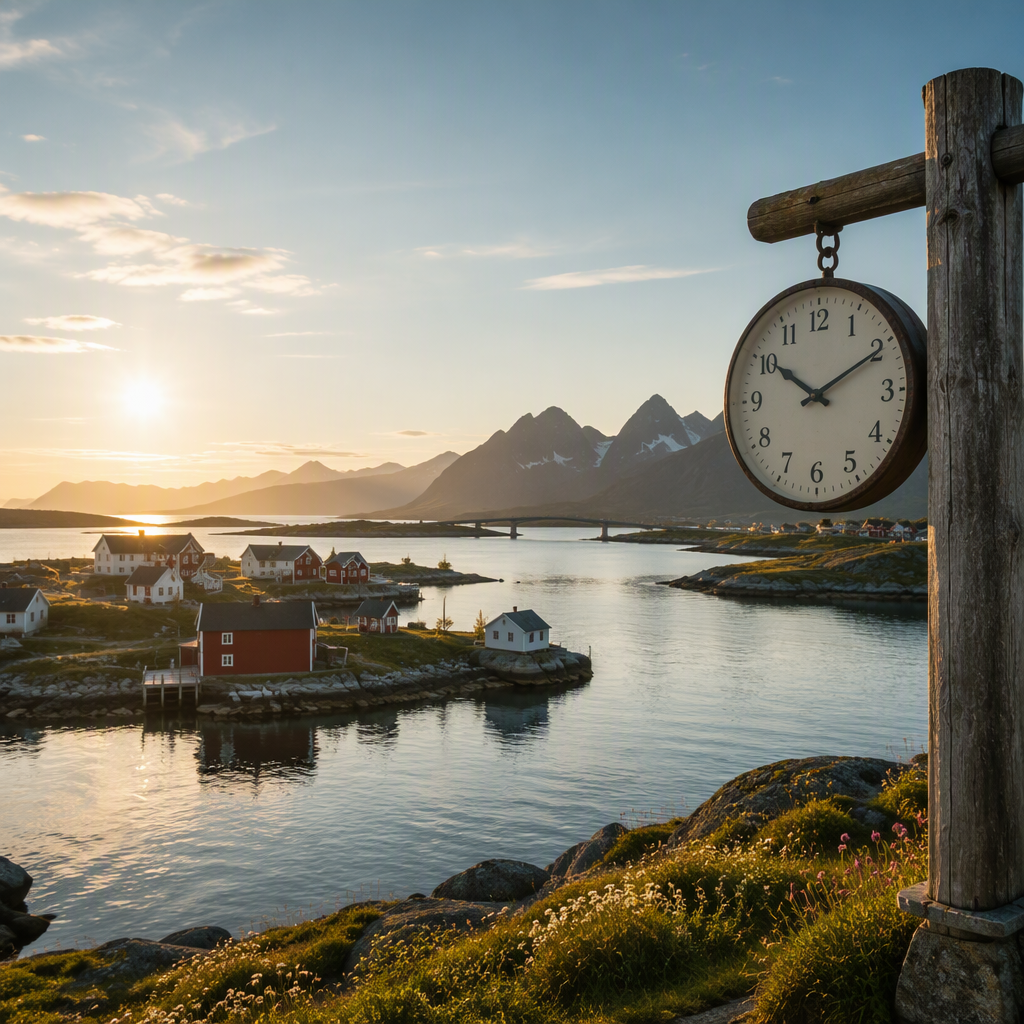
Positioned west of Tromsø, Sommarøy experiences the midnight sun between mid-May and late July. During these 69 continuous days, the sun never dips below the horizon. According to local organizers, the relentless daylight meant traditional measurements of hours and minutes were practically obsolete.
Also read: Britain’s New Respect Orders Spark Fierce Free Speech Backlash
Why the Norwegian Island Wanted to Abolish Time
The movement was spearheaded by local resident Kjell Ove Melderskod, who held public town hall meetings to discuss freeing the community from standard clock routines. Residents claimed that conventional timekeeping restricted their natural rhythm during the polar summer.
In Sommarøy, locals noted that standard societal schedules do not align with arctic reality. Children play soccer at midnight, painters work on homes at 2:00 a.m., and fishermen head out to sea without consulting their watches. Organizers proposed formalizing this practice by introducing flexible hours for schools, businesses, and municipal services.
To demonstrate their commitment, visitors crossing the bridge connecting Sommarøy to the mainland were invited to hang their watches on the bridge railings—a symbolic gesture replacing time constraints with total seasonal freedom.
The Global Appeal of a Time-Free Zone
Within days of launching the campaign, organizers reportedly met with a member of Norway’s parliament to present signatures requesting formal recognition as a time-free territory. International coverage exploded across major networks, wire services, and digital publications.
The proposal struck a chord with an international public grappling with burn-out and digital exhaustion. For readers across fast-paced metropolitan hubs, Sommarøy represented a refreshing alternative to rigid 9-to-5 schedules. Tourism inquiries surged as travelers sought to experience living entirely by daylight rather than by the clock.
The PR Controversy Behind the Campaign
Just weeks after international headlines celebrated the rebellion against the clock, the narrative took an unexpected turn. Norwegian media revealed that the initiative was not an entirely grassroots revolt, but rather a coordinated public relations campaign funded by Innovation Norway, the state-backed tourism authority.
The state agency acknowledged that it had spent approximately 500,000 Norwegian kroner (around $58,000 at the time) orchestrating the campaign to stimulate international interest in northern Norway. While government officials defended the effort as an inventive way to highlight the midnight sun, the revelation triggered pushback from media analysts and ethics watchdogs who criticized state institutions for blurring the lines between news and marketing.
Innovation Norway subsequently issued a public apology for misleading domestic and foreign media outlets, acknowledging that government communication should maintain absolute transparency.
Real Tradition Meets Modern Marketing
Despite the commercial origins of the PR push, residents maintained that the core concept genuinely reflected their northern lifestyle. While legal schedules remain strictly tied to Central European Time, everyday habits in the Arctic Circle do shift dramatically when continuous daylight arrives.
Locals continue to treat sunny summer nights with complete disregard for bedtime conventions, prioritizing outdoor activities, fishing, and community gatherings over conventional clocks. In winter, the opposite phenomenon occurs during the polar night, when the sun does not rise for weeks, fostering a quiet, inward-focused existence.
What Happens Next
Sommarøy remains one of Tromsø’s most popular day-trip destinations, drawing visitors for its turquoise waters, white sand beaches, and striking Arctic vistas. Although the formal petition to strip legal hours from municipal law never advanced through Norway’s parliament, the island’s bridge still occasionally attracts symbolic watches left behind by international tourists.
Ultimately, the saga of the Norwegian island that wanted to abolish time endures as both a textbook case study in viral destination marketing and a poignant reminder of humanity’s complicated relationship with the modern clock.