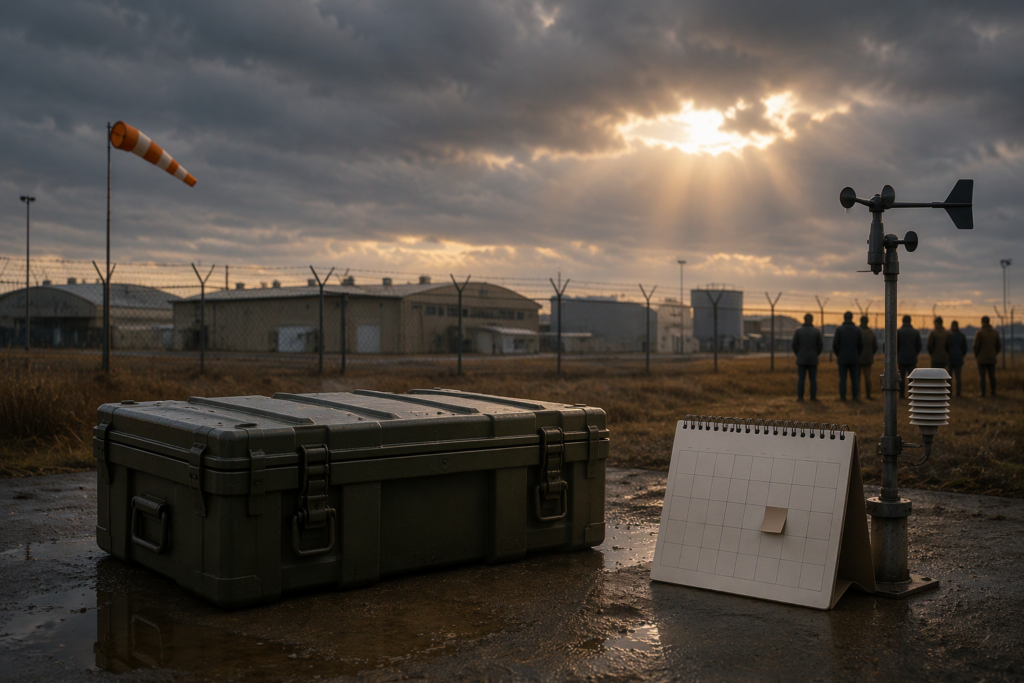
The U.S. Army plans to detonate five tonnes of volatile lead azide explosives on Wednesday at the Iowa Army Ammunition Plant in Middletown. Military officials rescheduled the demolition from an earlier target date to wait for favorable weather and complete protective preparations.
The controlled blast follows days of legal wrangling between federal authorities and conservation groups over chemical pollution risks. Environmental organizations obtained a court order halting the plan last week, but the Department of Justice informed the court that the operation must proceed quickly to prevent a catastrophic accidental blast.
Also read: FBI Hunts Suspect After Illinois Ethanol Plant Bomb Found
Officials determined the degraded materials cannot be transported safely from the southeastern Iowa facility. According to Iowa Public Radio reporting cited in legal records, plant staff discovered earlier this year that the compound had deteriorated into an unstable condition.
Freezing Forecast Prompts Emergency Demolition
The Justice Department characterized the ammunition disposal as an emergency that permits action without standard environmental permitting procedures. Federal lawyers stated that forecast temperatures dropping below 30 degrees Fahrenheit, or minus one degree Celsius, significantly heighten the danger of spontaneous combustion.
According to court filings, cold weather causes formed chemical crystals to fracture more easily, raising the likelihood of an uncontrolled detonation. The military and the Environmental Protection Agency concluded that exploding the material on site was the safest available choice.
Federal agencies noted they have been preparing disposal operations since March. The EPA granted an emergency authorization covering 68 drums of the chemical, finding the storage conditions posed an imminent threat to regional safety.
Health Hazards and Evacuation Advisories
Lead azide functions as an explosive detonator, and its destruction disperses toxic heavy metal residue. The EPA maintains that no level of lead exposure is safe for humans or animals, as inhalation and ingestion can lead to severe physiological harm, especially in children.
Before the latest postponement, the Army advised nearby residents to vacate their homes for six hours on the day of the blast. That advisory warned members of the public to stay indoors away from affected zones until demolition dust cleared.
Federal officials have not yet released specific operational parameters or neighborhood guidance for Wednesday’s rescheduled detonation.
Environmental Lawsuits Challenge Federal Move
The Sierra Club and the Iowa Environmental Council filed suit on Thursday, arguing that the military bypassed judicial review and failed to investigate safer non-explosive alternatives. The groups lodged a new motion on Sunday asking the court to pause operations so they can submit more evidence.
“Despite claiming public safety is its top priority and public communication is essential to trust, the Army seemed more concerned over the weekend with finding a way to sidestep the judicial process than on meeting the public’s demands for greater transparency, notice to affected communities, and far stronger protection of people, property, and the environment from serious harm.”
The quote from Earthjustice attorney Thien Chau reflects growing local pushback. Newly elected Iowa Democratic Senator Josh Turek has called for a formal investigation into how the hazardous chemicals deteriorated and why alternate disposal technologies were not chosen.
The immediate unresolved matter rests with the federal court, which must rule on the environmental coalition’s emergency motion before the military’s scheduled Wednesday demolition window.
Source: BBC