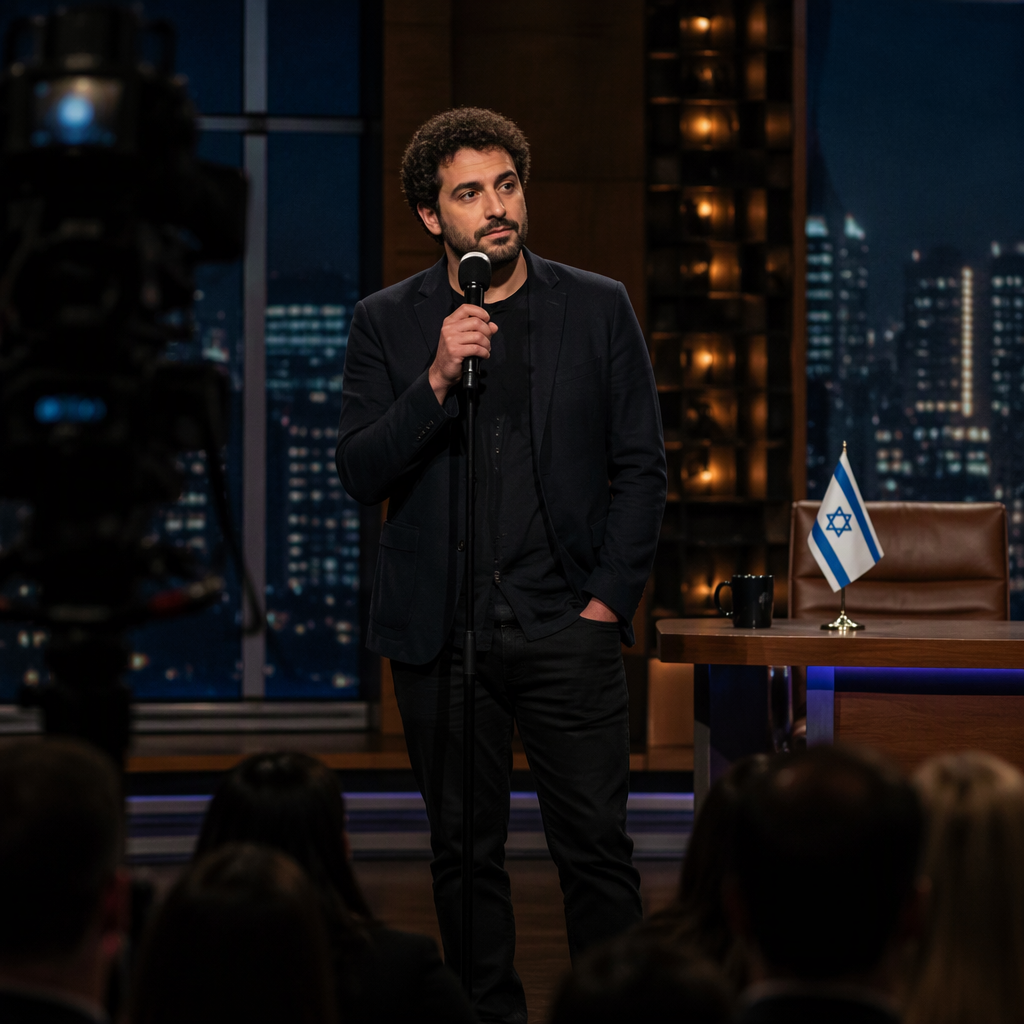

NBC Late-Night Comedian Faces Backlash Over Jewish State Punchline
An NBC late-night comedian has ignited widespread controversy and drawing sharp criticism from advocacy groups and public officials following a joke targeting Israel’s vaccination campaign. The controversial Jewish state punchline, delivered during a broadcast of Saturday Night Live‘s “Weekend Update,” quickly triggered accusations of promoting antisemitic tropes and spreading factual inaccuracies.
During the segment, co-anchor Michael Che addressed international news regarding the global rollout of the COVID-19 vaccine. Referencing Israel’s rapid inoculation efforts, Che delivered the joke: “Israel is reporting that they’ve vaccinated half of their population. I’m going to guess it’s the Jewish half.” The remark was met with an immediate response across social media platforms, followed by formal rebukes from prominent civil rights and Jewish advocacy organizations.
Also read: Rolling Stone Faces Backlash Over List of the 200 Greatest 21st Century Rock Songs
Outrage Follows Controversial Jewish State Punchline
The broadcast swiftly drew formal condemnations from leading organizations monitoring antisemitism. Critics argued that the joke leaned into harmful stereotypes regarding Jewish exclusivity and malice, while completely ignoring the facts on the ground.
The American Jewish Committee (AJC) issued a strongly worded statement denouncing the segment and initiated an online petition demanding a formal retraction and apology from NBC. The AJC pointed out that Israel’s vaccination drive applied equally to all citizens of the country, regardless of religious or ethnic background.
“Saturday Night Live’s ‘joke’ isn’t just untrue—it’s dangerous, a modern twist on a classic antisemitic trope that has inspired the mass murder of Jews throughout the centuries,” the AJC said in a public statement. The organization stressed that Israel’s Arab citizens, who make up roughly 20 percent of the population, were included alongside Jewish citizens in the national healthcare system and vaccination priority groups.
Jonathan Greenblatt, CEO of the Anti-Defamation League (ADL), also voiced concern over the joke’s potential impact. Greenblatt noted that while satire often pushes boundaries, late-night comedy platforms carry a responsibility not to amplify antisemitic tropes under the guise of humor, particularly during times of rising antisemitic incidents nationwide.
Diplomatic and Political Condemnations
The controversy extended into diplomatic channels. Gilad Erdan, who served as Israel’s Ambassador to the United States and the United Nations at the time, publicly criticized the network and the show’s writers for airing what he characterized as dangerous misinformation.
“I’m a big fan of humor, but since when is anti-Semitism funny?” Erdan stated on social media. He emphasized that Israel’s Ministry of Health conducted widespread outreach campaigns in Arabic and deployed mobile vaccination units to Arab towns and Bedouin communities to ensure equitable access across the entire populace.
Several media observers and lawmakers also weighed in, arguing that the script failed basic fact-checking standards that should apply even to entertainment-driven news satire programs.
Context Surrounding the Punchline and Middle East Debate
Defenders of the segment and some political commentators argued that late-night satire frequently targets foreign governments and pointed to broader international discussions surrounding vaccine access. Human rights organizations had previously debated the legal and humanitarian responsibilities regarding Palestinian populations living in the West Bank and the Gaza Strip.
Under the Oslo Accords, the Palestinian Authority maintains responsibility for healthcare in areas under its control, although international bodies noted stark discrepancies in vaccine availability between Israeli citizens and Palestinians living outside Israel’s sovereign borders.
However, media analysts observed that the formulation of the joke specifically framed the divide along religious lines rather than citizenship or territorial jurisdiction, creating the false impression that non-Jewish Israeli citizens were systematically excluded from receiving healthcare.
What Happens Next
Neither NBC executives nor Michael Che issued an immediate on-air apology, a standard practice for the sketch comedy show, which historically avoids issuing formal apologies for contentious “Weekend Update” jokes. Network representatives remained tight-lipped as advocacy groups continued to demand meetings with network leadership.
The debate has reignited broader industry conversations regarding standards and practices in late-night television writing rooms. Media watchdog groups continue to urge broadcast networks to incorporate greater cultural sensitivity and factual oversight when scripting political humor.
As discussions around public discourse and satire evolve, the scrutiny surrounding the Jewish state punchline highlights the increasingly fine line between sharp-edged political humor and rhetoric that crosses into prejudice.