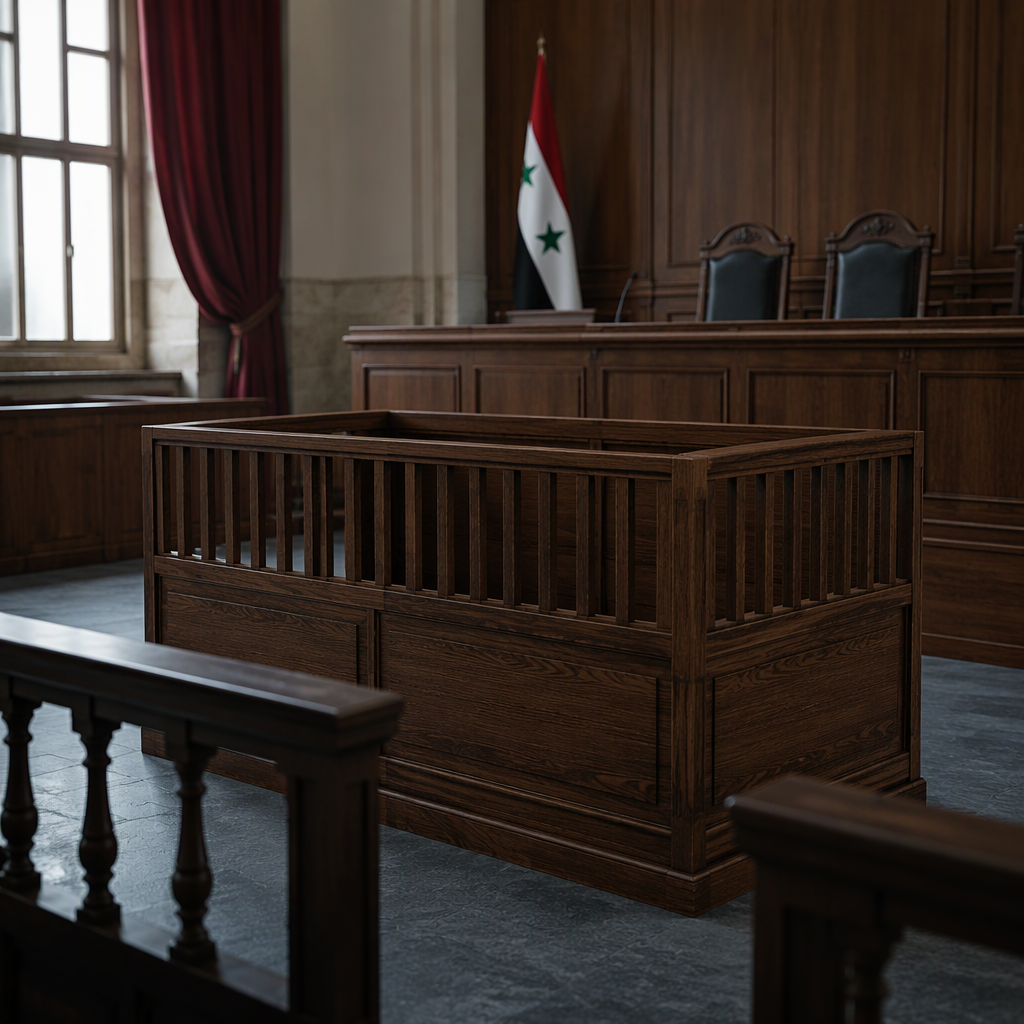

A judicial panel in Damascus has ruled that former Syrian leader Bashar al-Assad faces capital punishment, confirming that Assad sentenced to death in absentia following formal proceedings on charges of high treason, war crimes, and crimes against humanity. The ruling marks a dramatic legal development in post-Assad Syria as transitional authorities move to address decades of state-sponsored atrocities.
The landmark verdict follows the collapse of Assad’s regime in late 2024, when insurgent factions captured Damascus, ending more than five decades of rule by the Assad family. Assad fled to Russia, where he was granted political asylum by Moscow. Because Assad remains outside the country’s jurisdiction, the tribunal conducted the trial without his presence in the courtroom.
Also read: Former Colombian President Accused of Exploiting Dozens of Women for Parties
Legal Grounds: Assad Sentenced to Death in Absentia
The court reviewed extensive documentation detailing systematic human rights abuses committed during the 13-year civil war. Key evidence submitted to prosecutors included records of chemical weapons attacks, the industrial-scale torture of political detainees in military prisons like Saydnaya, and deliberate bombardments of civilian infrastructure across major cities such as Aleppo, Homs, and Idlib.
Chief judges stated that the former president bore direct command responsibility for state apparatuses that carried out indiscriminate attacks against Syrian civilians. In addition to the death penalty, the ruling orders the confiscation of Assad’s domestic assets and issues an active red notice request through international law enforcement agencies.
International Reactions and Extradition Hurdles
The sentence has generated widespread domestic and international reaction. Human rights organizations and Syrian civil society groups welcomed the judgment as a vital step toward long-delayed accountability. Many survivor networks noted that while symbolic due to Assad’s absence, the verdict formally establishes state-level criminal guilt for the regime’s atrocities.
However, practical enforcement faces formidable diplomatic barriers. The Russian government has consistently sheltered Assad and shows no intention of extraditing the former dictator to Damascus or to an international tribunal. International legal scholars point out that judgments issued in absentia often face diplomatic hurdles in foreign jurisdictions, particularly in non-extradition states.
What Happens Next
Syria’s interim judicial authorities have indicated that trials targeting senior officials from the former military intelligence, air force intelligence, and executive branch will proceed in subsequent phases. Legal representatives in Damascus are also coordinating with international judicial bodies, including European national courts exercising universal jurisdiction, to share evidence and pursue cross-border asset recovery.
While the prospect of immediate physical execution remains unlikely so long as Russia refuses extradition, the reality of Assad sentenced to death in absentia closes the door on any political rehabilitation for the former president, cementing his status as an internationally wanted fugitive.