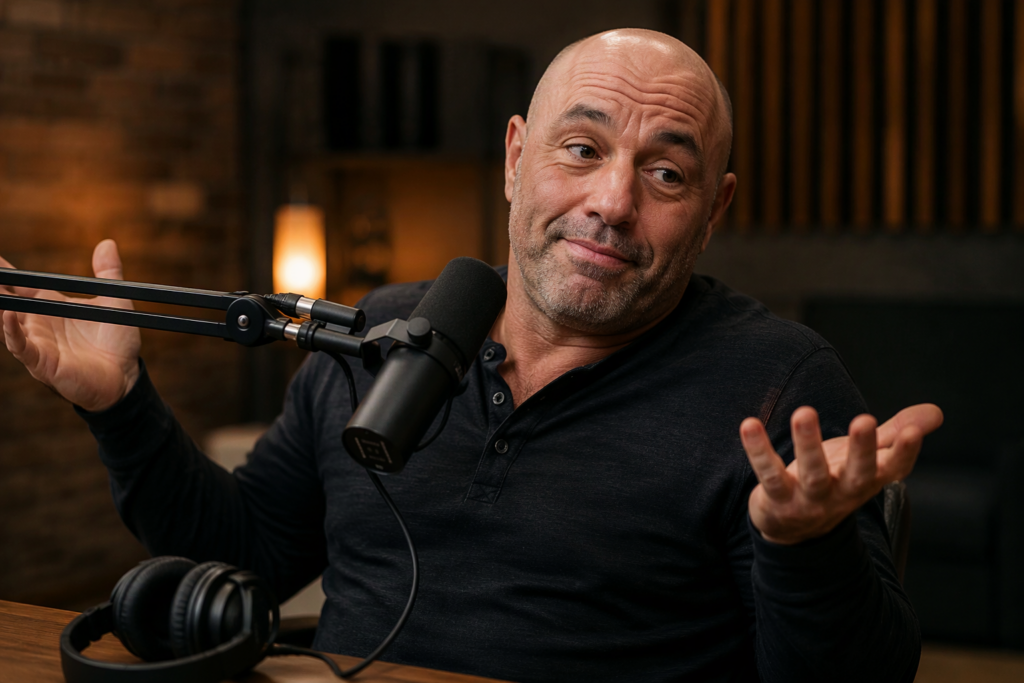

Joe Rogan does not want a seat in the West Wing, and he wants everyone to stop pretending he belongs in one. Dismissing suggestions that online hosts take over political reporting, he shut down the idea of Joe Rogan press conferences at the White House by bluntly reminding his audience of what he actually does for a living.
“We’re not press people,” Rogan said. “We talk s—.”
Also read: Nvidia Chip Leak Sparks Feud in Trump White House
The blunt rejection draws a sharp boundary between political commentary and actual reporting after months of politicians flocking to studio microphones. While Washington power players increasingly treat internet broadcasters like the new gatekeepers of American politics, Rogan argued that handing broadcast creators credentials to question the president fundamentally misunderstands their job.
Why Joe Rogan press conferences will never happen
The conversation unfolded during an episode featuring comedians Shane Gillis, Mark Normand, and Ari Shaffir. The group began dissecting recent media appearances by President Donald Trump, noting how unruly and disorganized the sessions look on camera.
Rogan made it clear that he will not trade his studio desk for the James S. Brady Press Briefing Room. He insisted that podcasters have no place sitting among correspondents to quiz administration officials like former White House press secretary Karoline Leavitt.
“We’re not going to the f—ing press conferences and sitting in the front row and asking questions to Karoline Leavitt. We’re not going to go to the press conferences. We’re not press people.”
Rogan went further, calling out the broader cultural habit of treating unvetted entertainers as authority figures. The fact that political circles now hang on every word from comedy studios strikes him as a broader cultural failing.
“It’s a sickness of our society that people take our opinions so importantly that it’s so significant,” Rogan said. “It should not be. They do though, unfortunately. And it works, unfortunately.”
A chaotic gaggle is just a bad podcast
Much of Rogan’s frustration stemmed from watching the disorderly exchanges during Trump’s recent press gaggles. In those scrums, reporters frequently shout over one another to get the president’s attention, creating an overlapping mess of competing questions.
“There is a problem at these things,” Rogan said. “Like, say if you have a question and you’re talking to him. Someone else would just talk louder right next to you with a totally different question. It is f—ing annoying. And they don’t care. It’s a bad podcast!”
To Rogan, basic conversational manners would fix the circus atmosphere that routinely dominates televised presidential briefings. He argued that basic broadcast discipline would produce far better answers for the public.
“If you hear a guy with a good question, let him go,” he said. “Let him cook. Let him ask his f—ing question. And if you have a question later, raise your f—ing hand. And when he comes to you, ask your question. But if you’re just yelling over the other guy’s question, a louder, different question. That s—‘s annoying.”
The push from David Sacks and the White House
The debate over putting online personalities into the briefing room gained traction after comments from David Sacks, who serves as chairman of the President’s Council of Advisors on Science and Technology. Sacks argued that the administration was alienating podcasters with its policy direction and proposed giving them front-row access at official press events.
Rogan rejected that suggestion outright. Giving online creators front-row spots at formal briefings would displace the beat reporters who do the daily work of holding officials accountable.
“Like, hey, how about no?” Rogan said. “How about real journalists? How about not have us do that? Also, we’re not going!”
The idea of official Joe Rogan press conferences may sound appealing to campaign strategists looking for friendly formats, but Rogan reiterated that his peers lack the background to replace professional correspondents. Former late-night host Jay Leno recently called Rogan “the new Johnny Carson,” yet Rogan continues to resist being treated as an institution.
Karoline Leavitt and the new media seat
The White House has already taken steps to invite non-traditional voices into the briefing room. During her tenure, Karoline Leavitt established a permanent presence for digital creators by creating a designated new media seat right near the podium.
That seat brought several new groups into daily briefings:
- Independent bloggers covering niche policy topics
- Social media influencers with large direct followings
- Digital commentary hosts bypassing traditional television networks
The setup sits just steps from where officials take questions, giving internet figures direct access to press secretaries. Trump even brought UFC CEO Dana White to take questions at the podium during a White House briefing, underscoring how blurred the line between sports, entertainment, and governance has become.
Online media undoubtedly shaped the 2024 race, which many analysts dubbed the “podcast election” after Trump appeared on Rogan’s show and later received his endorsement. Rogan made clear that sitting down for casual, three-hour conversations does not mean podcasters should take over standard presidential questioning. For now, the administration continues to manage its rotating front-row seat for digital creators, while Rogan stays firmly behind his studio microphone in Texas.
Source: Fox News