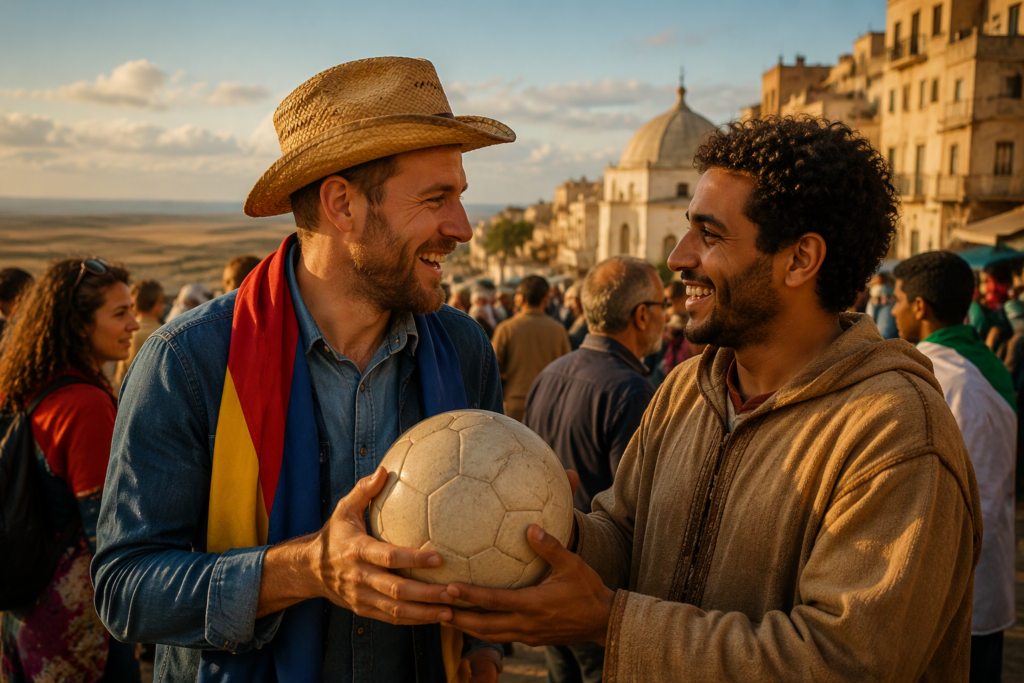
Tommee Sherwood never expected to find himself on a boat drifting across the Bay of Algiers, listening to a local disc jockey spin vintage Kansas City jazz records. Yet that improbable musical encounter is exactly what cemented a deep Kansas Algeria connection, months after a soccer tournament ended thousands of miles away.
The 70-year-old retired university custodian from Lawrence, Kansas, was one of 38 American visitors flown to North Africa from November 9 to 15. Algerian President Abdelmadjid Tebboune covered every cent of the trip as a gesture of gratitude. Five months earlier, the town of Lawrence had served as the official base camp for Algeria’s national team during the World Cup, welcoming players and supporters with open arms.
Also read: Gérard Depardieu Investigation Opens Over Film Set Rape Claim
The cross-continental bond shows how sports diplomacy can shatter stereotypes and spark genuine community partnerships. For people living in both regions, the aftermath has led to city partnerships, mutual aid during natural disasters, and friendships that defy borders.
How the Kansas Algeria connection began in Lawrence
During the tournament, storefronts along Massachusetts Street in downtown Lawrence displayed Algerian flags. The city set up giant outdoor screens to broadcast every match played by both Algeria and the United States. Before daily practice sessions, the University of Kansas band even serenaded the Algerian squad by playing their national anthem.
Tough travel restrictions kept most fans from leaving North Africa, because Algeria was among 50 nations facing a strict $10,000 visa bond requirement. Instead, members of the Algerian diaspora across the United States stepped up. Up to 50,000 Algerians live in America, and thousands traveled directly to Kansas to rally behind their squad.
Saajida Andalsi, a 24-year-old whose mother has lived in Kansas for 36 years, acted as an informal community bridge during the tournament. She had not visited Algeria in 15 years before joining the November delegation.
Her mother described the local atmosphere simply: “I didn’t go to Algeria. Algeria came to me.” For a few weeks in the summer, Lawrence felt like a sister city nestled on the Mediterranean coast.
Trading records and anthems in the Casbah of Algiers
When the Lawrence delegation arrived in Algeria, their hosts returned the hospitality in full. On Sherwood’s first day in Algiers, the boat DJ noticed the American visitor and switched from local tunes to classic Kansas City jazz. Sherwood gave him a small gift and snapped a photo.
The following day, the same musician approached Sherwood at another gathering and handed him three rare vintage vinyl 45s. One record featured a historic anti-colonial anthem titled “We Stay, You Go,” aimed at French occupiers.
“These records, if they were made of gold, they wouldn’t be any more valuable to me.”
The musical exchange reached its peak inside the historic Casbah of Algiers. Ruth DuWitt, director of community engagement at the Explore Lawrence tourism bureau, watched the University of Kansas band share a stage with local Algerian performers. An Algerian conductor led the Kansas students through “The Star-Spangled Banner,” while the Kansas band director conducted the Algerian national anthem.
Spectators flooded into the center of the square to dance together as the combined ensembles played. DuWitt recalled getting choked up standing in a place known globally for revolution and freedom. The gathering proved that people could connect through shared humanity and song, reaching far beyond the football pitch.
Historic ties and practical support
The surprising Kansas Algeria connection actually stretches back decades into civil rights history. Algeria granted refuge to prominent Black Panther Party members during the 1970s, including Pete O’Neal, the former chairman of the Kansas City chapter. Sherwood had long known about that chapter of history, but the modern exchange brought those links to life for an entire town.
Now, those bonds are moving into formal agreements and everyday neighborliness. President Tebboune approved several formal steps to keep the momentum going:
- Authorizing a municipal twinning agreement between Kansas City and the Algerian coastal town of Tipaza.
- Funding full travel expenses for up to 100 American visitors to tour historical sites across Algeria.
- Promoting cultural, educational, and athletic exchanges between Midwest institutions and North African partners.
Madjid Khettar, an Algerian resident who has lived in Kansas for 13 years, has felt the shift in his day-to-day interactions. When he wears his national team jersey to local soccer pitches, neighbors stop him just to talk about the World Cup. When destructive wildfires tore through parts of Algeria in August, Kansas residents asked Khettar how to help and donated to online relief funds.
Building relationships that outlast the tournament
Former diplomat Elizabeth Moore Aubin joined the Lawrence group on their journey across Algiers. Having served as the United States ambassador to Algeria until January 2026, she traveled to more than 50 of the country’s 58 provinces during her tenure. She observed that ordinary Americans and Algerians have far more in common than either group suspects.
Aubin emphasized that while grassroots enthusiasm provides the spark, institutions must step forward to fund ongoing contact. Without academic programs, civic partnerships, and trade initiatives, sports diplomacy risks fading away once the tournament spotlight turns off.
Local participants have no intention of letting that happen. Sherwood is already organizing a return visit to Algeria next spring alongside his wife. His itinerary includes traveling to refugee camps near Tindouf in Western Sahara, where he hopes to shine a light on families facing protracted humanitarian displacement.
For now, both communities are looking ahead to spring 2027, when the first formal delegation from Tipaza is scheduled to arrive in Kansas City to sign their municipal partnership.
Source: Al Jazeera


