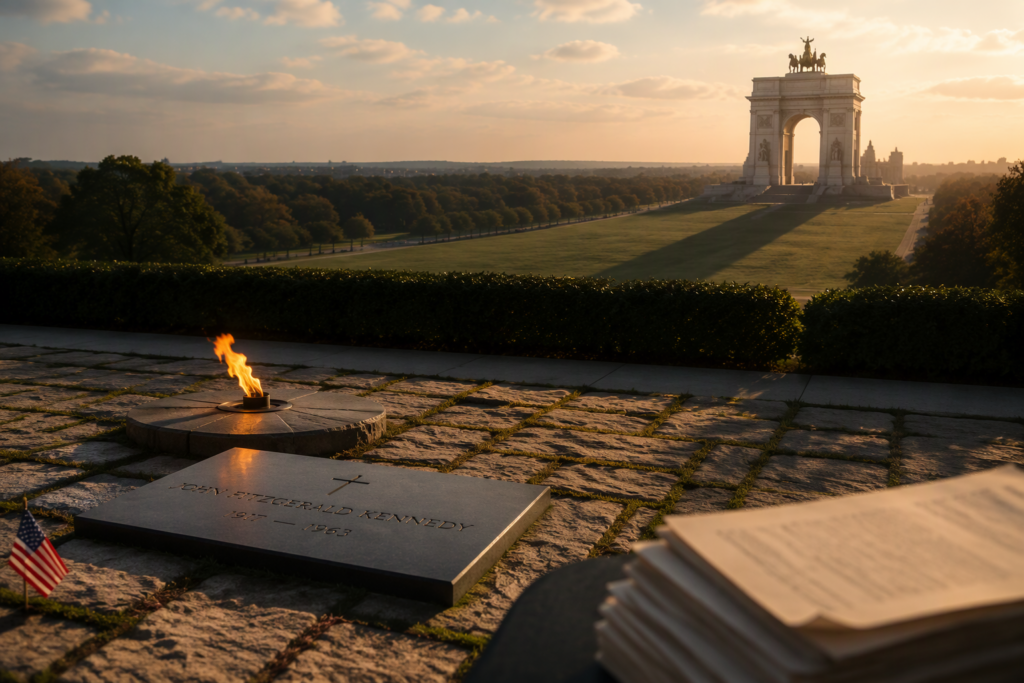

Nine members of the storied Kennedy political family have filed a lawsuit seeking to halt plans for a proposed Trump arch, contending that the massive 250-foot structure would cast an intrusive shadow over sacred gravesites, including that of former President John F. Kennedy.
Legal Battle Over the Proposed Trump Arch
The legal action represents a direct clash between two of America’s most recognizable political dynasties. According to the lawsuit brought by nine Kennedy family members, the sheer scale of the planned 250-foot arch poses a direct visual and physical intrusion upon the memorial grounds where President Kennedy is buried.
Also read: Schumer Blasts Trump Following Report on Nvidia CEO Briefing
The plaintiffs maintain that the towering monument is inappropriate for the location and would fundamentally alter the historic landscape. By casting shadows across significant burial plots, the family argues that the monument disrespects the solemn setting dedicated to honoring national leaders and fallen service members.
Concerns for JFK Gravesite and Visual Impact
John F. Kennedy’s final resting place remains one of the most visited and revered memorial locations in the nation. The burial site was intentionally designed to provide visitors with an open, contemplative atmosphere to pay their respects.
The lawsuit underscores concerns that a structure standing 250 feet tall would dominate the immediate skyline, eclipsing the natural light and open air that have defined the historic resting place for decades. Family members emphasize that protecting the visual integrity and sanctity of the gravesite is of paramount importance.
Next Steps in the Dispute
The legal challenge asks the court to intervene and block the construction of the arch as proposed. Representatives for the family maintain that preservation standards and site dignity must take precedence over new monument designs in the area.
As the legal process unfolds, the case brings renewed focus to disputes surrounding how commemorative monuments are planned near historically sensitive landmarks.
Source: BBC