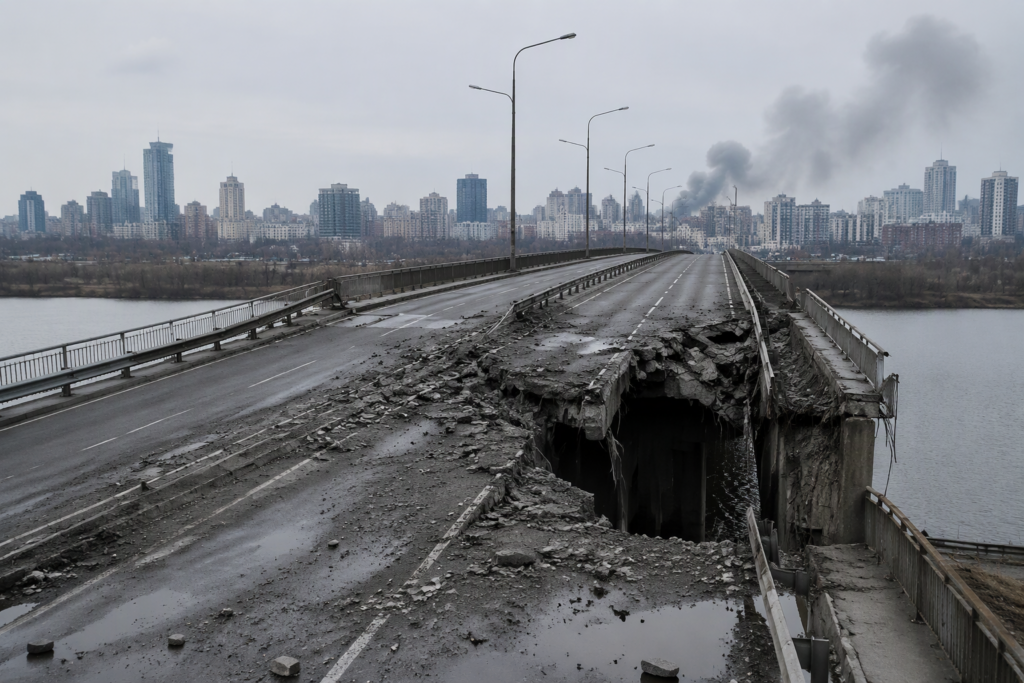
Russian strikes hit two major transit crossings in the Ukrainian capital overnight, leaving residents without essential utilities. The Kyiv bridge attack damaged key transport routes and cut access to both municipal heat and running water across several districts.
Kyiv Mayor Vitaliy Klitschko confirmed that the strikes caused severe damage to critical infrastructure systems. The disruptions hit households directly, forcing municipal teams to scramble in the early morning hours to keep essential supplies running.
Also read: Kyiv Bridges Attack: Missiles Strike Dnipro River Crossings
Aftermath of the Kyiv bridge attack
The strikes directly hit two separate crossing points that connect central Kyiv across the Dnipro river. BBC correspondent Sarah Rainsford reported from the scene at one of the damaged spans, where emergency workers surveyed fractured roadways and disrupted utility lines.
Rainsford spoke directly to local residents who woke up to blasts and suddenly went without tap water or radiator heat. For people living near the blast zones, the strikes destroyed daily routines and raised urgent questions about how fast municipal workers can patch fractured networks.
Disrupted heat and water systems
City authorities face an immediate logistical test. Mayor Vitaliy Klitschko warned that overnight strikes damaged vital municipal infrastructure, cutting off heating and water supplies in multiple residential sectors.
Repair teams deployed immediately to isolate severed water mains and reroute heating grids. Local officials have not given an exact estimate for full restoration, but work crews remained on-site through the day to shore up damaged sections of the spans.
Zelensky reveals strike on Crimea bridge
While Kyiv absorbed the strikes on its river crossings, Ukrainian forces launched their own long-planned strike against Russian transport lines. President Volodymyr Zelensky published footage showing a missile closing in on the strategic Crimea bridge.
Zelensky described the strike as an “unprecedented operation” that military planners spent weeks preparing. Moscow built the 19-kilometre road and rail crossing after it invaded and illegally annexed Ukraine’s Crimean peninsula in 2014, with Vladimir Putin personally driving the opening convoy across it in 2018.
The dual strikes underline how transport bottlenecks have become central targets for both militaries. Watch for updates from Kyiv municipal authorities on whether water pressure and district heating return to affected neighbourhoods before nightfall.
Source: BBC


