
Sommarøy: The Norwegian Island That Wanted to Abolish Time
In the early summer of 2019, global headlines focused on a tiny Arctic community when reports emerged of a Norwegian island that wanted to abolish time. Sommarøy, an idyllic fishing hamlet north of the Arctic Circle, captivated millions worldwide with a petition declaring itself the planet’s first “time-free zone.” The premise was simple yet radical: during the endless daylight of the polar summer, traditional clocks would be discarded, allowing residents to work, sleep, and socialize whenever they pleased.
The story struck a deep chord in a modern world exhausted by rigid schedules and screen-driven routines. However, the viral narrative soon took an unexpected turn, revealing a complex intersection of Arctic culture, modern destination marketing, and global media appetite.
Also read: China Encroaches Close to US Land as Coast Guard Ship Breakdown Exposes Arctic Defense Gaps
Living Under the Arctic Midnight Sun
Located in Troms county, Sommarøy sits approximately 200 miles north of the Arctic Circle. Because of its extreme northern latitude, the island experiences the polar night in winter and the midnight sun in summer. Between May 18 and July 26—a stretch of nearly 70 days—the sun never dips below the horizon.
For centuries, the island’s 300 residents have adapted their daily lives around nature rather than fixed hours. In late spring and summer, locals frequently complete domestic chores, fish, or swim in the Arctic waters at two in the morning. When community representative Kjell Ove Hveding announced a campaign to officially declare Sommarøy time-free, the concept appeared entirely genuine to international observers.
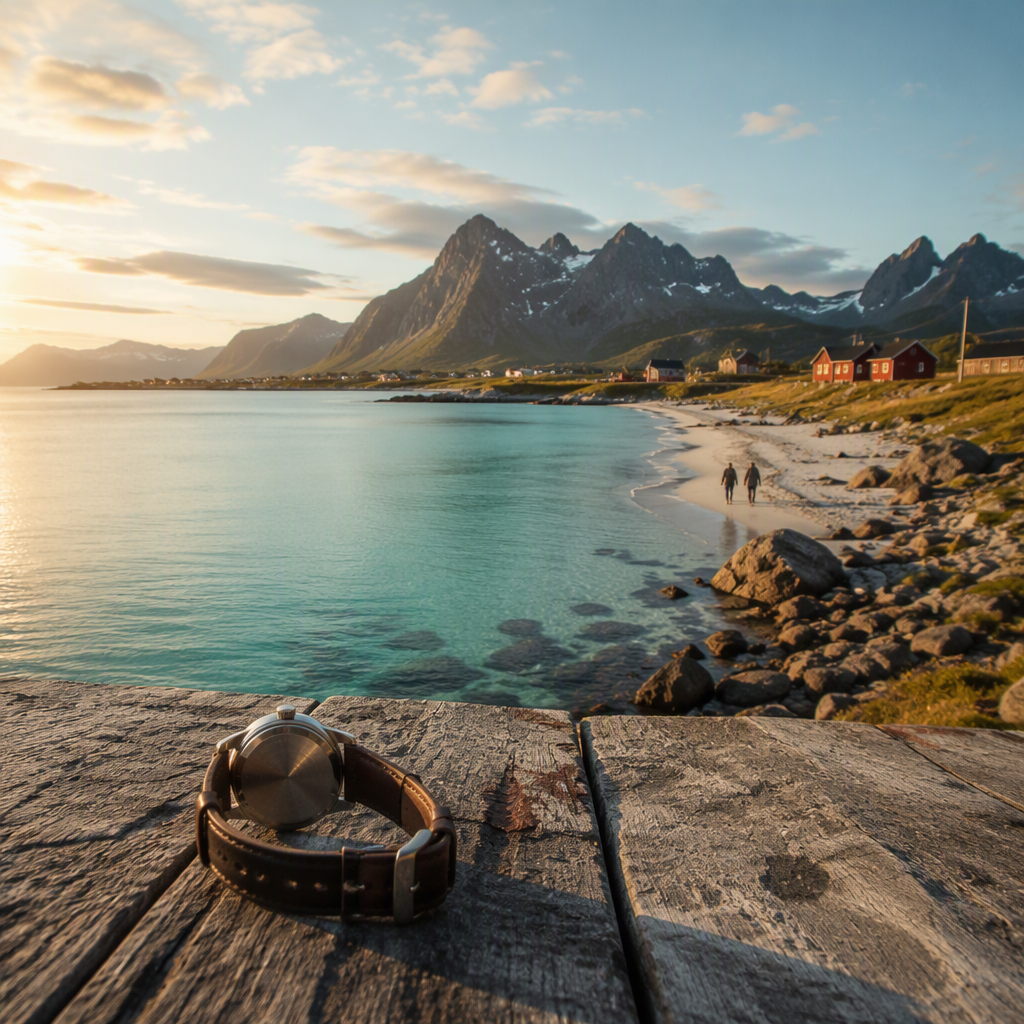
Hveding argued that conventional operating hours, rigid office schedules, and school bells had little relevance when darkness never fell. Symbolic gestures, such as visitors strapping wristwatches to the bridge connecting Sommarøy to the mainland, visually reinforced the island’s rejection of linear time.
How the Story of the Norwegian Island That Wanted to Abolish Time Went Viral
Within days of the June 2019 announcement, international news agencies, major broadcasters, and digital outlets across dozens of countries picked up the story. The vision of a tranquil community liberating itself from clock-watching resonated globally.
Journalists reported on town hall meetings where residents supposedly signed the petition. The initiative demanded that local businesses, schools, and workplaces operate with absolute flexibility. Travelers began booking trips to the remote outpost, eager to experience life outside the constraints of Greenwich Mean Time.
The PR Reality Behind the Campaign
The global illusion, however, was brief. In late June 2019, investigative reporting from Norwegian media revealed that the petition was not an organic grassroots initiative, but a coordinated marketing campaign orchestrated by Innovation Norway—the state-owned tourism board—in partnership with a communications agency.
Innovation Norway acknowledged that while the campaign reflected the authentic summer lifestyle of Northern Norway, the push to legally alter time laws was a strategic stunt designed to boost regional tourism. The revelation triggered swift criticism from international journalists, media watchdogs, and domestic newsrooms, who argued that official government channels had distributed misleading information as factual news.
The controversy prompted public apologies from marketing officials, who conceded that the campaign had blurred the line between cultural storytelling and institutional deception.
What the Campaign Revealed About Modern Society
Despite the backlash over marketing tactics, the narrative endured because it addressed a universal human desire. The proposal struck at the core of contemporary burnout, offering a glimpse into an alternative lifestyle guided by daylight and biological rhythms rather than ticking clocks.
Local residents noted that while the petition was not legally binding, the behavior it depicted was entirely accurate. Generations of Arctic fishers and coastal families have lived flexibly under 24 hours of sunlight, prioritizing tide tables and weather over standard business hours.
Conclusion
The saga of the Norwegian island that wanted to abolish time remains one of the most memorable viral episodes of recent years. While the official petition was revealed as a clever public relations venture, Sommarøy’s underlying message continues to fascinate travelers. In a society ruled by calendars and deadlines, the small Arctic island proved that the dream of escaping the clock is a universal aspiration.