A spark lit on New Year’s Day smoldered unseen inside underground root systems for almost a week before exploding into the deadly Palisades fire, leaving 12 people dead and leveling thousands of homes across Southern California.
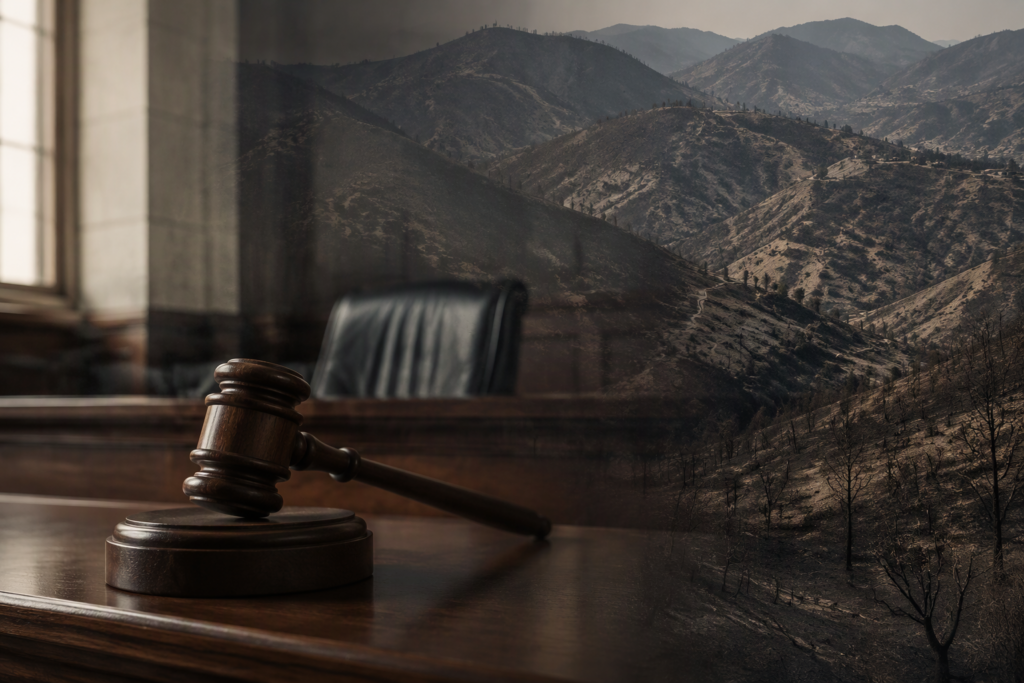
On Thursday, a federal jury in Los Angeles convicted 30-year-old Jonathan Rinderknecht on two arson charges for igniting the disaster. The verdict closes a painful legal chapter for victims who watched entire coastal neighborhoods vanish in flames.
Also read: Foie Gras Farm Fire Destroys Barns in Upstate New York
The trial decision delivers accountability to families who lost relatives and the residents who saw more than 6,800 structures burned to the ground across Pacific Palisades and Malibu. For survivors still living in temporary shelters or fighting insurance firms, the finding confirms that human malice sparked their ruin.
How the Palisades fire smoldered and spread
Jurors found that Rinderknecht started an initial brush fire on January 1 of last year. That flame appeared minor on the surface, but it burned underground out of sight.
Six days later, strong winds and parched brush whipped the hidden embers back to life. The flare-up turned into an uncontrollable inferno that raced toward coastal communities.
The two federal arson charges reflected that timeline. One charge cited the original ignition on New Year’s Day, while the second covered the catastrophic destruction unleashed when the blaze reignited.
The evidence that convinced the jury
Federal prosecutors painted Rinderknecht, a local resident and former ride-share delivery driver, as an isolated man seeking retribution. They told the court he acted out of bitter resentment on a holiday when he had nowhere to go.
Assistant US attorneys argued that Rinderknecht harbored a deep hostility toward wealthy residents, believing they were ruining society. They said he intentionally targeted the affluent enclave to lash out.
To tie him directly to the scene, the prosecution relied on a tight digital footprint:
- Geolocation logs extracted directly from Rinderknecht’s iPhone
- Security camera footage tracking the movements of his car
- Testimony from passengers who rode with him around the holiday
Defence attorney Steve Haney fought the charges by insisting the government lacked direct physical proof tying his client to the initial spark. Haney maintained that prosecutors relied on circumstantial timing rather than hard evidence, though defence lawyers stated after the trial that they respected the jury’s verdict.
A community still picking up the pieces
The guilty verdict follows a mistrial declared five months ago when an earlier panel deadlocked. This second trial resolved the legal blame, but public anger remains raw throughout Los Angeles.
Los Angeles Mayor Karen Bass acknowledged the lasting trauma across the burn zones, where many neighborhoods look like vacant lots.
“So many are still struggling to rebuild. For those still displaced, the devastation remains a daily reality.”
The blaze formed part of a terrible month across the region. Back-to-back blazes killed 31 people and destroyed roughly 16,000 structures countywide, stretching emergency responders past their breaking point.
Bill Essayli, head of the US Attorney’s Office for the Central District of California, noted that the verdict offers some closure after months of legal delays. Rinderknecht faces up to 20 years in federal prison on each count when District Judge Dolly Gee convenes his sentencing hearing on March 17.
Source: BBC