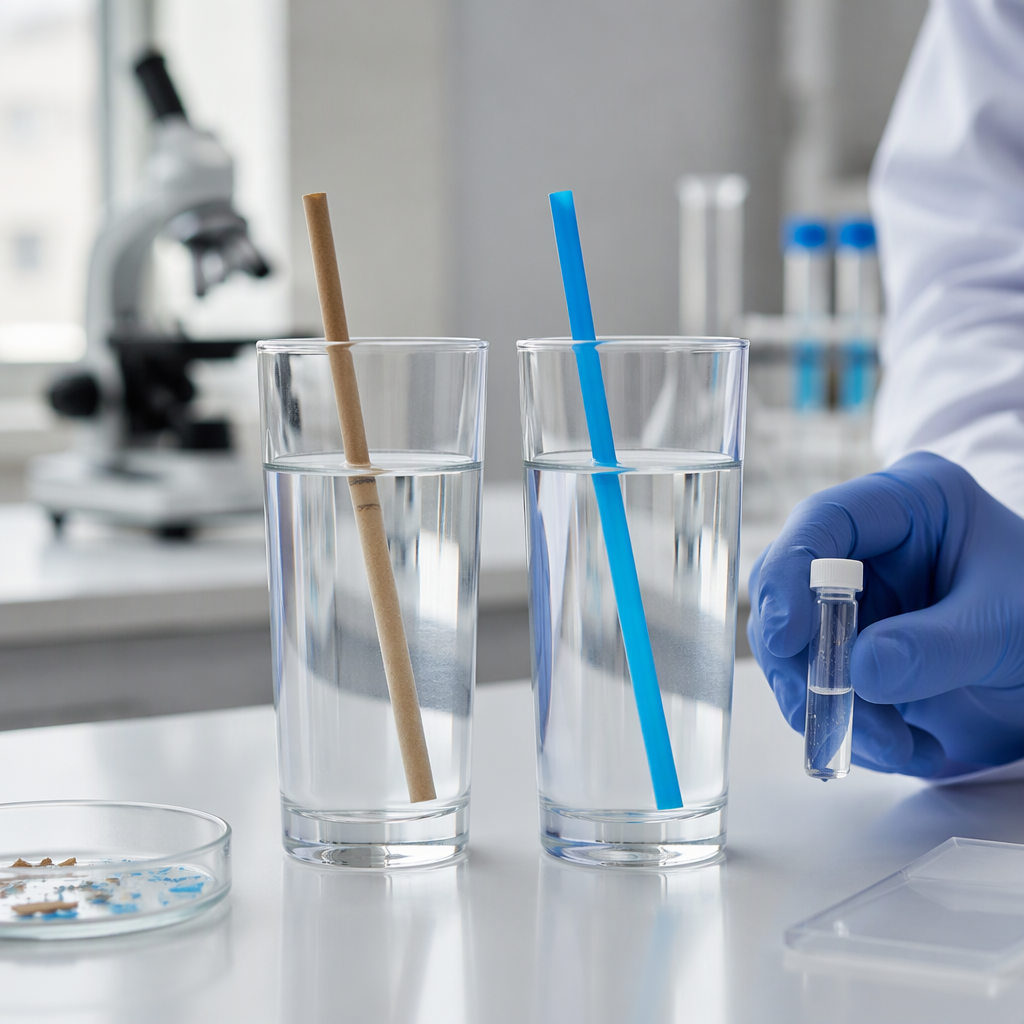

Paper Straws May Do More Harm Than Good, Study Warns Over Toxic Chemicals
Widely promoted as an eco-friendly replacement for single-use plastics, commercial paper straws may pose unexpected risks to human health and the environment due to persistent synthetic compounds, according to a landmark European study.
Researchers from the University of Antwerp tested dozens of drinking straw brands across retail stores and fast-food chains. Their findings, published in the peer-reviewed journal Food Additives & Contaminants, revealed that the vast majority of tested paper and bamboo straws contained measurable concentrations of per- and polyfluoroalkyl substances, commonly known as PFAS or “forever chemicals.”
Also read: Microsoft AI Beats Doctors in Simulated Diagnosis Test, Study Shows
High Prevalence of ‘Forever Chemicals’ in Paper Straws
The research team analyzed 39 commercial brands of drinking straws manufactured from paper, bamboo, glass, stainless steel, and conventional plastic. Laboratory evaluations screened the items for 29 distinct PFAS compounds.
The results showed stark contrasts across different materials:
- Paper straws: PFAS compounds were detected in 18 out of 20 brands tested (90 percent).
- Bamboo straws: Four out of five brands tested positive (80 percent).
- Plastic straws: Three out of four brands contained detectable levels (75 percent).
- Glass straws: Two out of five brands showed traces of the compounds (40 percent).
- Stainless steel straws: Zero PFAS compounds were detected across all tested brands.
The most frequently identified compound was perfluorooctanoic acid (PFOA), a toxic chemical banned globally under the Stockholm Convention due to its persistence and associated health risks.
Why Are Toxic Compounds Present in Plant-Based Straws?
Manufacturers frequently use PFAS to coat paper packaging, food containers, and disposable cutlery to make raw fibers water-resistant and grease-repellent. Without protective coatings, paper and cardboard products rapidly break down and soften upon contact with liquids.
However, researchers noted that contamination could also originate earlier in the manufacturing supply chain. Raw plant materials may absorb PFAS from contaminated agricultural soil or processing water, unintentionally transferring residues into final consumer goods.
Because PFAS do not degrade naturally over time, discarded paper alternatives can leach these compounds back into municipal landfill runoff and local ecosystems, contradicting their intended environmental benefits.
Potential Health Implications for Consumers
PFAS chemicals bioaccumulate in human tissue and take years to clear from the body. Scientific and medical institutions have linked prolonged exposure to several adverse health conditions, including:
- Elevated cholesterol levels and liver stress
- Thyroid dysfunction and hormonal disruption
- Weakened vaccine responses in children
- Increased risks of kidney and testicular cancers
- Reduced fetal growth and lower birth weights
The researchers emphasized that the concentration of PFAS found in individual straws remains low and does not pose an acute poisoning risk from occasional use. However, repeated exposure through daily beverages contributes to the cumulative chemical burden in the body.
What Happens Next
Public health advocates and consumer safety organizations are urging regulatory bodies in Europe and North America to implement stricter chemical thresholds for food-contact paper products. Environmental watchdogs are also calling for mandatory testing to verify sustainability claims before items are labeled compostable or green.
For consumers seeking safer ways to reduce single-use plastic waste, public health experts recommend switching to reusable stainless steel or non-coated glass straws. The research demonstrates that while replacing single-use plastics remains an urgent ecological priority, conventional paper straws may create new environmental and health challenges if chemical treatments remain unregulated.




1 Comment
Comments are closed.