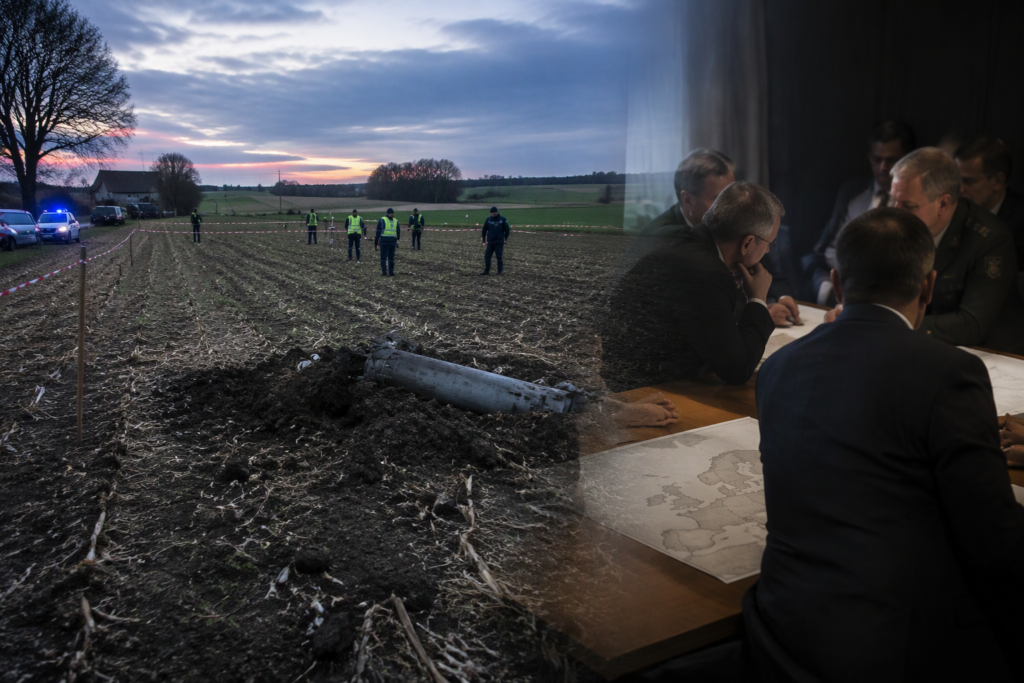
Two Russian missiles and a jet-powered drone slammed into southeastern Polish territory overnight, exploding barely 22 miles from an active training ground where troops from 11 European nations were staging military exercises. The crash sites in Nowy Lipowiec, Rudnik nad Sanem and Molodycz immediately forced Western allies to weigh whether Moscow was probing defenses or making an intentional threat against the alliance.
The incident on Polish soil comes at a volatile moment for European security, as Washington pushes for peace negotiations while the Kremlin ramps up massive strikes across Ukraine. Polish Prime Minister Donald Tusk declared that the country was facing an “intentional provocation” timed specifically to disrupt the ongoing drills. For everyday Europeans and alliance members, the breach raises urgent questions about collective defense and how far Moscow can push border boundaries before triggering a formal retaliation.
Also read: Poland Airspace Violation: Russian Objects Cross Border Overnight
How Russian missiles hit Poland during an air barrage
The strikes occurred on November 20 during one of the most violent bombardments of the nearly five-year war. Ukrainian President Volodymyr Zelenskyy reported that Russia launched more than 400 drones alongside at least 110 missiles, including 27 ballistic weapons carrying cluster warheads. The assault killed at least eight civilians across Ukraine and injured dozens more.
As Ukraine’s air defense fought off the barrage, Polish surveillance tracked multiple objects crossing the border. A Russian Kh-101 cruise missile crashed roughly 31 miles inside Poland, while an unmanned jet drone hit about 20 miles from the frontier. Polish Defence Minister Wladyslaw Kosiniak-Kamysz confirmed the locations in Warsaw, noting that no direct injuries or ground damage were recorded.
Why Moscow is testing NATO defenses along the border
Security analysts view the strike not as a stray accident, but as a deliberate probe of Western red lines. Professor Scott Lucas of the Clinton Institute at University College Dublin explained that Moscow is systematically finding out how far it can push the alliance.
“You lob a couple of missiles across and a drone near where 11 countries are holding exercises.”
Harry Nedelcu, senior director for geopolitics at Rasmussen Global, noted that Russian incursions have repeatedly tested border regions in Poland, Romania and non-NATO Moldova. He said Moscow aims to conduct grey-zone warfare just beneath the trigger point of open conflict, seeking to divide European unity while Washington pursues parallel diplomacy.
Why Russian missiles hit Poland without triggering Article 5
Under NATO’s founding treaty, Article 5 establishes that an armed attack on one member is an attack on all 32 nations. But activating collective defense is an explicit political consensus, not an automatic mechanism. Polish officials have not invoked the clause, nor have they activated Article 4 for formal emergency consultations.
Invoking collective defense requires evidence of a sustained, purposeful military assault on Polish territory rather than sporadic border incursions. NATO allies also want to prevent unintended military escalation while US special envoys Jared Kushner and Steve Witkoff carry out peace talks with Ukrainian and Russian officials. While French President Emmanuel Macron suggested revisiting Ukrainian alliance membership, Russian Deputy Foreign Minister Sergey Ryabkov insisted that any Western security umbrella for Kyiv remains completely unacceptable to Moscow.
Allied response and what comes next on the eastern flank
Western reactions revealed stark differences in tone. While US President Donald Trump claimed that Moscow was landing drones and missiles “by mistake,” European capitals reacted with alarm. UK Prime Minister Andy Burnham branded the airspace breach “utterly unacceptable,” and Germany described it as persistent provocation.
NATO Secretary-General Mark Rutte condemned the strike as a grave and dangerous violation of Polish sovereign airspace. Poland is now seeking enhanced air defense coverage under the existing Eastern Sentry mission, which could bring additional airborne early warning aircraft to its border. Rutte travels to Poland this weekend to inspect border defenses and hold crisis talks with Polish leadership in Warsaw.
Source: Al Jazeera


