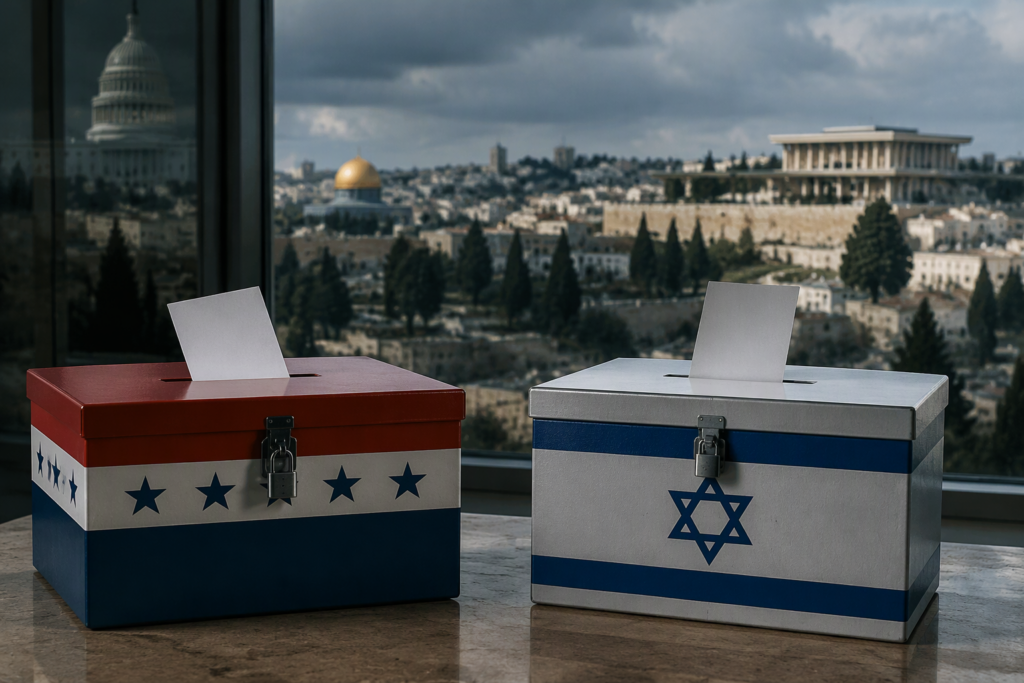

Surprise developments in the United States congressional midterms are sending shockwaves across the Middle East, fundamentally altering campaign calculations in the intense Israel race for PM. As political leaders in Jerusalem assess the shifting balance of power in Washington, candidates across the spectrum are recalibrating their foreign policy arguments and trading blame over who can best manage ties with the country’s most critical ally.
Shifting Dynamics in the Israel Race for PM
The relationship between Washington and Jerusalem has long served as a defining campaign issue in Israeli national politics. When electoral upsets alter the composition of the US Congress, candidates often seize on the results to question their rivals’ diplomatic judgment. The latest US midterm shock has quickly triggered a political blame game, with contenders accusing one another of misreading American political trends and mismanaging vital bilateral ties.
Also read: Midterm Results: Voters React as Democrats See Key Election Outcomes
For incumbent leaders and aspiring prime ministers alike, demonstrating an ability to work seamlessly with both the White House and Capitol Hill is an essential test of leadership. An unexpected balance of power in Washington forces contenders to present clear strategies on how they intend to navigate future aid packages, defense cooperation, and broader regional diplomacy.
The Repercussions of Washington’s Power Shift
Unexpected electoral results in the United States often complicate foreign policy expectations for foreign leaders. In Israel, political strategists closely scrutinize congressional shifts to anticipate changes in legislative priorities, committee leaderships, and foreign assistance debates.
Opposing factions are leveraging the uncertainty to weaken their adversaries. Challengers argue that current governance has polarized American support, while ruling coalition figures contend that external political changes require experienced, steady hands at the helm rather than untested leadership.
Bipartisan Alliances and Diplomatic Pressure
Maintaining bipartisan support in the United States remains a strategic necessity for Israel’s defense architecture. However, domestic political rhetoric often strains this consensus. Candidates seeking the premiership are now emphasizing their unique credibility to engage both Democratic and Republican lawmakers during a period of potential friction.
Looking Ahead in the Premiership Contest
As the election season progresses, the aftermath of the American vote is likely to remain at the forefront of campaign debates. Voters are weighing not only domestic security and economic concerns, but also which leader possesses the diplomatic acumen to secure national interests amidst an evolving geopolitical landscape.
The race for the prime minister’s office will ultimately turn on which candidate successfully convinces the electorate that they can protect key international partnerships while withstanding overseas political pressures.
Source: Al Jazeera