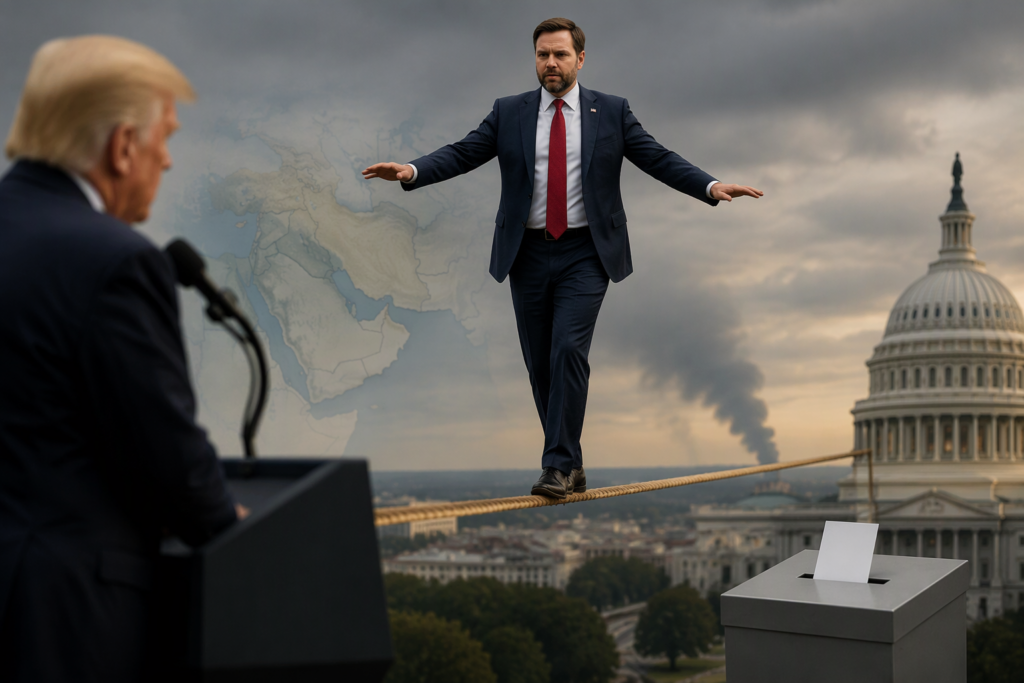

Vice President JD Vance delivered a blunt Vance election critique following a major Republican election defeat, pointing directly to the conflict involving Iran as a decisive factor in the outcome. The candid assessment underscores Vance’s challenge as he walks a political tightrope between party leadership and Donald Trump.
A Rare Break With a Sitting President
Vance’s pointed analysis marks one of the sharpest divergences between a vice president and a sitting commander-in-chief in recent memory. By attributing electoral losses to the war, Vance openly challenged the prevailing administration narrative surrounding foreign policy priorities and voter sentiment.
Also read: Trump Says War on Iran Led to Election Loss but Insists He ‘Had to Do It’
Political observers note that public disagreements of this magnitude are exceptionally rare in the executive branch, where vice presidents typically present an unwavering unified front with the administration.
The Vance Election Critique Focuses on War Repercussions
In his post-election evaluation, Vance zeroed in on the war in Iran as a principal drag on Republican candidates across the ballot. Voters increasingly signaled fatigue over foreign military entanglements, creating headwinds that candidates struggled to overcome at the ballot box.
The critique highlights growing internal party friction over international interventions. By spotlighting the conflict, Vance aligned himself with populist voters who have long expressed skepticism regarding overseas military actions.
Navigating Political Fallout Ahead
The candid assessment places Vance in a delicate position as he balances loyalty to Trump with his own political future and party responsibilities. While the remarks risk tension with administration leadership, they also position Vance as an independent voice willing to address contentious issues directly.
As Republicans evaluate the lessons from the election defeat, Vance’s remarks are poised to spark broader debate over foreign policy direction and party strategy heading into the next legislative and electoral cycles.
Source: BBC