
Trump Calls Iran Conflict a ‘Soft War,’ Insists US Holds the Cards Ahead of Midterm Elections
Former President Donald Trump calls Iran conflict a ‘soft war,’ arguing that the United States maintains superior strategic leverage over Tehran as both nations navigate heightened geopolitical friction ahead of the midterm elections. Trump asserted that Washington controls the trajectory of the standoff, downplaying the likelihood of full-scale military conflict while framing economic and diplomatic pressure as decisive tools.
Speaking on the campaign trail, Trump characterized the ongoing tensions between Washington and Tehran as an unconventional struggle rather than an imminent conventional war. He maintained that economic sanctions, diplomatic posture, and strategic deterrence give the U.S. significant room to dictate terms without entering prolonged armed hostilities.
Also read: Obama Attacks Trump While Campaigning for Democrats Ahead of Midterm Elections
Why Trump Calls Iran Conflict a ‘Soft War’
In his remarks, Trump framed the current standoff through the lens of non-kinetic confrontation. The term “soft war” traditionally refers to psychological operations, cyber activities, cultural diplomacy, and economic pressure rather than open military engagement.
Trump claimed that the U.S. retains overwhelming leverage over Tehran’s strained economy. Decades of international sanctions, domestic economic challenges, and regional isolation have left Iran vulnerable, according to his assessment.
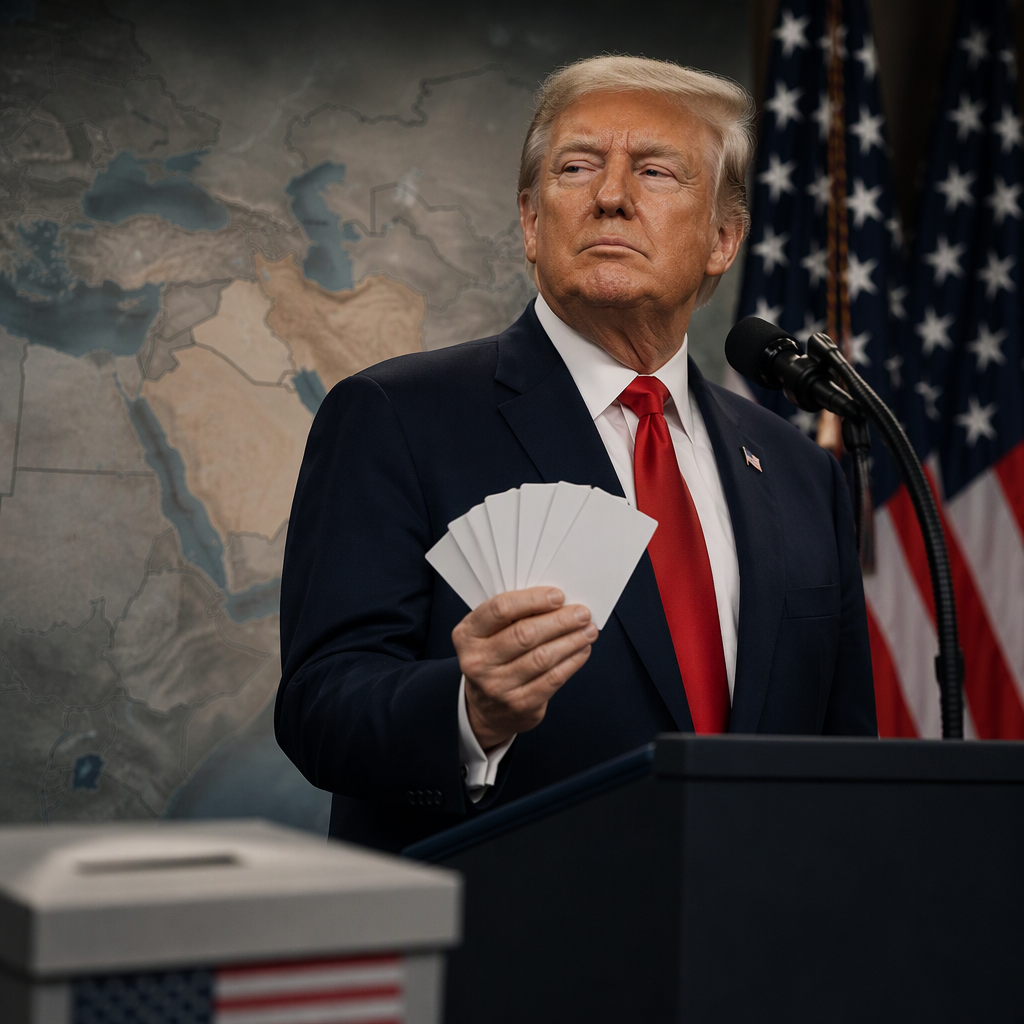
“We hold all the cards,” Trump stated, emphasizing that American financial dominance and military readiness force Tehran into a defensive posture. By designating the situation a soft war, he sought to reassure voters weary of foreign entanglements while simultaneously projecting strength on national defense.
Midterm Elections and Foreign Policy Strategy
Foreign policy frequently serves as a core messaging pillar during campaign seasons. As voters prepare for upcoming midterm elections, candidates across the political spectrum are positioning themselves on key international security issues, including Middle East stability and energy security.
Trump’s comments target domestic audiences concerned about both national security and economic volatility. By presenting the conflict as manageable through pressure rather than battlefield deployment, the rhetoric appeals to conservative voters who favor strong deterrence paired with an “America First” aversion to foreign interventions.
Democrats and national security analysts, however, often challenge this framing. Critics argue that downplaying regional friction as merely a soft war ignores volatile proxy activities, maritime harassment in the Persian Gulf, and the steady advancement of Iran’s nuclear enrichment program.
Strategic Realities: Does the US Hold the Cards?
Foreign policy analysts offer mixed assessments regarding Washington’s current leverage over Iran. While the U.S. dollar and global sanctions architecture give the American government immense coercive power, regional realities present complicated challenges.
- Nuclear Program Progress: Monitoring agencies continue to report elevated levels of uranium enrichment inside Iran, narrowing the theoretical breakout window.
- Regional Proxy Networks: Iran maintains influence across Yemen, Lebanon, Syria, and Iraq, providing Tehran with asymmetric deterrence options.
- Global Energy Markets: Any escalation in the Strait of Hormuz risks driving global oil prices higher, a development U.S. policymakers actively work to prevent before major elections.
Despite these complexities, Trump insisted that strong leadership and decisive sanctions enforcement prevent adversaries from escalating disputes into kinetic conflict.
What Happens Next
In the coming weeks, Middle East policy will remain a contentious topic in Congressional debates and campaign rallies. Lawmakers from both parties will continue scrutinizing the White House’s approach to deterrence, maritime security, and sanctions enforcement.
Meanwhile, international monitors and diplomatic envoys are watching regional developments closely. Any sudden escalation in the Gulf could quickly shift public debate from campaign trail talking points to urgent defense discussions on Capitol Hill.
Conclusion
Ultimately, as Trump calls Iran conflict a ‘soft war’ and insists Washington retains the winning hand, his rhetoric reinforces his signature foreign policy message heading into the midterm elections. Whether voters view this assessment as clear-eyed confidence or an oversimplification of a complex international crisis will become clear at the ballot box.