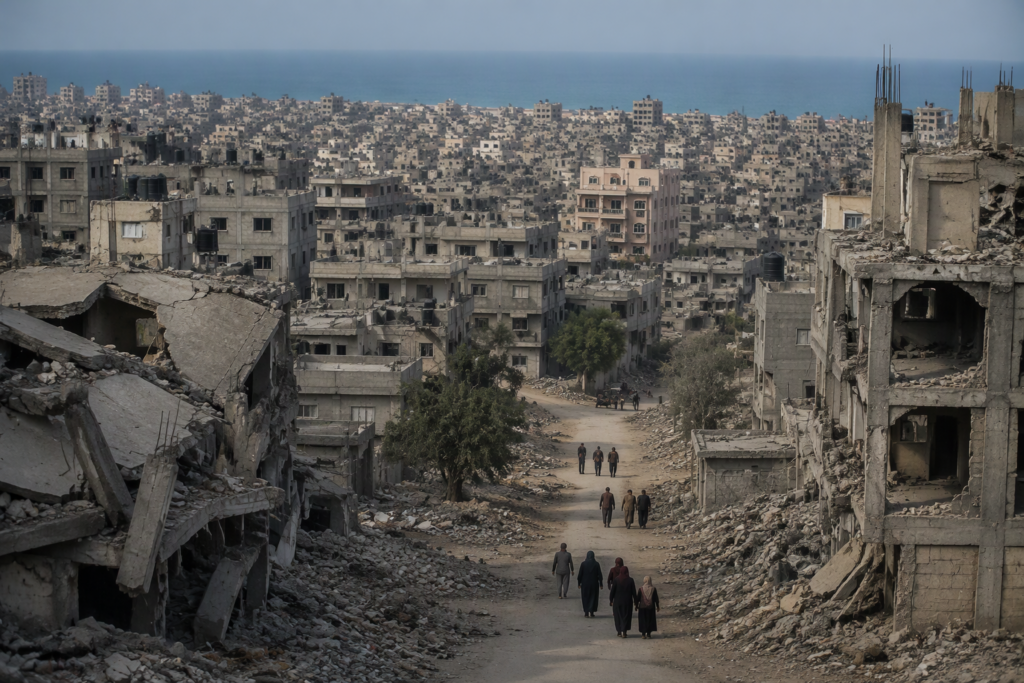

The phrase “It’s Gaza, stupid”—a direct echo of the famous 1992 political slogan—underscores how the Gaza political impact has evolved from a distant foreign policy matter into a central domestic issue influencing major political outcomes and voter behavior.
Assessing the Gaza Political Impact on Modern Elections
For decades, political strategists adhered to the convention that domestic pocketbook concerns determine election cycles. However, sustained turmoil and humanitarian fallout in the Middle East have disrupted conventional campaign formulas. The ongoing crisis has forced candidates, parties, and administrations to confront mounting scrutiny over international diplomacy, military aid, and humanitarian responsibilities.
Also read: What the US Midterm Results Mean for the Middle East
Voter coalitions, especially younger demographics and progressive activists, increasingly view governance through the lens of international accountability. In several critical voting blocs, policy stances regarding the crisis have become definitive litmus tests rather than secondary considerations.
Shifting Alignments and Changing Voter Sentiment
The escalation of public debate demonstrates that foreign affairs can drive voter mobilization just as potently as domestic economic conditions. Public demonstrations, campus movements, and grassroots campaigns have placed Middle Eastern foreign policy at the center of institutional decision-making.
The Role of Grassroots Pressure
Grassroots movements continue to alter how policy positions are communicated to the public. Elected leaders face continuous questions over ceasefire negotiations, civilian protection, and bilateral alliances. In many cases, uncommitted voting campaigns and protest ballots have revealed deep fissures within traditional party bases.
Diplomatic Accountability and Strategic Division
The political resonance of the conflict also exposes fundamental divisions within global diplomacy. Policymakers struggle to balance longstanding strategic partnerships with growing domestic pressure demanding stricter conditions on foreign assistance and active enforcement of international law.
Conclusion
As political landscapes continue to experience volatility, treating the crisis as an isolated foreign affair is no longer viable. The growing electoral repercussions demonstrate that domestic politics and international policy are inextricably linked, ensuring the issue will shape political discourse for the foreseeable future.
Source: Al Jazeera