
‘Afraid of Heights’: Inside the Peruvian Cliff Hotel With a Terrifying Check-In
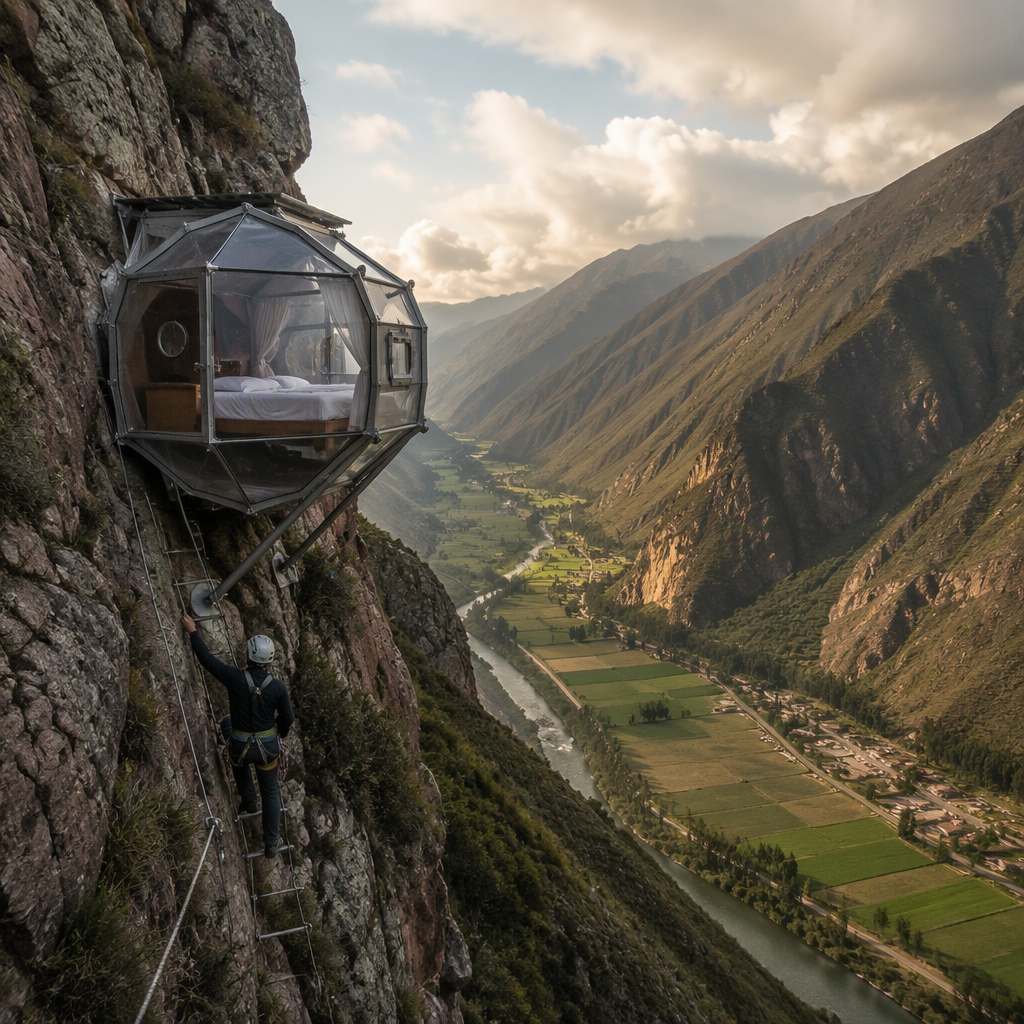
For most travelers, checking into a hotel involves stepping up to a marble desk, handing over an identification card, and taking an elevator to their floor. At the Skylodge Adventure Suites, a world-renowned Peruvian cliff hotel hanging over Peru’s Sacred Valley, arrival demands a harness, a helmet, and the nerve to scale a 1,300-foot sheer rock face.
Perched high above the Urubamba River near Cusco, the transparent sleeping pods have gained viral attention as both an engineering marvel and an intense psychological test. Many guests only discover the extent of their acrophobia once suspended hundreds of feet above the valley floor.
Also read: The Return of New Orleans’ ‘Deadly’ Cocktail: Inside the Absinthe Revival
What It Takes to Reach the Peruvian Cliff Hotel
Operated by adventure tourism company Natura Vive, the property offers no elevators, bellhops, or traditional staircases. Guests must reach their transparent capsules through one of two physically demanding methods: navigating a 400-meter via ferrata or hiking an exposed mountain trail linked with suspension bridges.
The via ferrata—a climbing path secured with fixed steel cables and iron rungs embedded into the rock—allows novice climbers to ascend safely under the supervision of certified mountain guides. Climbers remain clipped into safety lines at all times with dual carabiners.
Despite the redundant safety measures, the visual exposure often triggers deep-seated anxiety. Travelers face open drop-offs below their boots as they ascend, prompting many to confront a sudden fear of heights before ever setting eyes on their room key.
Inside the Suspended Glass Pods
Once guests pull themselves through the top hatch of their capsule, the adrenaline rush gives way to an architectural wonder. Each pod measures 24 feet in length and 8 feet in width, constructed from aerospace-grade aluminum and high-resistance polycarbonate.
The suites provide four beds, a dining area, and a private ecological bathroom separated by an insulated wall. Solar panels power the interior lighting and reading lamps, while curtains offer privacy from neighboring pods and condors soaring overhead.
Guides haul fresh ingredients up the mountain to prepare multi-course dinners, accompanied by local wine, which guests consume while taking in 300-degree vistas of the Sacred Valley and star-filled Andean skies.
The Growing Allure of Extreme Hospitality
The phenomenon of the cliffside lodge highlights a shift toward experiential and extreme tourism. Travelers increasingly bypass traditional luxury resorts in pursuit of memorable, high-stakes physical accomplishments.
Psychologists and travel analysts note that overcoming genuine fear often intensifies the satisfaction of a trip. For visitors clinging to steel rungs above the valley, reaching the comfort of their bed delivers a profound sense of achievement alongside postcard views.
Checking Out: A Descent by Zipline
Checking out of the facility offers no gentle stroll either. Following breakfast perched on the platform roof, guests gear up again to descend.
Rather than down-climbing the via ferrata, guests typically exit via a network of seven ziplines crisscrossing the canyon. The cables whisk travelers over gorges and rocky crags back to the valley floor, concluding an experience that challenges human equilibrium from start to finish.
Conclusion
The Skylodge Adventure Suites proves that modern travel can still push physical and mental boundaries. By turning a routine hotel check-in into a mountaineering ascent, this Peruvian cliff hotel continues to captivate thrill-seekers and test the limits of anyone brave enough to sleep suspended in midair.



2 Comments
Comments are closed.