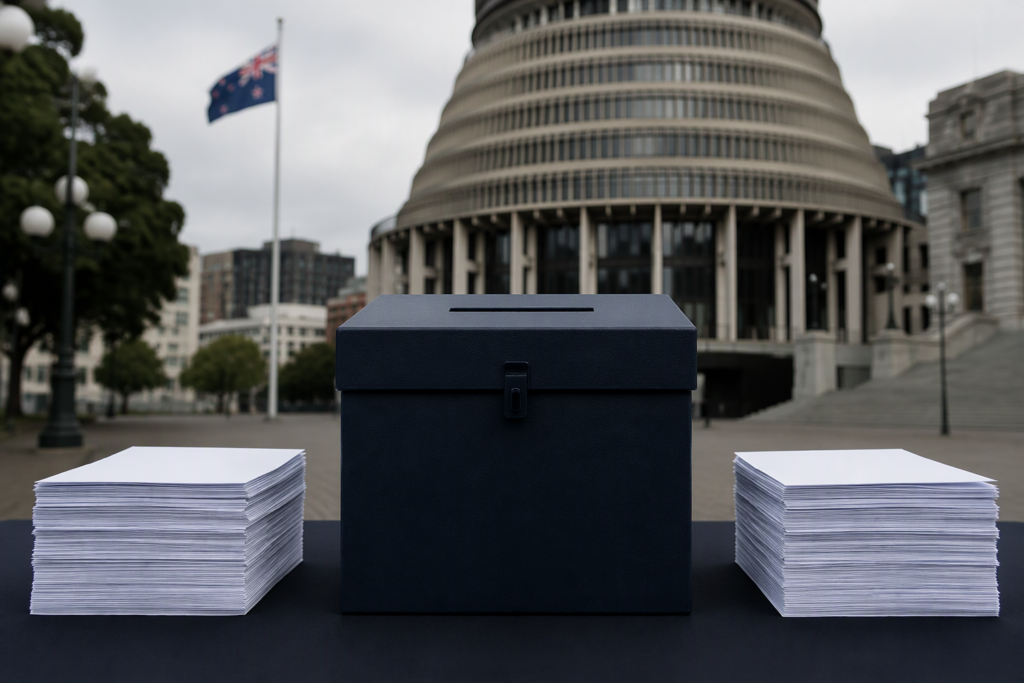

Voters across the country are preparing to cast their ballots as the latest New Zealand election approaches with polls pointing toward a knife-edge contest. Campaigning has entered its decisive phase, with political parties making final appeals to undecided voters in a race that could reshape the nation’s leadership.
What Is at Stake in the New Zealand Election
The outcome of the parliamentary race is expected to determine the direction of national policy across economic management, social programs, and public services. With voter sentiment divided, the contest underscores deep public interest in how the next government addresses key challenges affecting everyday life.
Also read: Thousands Rally in New Delhi to Demand India’s Election Chief Resign
New Zealand operates under the Mixed Member Proportional (MMP) voting system, which typically means that no single party wins an outright majority in parliament. As a result, the formation of the next administration is likely to hinge on coalition negotiations among multiple political parties.
How the Mixed Member Proportional System Works
Under the MMP framework, electors cast two votes: one for a local electorate member of parliament and another for their preferred political party. The party vote is critical, as it determines the total proportion of seats each party secures in the House of Representatives.
Because major parties rarely capture more than 50 percent of the vote on their own, smaller parties frequently play a decisive role in determining which bloc can form a governing majority. Political analysts anticipate that post-election talks could take days or even weeks before a stable government emerges.
Key Issues Influencing Voters at the Polls
Campaign debates leading up to the vote have centered heavily on bread-and-butter concerns. Economic pressures, housing affordability, healthcare infrastructure, and public spending have dominated discussions across the political spectrum.
Voter turnout and the choices of late-deciding citizens are expected to prove decisive in tipping tight electorate races and altering party vote percentages across the country.
Looking Ahead to Results and Coalition Talks
Election authorities are preparing for counting procedures once polling stations close. While preliminary counts are typically reported on election night, the counting of special and overseas votes can alter final seat distributions.
As New Zealand enters the final stretch of this critical vote, all eyes remain on whether the balance of power will shift or deliver a mandate that demands complex cross-party cooperation.
Source: Al Jazeera