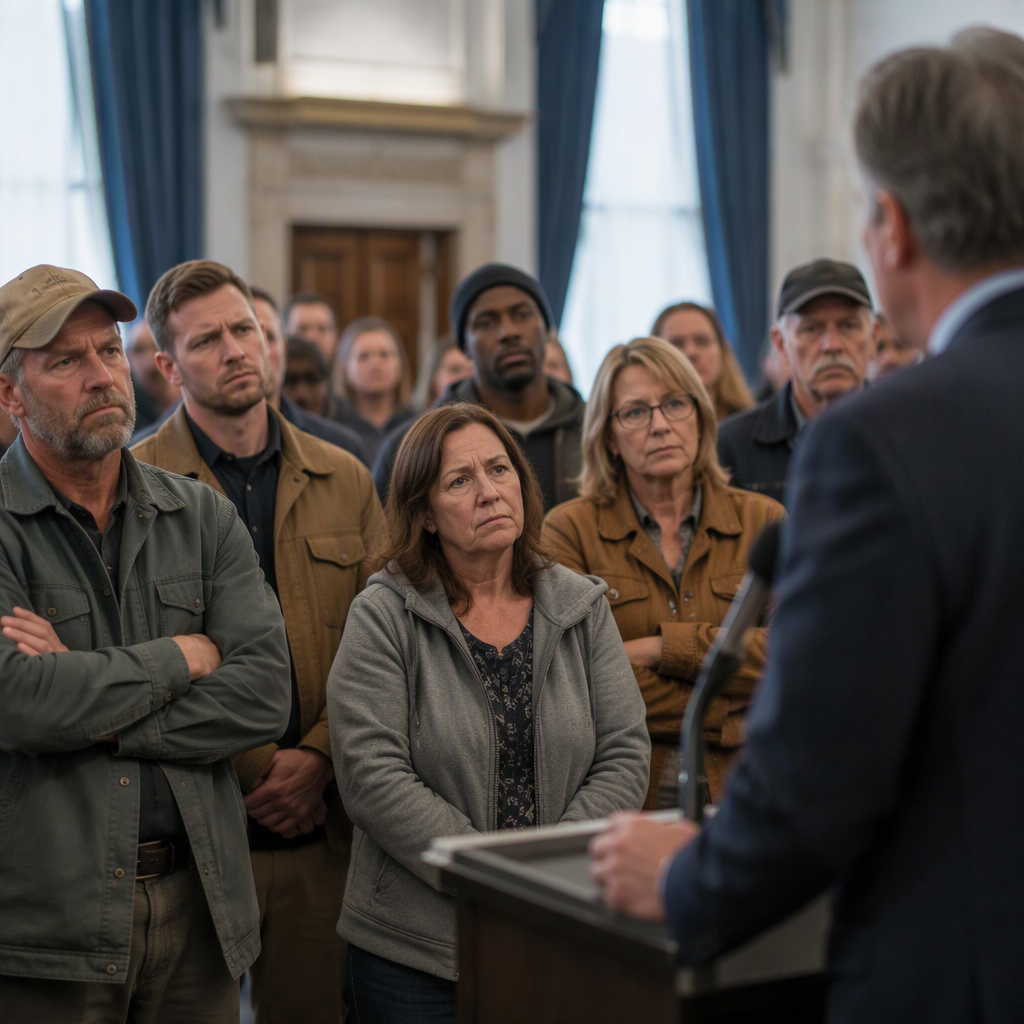

Governor Faces Revolt from Unlikely Voters as Democrats Deliver Scathing Verdict
State leadership is confronting an unexpected political crisis as a prominent governor faces revolt from unlikely voters across key districts, while registered Democrats deliver a scathing verdict on the direction of their party. Recent polling, town hall feedback, and grassroots coalition reports indicate mounting frustration over cost-of-living concerns, public safety, and perceived detachment from everyday working-class priorities.
The sudden shift among demographics that traditionally vote infrequently—or lean toward incumbent administrations—signals deepening vulnerabilities. Political observers note that the discontent is not confined to opposition lines; rather, internal party self-examination is exposing sharp divisions over executive messaging, state spending, and policy implementation.
Also read: Alaska Governor Orders Probe into Democratic Campaign Over Same-Name Candidate
Why a Governor Faces Revolt Among Non-Traditional Voters
The unrest emerging across suburban and rural enclaves highlights a notable shift in voter behavior. Independent working-class families, young blue-collar laborers, and low-propensity voters who rarely engage in mid-cycle elections are turning out to air grievances directly at municipal forums and legislative listening sessions.
Chief among their concerns is the persistent squeeze of inflation, property taxes, and escalating utility rates. While executive officials have repeatedly pointed to macro-level job numbers and state infrastructure investments, localized communities argue that state-level relief measures have been slow to reach household budgets.
“Voters who usually stay home are paying attention because the financial pressures are impossible to ignore,” said one regional political pollster. “When non-traditional voters mobilize early, it often signals an erosion of trust that standard campaign talking points cannot easily repair.”
Democratic Party Members Deliver Scathing Verdict on Leadership
Simultaneously, rank-and-file Democrats are voicing unusually candid criticism of their own leadership. Community organizers, precinct chairs, and local candidates warn that party officials have prioritized niche cultural messaging over core kitchen-table deliverables.
In post-briefing assessments and focus groups, party loyalists described a widening disconnect between statehouse decision-makers and the constituencies they represent. Many argue that defensive posturing by party spokespersons has alienated moderate Democrats and working families who demand pragmatic governance.
Internal party reviews emphasize that failure to acknowledge voter fatigue could depress turnout among base supporters while further energizing opposition turnout in competitive legislative districts.
Economic Strain and Shifting Coalitions Drive the Divide
The growing friction underscores a broader realignment across state politics. Key issues fueling public dissatisfaction include:
- Living Expenses: Escalating costs for housing, food, and energy dominate voter concerns across all demographic brackets.
- Regulatory Friction: Small business owners cite heavy bureaucratic mandates as a primary obstacle to post-pandemic stabilization.
- Policy Execution: Delays in public transit projects, local school funding negotiations, and basic service delivery have drawn bipartisan scrutiny.
As these pressures converge, the administration’s traditional coalition appears increasingly fragile. Suburban moderates who backed executive initiatives in prior cycles are expressing skepticism, creating an opening for alternative candidates from both sides of the aisle.
What Happens Next
In response to mounting pushback, the governor’s communications and legislative teams are expected to recalibrate their agenda ahead of the upcoming legislative session. Advisers are reportedly preparing policy revisions focused on targeted tax relief, energy affordability benchmarks, and municipal support grants.
Meanwhile, party committees plan a series of statewide listening tours aimed at repairing ties with local organizers and addressing internal dissent before primary season approaches. Whether policy adjustments will be enough to defuse voter frustration remains uncertain.
Conclusion
The reality that an incumbent governor faces revolt from unexpected voter blocs while party insiders issue sharp rebukes marks a critical inflection point. To rebuild confidence ahead of future electoral tests, state leaders must bridge the divide between legislative rhetoric and the tangible economic realities shaping voter sentiment.