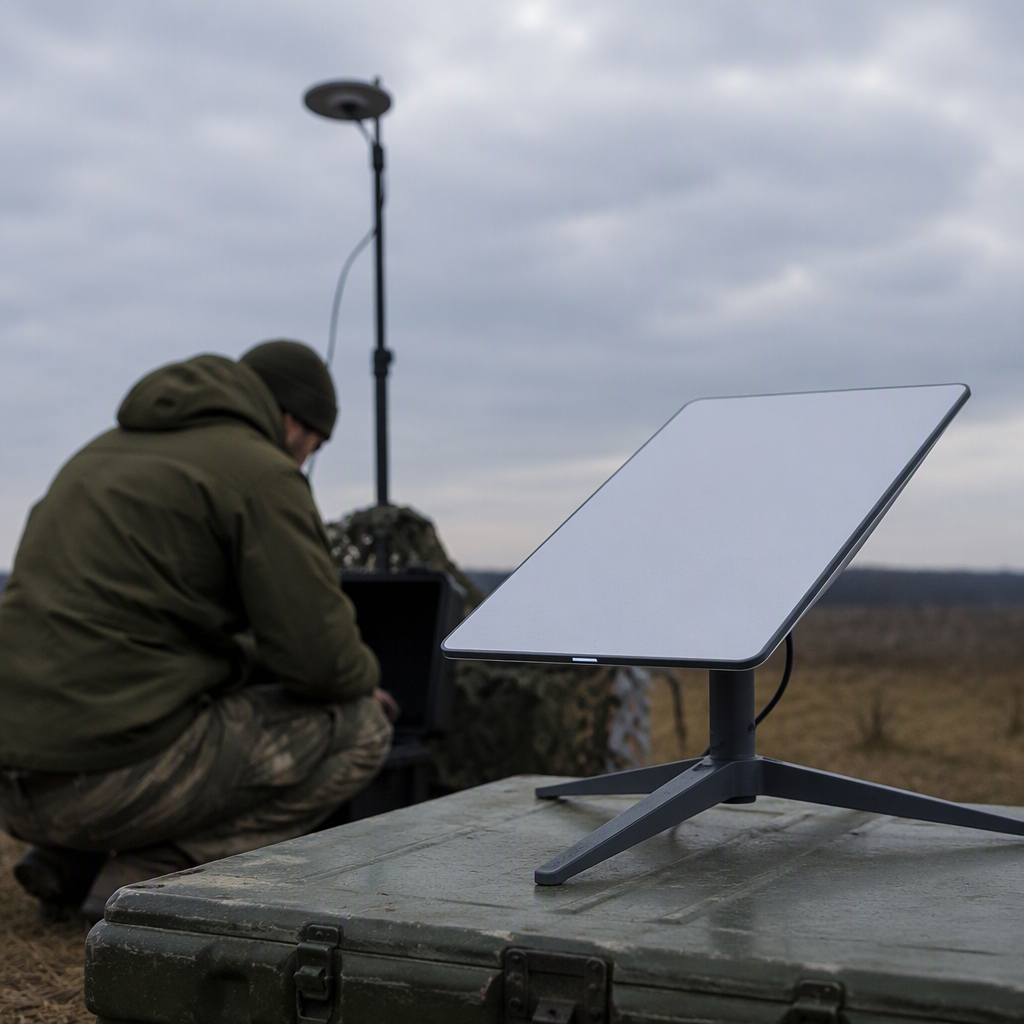

Musk Explains Why SpaceX Restricted Ukraine Starlink Connection as Service Continues
Elon Musk has confirmed that SpaceX restricted Ukraine Starlink connection capabilities for offensive military operations, reiterating that the commercial satellite system was never intended to serve as a weaponized combat tool. While internet access remains active across the country for defense communications and civilian infrastructure, the aerospace company has enforced deliberate technical boundaries to prevent its network from facilitating long-range drone strikes and direct offensive maneuvers.
The clarification follows ongoing international debate regarding the operational limits imposed on Ukraine’s military. Since the outset of Russia’s invasion in February 2022, thousands of Starlink terminals provided by SpaceX, private donors, and Western governments have formed the backbone of Ukraine’s battlefield communications and emergency digital infrastructure.
Also read: Starlink Service in Ukraine Restored Following Disruptions to Frontline Drone Operations
Why SpaceX Restricted Ukraine Starlink Connection
SpaceX leadership emphasized that the decision to limit offensive usage aligns with the platform’s original terms of service. Musk pointed out that while Starlink was deployed to keep hospitals, emergency responders, and military command centers connected, enabling direct weapon targeting risked turning the commercial service into an active combat participant.
SpaceX executives, including President Gwynne Shotwell, previously noted that the company took active technical measures to constrain how the satellite terminals are utilized. Ukrainian forces have widely leveraged consumer and commercial technology, adapting off-the-shelf equipment and satellite dishes to guide unmanned aerial vehicles (UAVs) against Russian positions.
When SpaceX engineers identified that Ukrainian forces were integrating Starlink directly into weaponized drones for strikes beyond frontline defensive zones, the company implemented software geofencing. These limitations restricted connectivity in contested maritime and Russian-controlled territories, preventing terminals from transmitting telemetry data for offensive remote-control operations.
Civilian Lifeline Versus Offensive Military Tool
The tension highlights the broader challenge of private technology firms providing critical infrastructure in modern conflicts. Starlink stepped into a massive communications vacuum after Russian cyberattacks disrupted Ukraine’s standard telecommunications networks in the early days of the war.
Musk reiterated that SpaceX continues to support Ukraine’s defensive efforts. Starlink maintains robust connectivity for civilian administration, humanitarian logistics, and baseline defense communications across government-controlled regions. However, Musk warned that permitting the network’s integration into long-range offensive missions carries severe escalation risks, potentially expanding the war into a broader global confrontation.
Ukrainian officials have expressed mixed reactions. While acknowledging Starlink as an indispensable lifeline on the ground, several government advisors have criticized the operational constraints, arguing that full digital mobility is essential for repelling Russian forces and liberating occupied territory.
International Reaction and Geopolitical Implications
The situation has prompted intense scrutiny from defense analysts and international policymakers. The restriction demonstrated how sovereign nations can become dependent on commercial satellite constellations controlled by private corporations during wartime.
In Washington, lawmakers and Pentagon officials have closely reviewed the arrangement. The United States Department of Defense subsequently contracted directly with SpaceX to procure dedicated military-grade services under the “Starshield” program. This separate initiative provides secure satellite communications managed under direct military oversight, establishing clearer regulatory and contractual boundaries between commercial civilian services and defense operations.
What Happens Next for Starlink in Ukraine
Looking ahead, SpaceX is expected to maintain its current policy framework. Commercial Starlink connectivity will continue supporting Ukrainian civil society, healthcare facilities, and routine military command structures, while geofencing will remain in place to deter weaponized integrations.
Ukraine is actively pursuing redundancy by diversifying its satellite communications partnerships. European defense agencies and alternative commercial low-Earth orbit (LEO) satellite providers are exploring additional agreements to bolster Ukraine’s resilience and reduce reliance on a single corporate provider.
As governments worldwide study the role of commercial tech in modern warfare, the episode where SpaceX restricted Ukraine Starlink connection capabilities underscores the unresolved legal and ethical questions surrounding private infrastructure on the modern battlefield.