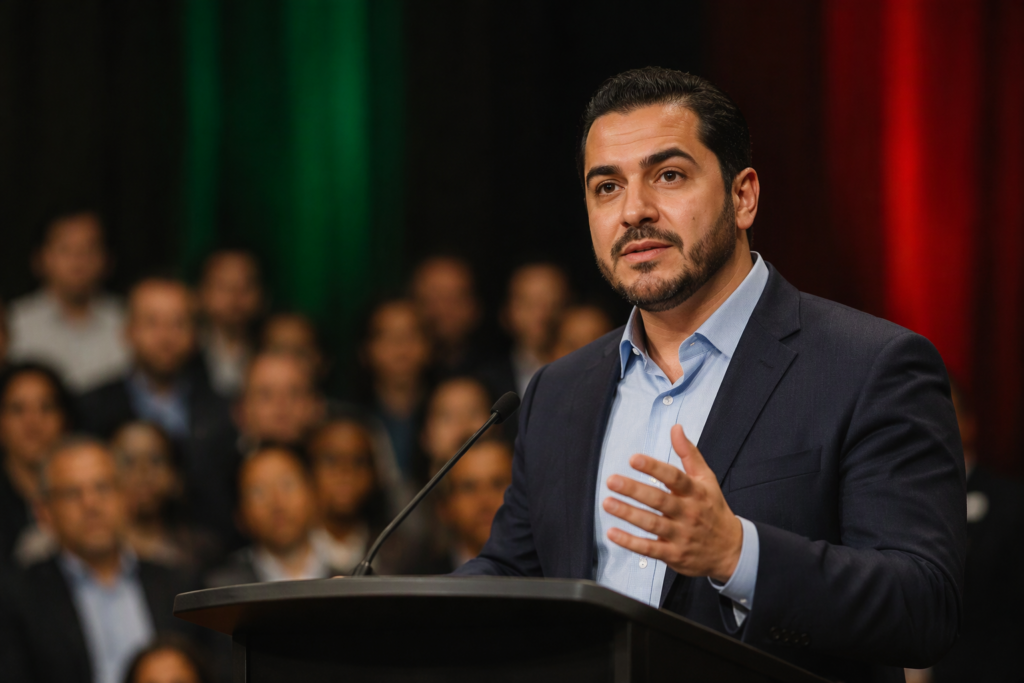

Author and political commentator Asra Nomani has spotlighted the rising political profile of progressive leader Abdul El-Sayed, characterizing him as a leading figure within what analysts describe as the hard left’s red-green alliance. The commentary underscores emerging ideological shifts shaping progressive advocacy across the United States.
Understanding the Red-Green Alliance Critique
In political discourse, commentators frequently use the term red-green alliance to refer to a convergence between socialist or left-wing political movements and faith-based activist coalitions. Nomani’s analysis focuses on how these intersecting factions collaborate to advance common political agendas, particularly on foreign policy, social restructuring, and electoral strategy.
Also read: Kathy Hochul Political Promotion Rumors Rise Ahead of 2028
Critics argue that such alliances present ideological contradictions, merging secular progressive values with socially conservative or faith-aligned frameworks. Supporters, however, view these partnerships as an effective coalition-building strategy designed to mobilize diverse grassroots bases against mainstream political establishments.
El-Sayed’s Rising Influence on the Left
El-Sayed, a physician, epidemiologist, and former director of the Detroit Health Department, gained national prominence during his 2018 gubernatorial bid in Michigan. Supported by key figures in the progressive wing of the Democratic Party, he established himself as an articulate advocate for single-payer healthcare, environmental justice, and systemic political reform.
Nomani argues that El-Sayed’s ability to navigate both traditional progressive policy circles and identity-focused activist networks has elevated his status. His commentary, media appearances, and organizing efforts have made him an influential voice for left-leaning voters seeking an alternative to the moderate Democratic establishment.
Broader Implications for National Politics
The debate surrounding progressive coalitions reflects broader tensions within modern American politics. As the progressive wing seeks greater influence over local and national policy, its partnerships continue to draw scrutiny from conservative commentators and moderate leaders alike.
Nomani’s assessment emphasizes that figures like El-Sayed will continue to play a pivotal role in testing whether these complex ideological coalitions can sustain long-term electoral momentum and reshape the political landscape.
Source: Fox News