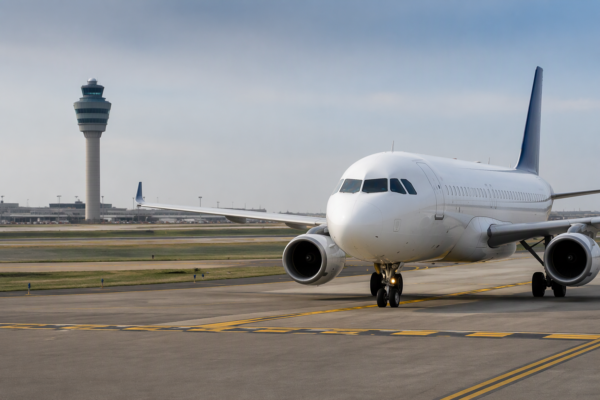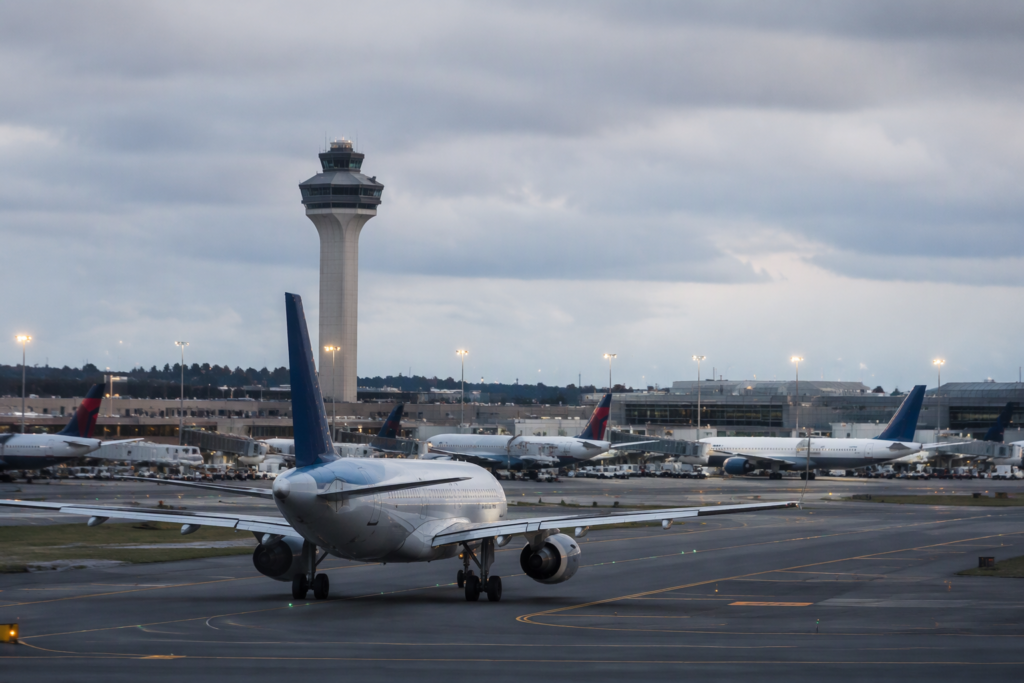

Thousands of airplanes across the United States were ordered to halt on the runway after a sudden communication failure crippled air traffic control facilities. The Federal Aviation Administration ordered a nationwide ground stop on all domestic departures, halting flights at major hubs and leaving arriving jets trapped on taxiways without gates.
US Transport Secretary Sean Duffy confirmed the sweeping shutdown, stating that technical teams are racing to identify the breakdown. The disruption immediately cascaded through the country’s aviation system, leaving passengers stranded inside cabins and forcing air traffic controllers to manage thousands of aircraft already in midair.
Also read: New SNAP Rules: NYC Rolls Out Small Business Help
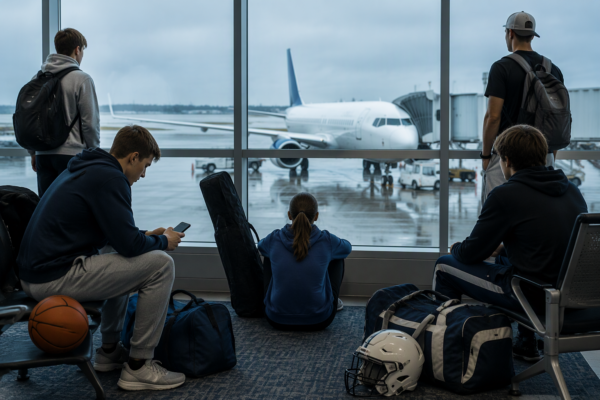
For anyone holding an airline ticket today, schedules are shattered. Because no departures can leave the ground, arrival gates remain blocked by planes that cannot push back. That means even if your flight lands on time, you may find yourself stuck on the tarmac for hours while airports untangle the gridlock.
What triggered the nationwide ground stop
The FAA issued the emergency order after identifying a systemwide breakdown across its regional management facilities. According to Duffy, the issue directly impacted Air Route Traffic Control Centers, which guide aircraft cruising at high altitudes between airport terminal areas.
“FAA technicians are investigating the issue. We will provide immediate updates as we have them,” he says.
The agency stated that all flights were held on the ground “due to extraordinary circumstances and for reasons of safety.” Soon after the initial notice went live on the FAA operational website, the advisory was removed, creating confusion among airlines and airport authorities over whether individual hubs could resume operations.
Gridlock on runways from Los Angeles to Austin
The sudden freeze left airports struggling to handle incoming traffic that was already airborne when controllers issued the order. At Los Angeles International Airport, passengers aboard arrived flights reported sitting motionless on remote taxiways.
One passenger who flew in from Newark told CBS News that their jet could not move toward the terminal because an outbound plane scheduled to depart was forbidden from taking off. With the departing aircraft occupying the gate, arriving passengers had no way to deplane.
A similar scene unfolded in Texas. A traveler who landed at Austin-Bergstrom International Airport reported that crew members told everyone on board to sit tight. Flight crews informed travelers they could not disembark because gate space remained entirely frozen across the airfield.
Thousands of flights caught midair
While departures remained frozen at terminal gates, thousands of planes were already high above the country. Tracking data from Flightradar24 showed roughly 3,100 airborne aircraft en route to American destinations at the time of the shutdown.
The tracking platform confirmed on social media that no additional planes were taking off from any domestic airport. Air traffic controllers had to prioritize guiding active flights to safe landings while keeping ground movements at a complete standstill.
The agency took a separate approach for international arrivals crossing into domestic airspace. In an official statement, the FAA clarified that inbound international long-haul flights would be handled on a case-by-case basis as they approached American borders.
How airlines are responding to the ground stop
Airport authorities across the country moved quickly to issue advisories to passengers packed inside terminal concourses. Multiple major airports confirmed domestic flights were grounded following the FAA directive, urging travelers not to rely on airport display boards.
Instead, airport operators advised customers to check their flight status directly through individual airline mobile apps and text alerts. Airline customer service desks faced immediate lines as travelers attempted to rebook connecting flights that were cancelled or delayed by the halt.
Because the FAA has not confirmed how many total flights have been grounded or delayed, the financial and operational fallout for carriers will take days to resolve. When an air traffic control failure halts departures nationwide, aircraft and flight crews end up out of position for subsequent routes, triggering rolling cancellations that outlast the initial computer outage.
What happens next
Federal officials have not yet announced an official restart time as technicians continue working to restore the control center communication links. The immediate next step is an operational update from Duffy and the FAA outlining whether the nationwide ground stop can be lifted in stages or all at once.
Source: BBC