
A sudden telecommunications blackout at all 22 regional air traffic control centres forced the federal government to freeze departing flights across the United States on Friday evening, leaving 1.5 million travellers and entire professional sports rosters stranded on runways and in terminal concourses. The sweeping FAA ground stop lasted more than four hours before officials lifted the order at 8:15pm Eastern time, but airlines warned the fallout will ripple across American skies for days.
The blackout could hardly have struck at a worse moment for weekend travel. Friday afternoon carried 11,000 scheduled domestic departures after 4pm, including five NBA teams, multiple NHL squads and dozens of college football programmes heading out for Saturday showdowns. By the time planes received clearance to push back, FlightRadar24 had logged more than 4,700 flight cancellations and 10,000 delays, with another 700 flights scratched before Saturday morning even arrived.
Also read: US Flight Ground Stop: Outdated Gear Halts Flights
For passengers caught in the freeze, the sudden shutdown turned terminals into chaotic holding pens. At its lowest point, tracking data showed just 336 flights in the air worldwide bound for the United States. With Thanksgiving travel less than two weeks away, the collapse revealed how quickly a single technical failure can paralyze the nation’s aviation grid.
Telecommunications failure blinds regional air traffic control centres
Federal officials traced the unprecedented nationwide ground halt to a widespread communications breakdown that crippled the agency’s primary communication links. The outage struck the FAA’s 22 en route air traffic control hubs, which manage high-altitude commercial flights across the continental United States. Without reliable voice and data links to monitor planes between airports, regulators had no choice but to keep departures firmly on the tarmac.
Aviation analytics firm Cirium reported that at least 827 airborne flights had to be diverted by early Friday evening as controllers scrambled to clear crowded sectors. Flights already in the sky continued to their destinations or diverted to alternate runways under manual spacing rules, but nothing new was permitted to take off.
The sudden freeze created immediate gridlock from coast to coast. At Los Angeles International Airport, Nicholas Erdodi found himself dumped back into the terminal after boarding his connection. He had flown in from New Zealand on his way to a business conference in Chicago.
“The challenge is you cannot ask anyone here what to do,” Erdodi said after spending six hours waiting at the gate. “Lack of information is what bothers me.”
How the FAA ground stop scrambled college football and pro leagues
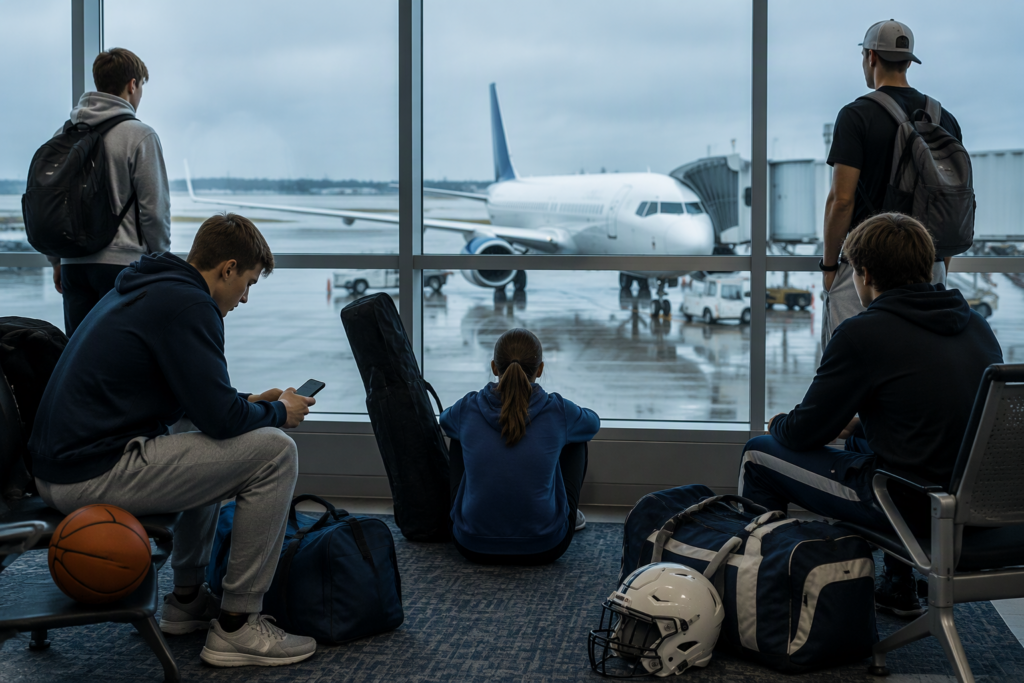
The Friday night travel disruption hit American sports schedules with rare force. College football teams faced the tightest squeeze, with kickoff times looming less than 24 hours after the shutdown began.
The Texas Longhorns football team had already settled into their charter seats in Austin when the FAA ground stop flashed across cockpit screens. Players and staff were forced to disembark and wait on the tarmac while athletic directors debated contingency options. A charter flight to Baton Rouge takes barely an hour; driving the same distance in a fleet of buses requires seven grueling hours on Interstate 10 ahead of Saturday’s 6:30pm kickoff.
“We are grounded and waiting to see when we can leave,” a Texas Longhorns team spokesman said as the squad weighed whether to wait out the order or board charter buses.
The Washington Huskies encountered similar chaos. Team buses carrying nearly 200 players, coaches and support personnel pulled up to the airport terminal in Seattle at the exact moment regulators issued the nationwide halt. Both the Big 12 and the Southeastern Conference announced they were monitoring team movements and reviewing whether kickoff windows would need to slide back.
Professional leagues scrambled just as hard to protect their weekend fixtures:
- The Brooklyn Nets were stranded alongside four other NBA franchises scheduled to play away games on Saturday.
- The San Jose Sharks remained stuck in Northern California while trying to fly to Utah for their NHL meeting.
- The Florida Panthers narrowly avoided the freeze, landing in St Louis just before controllers stopped accepting incoming traffic.
- NFL front offices began checking whether charter carriers could guarantee Saturday travel windows for Sunday matchups.
Airlines face massive logistical logjam to reposition planes and crews
Lifting the flight freeze does not mean normal service resumes immediately. Commercial aviation runs on precise mechanical loops, where a delayed flight in Atlanta strands a flight crew in Denver and leaves an aircraft out of position in Boston.
Delta Air Lines confirmed it had begun restoring operations on Friday night, but cautioned travellers that repositioning displaced aircraft and flight attendants across its network will take time. United Airlines managed to dispatch several late-night flights once local towers rebooted their communication boards. International carriers took heavy hits as well, with Mexico City’s Benito Juarez International Airport reporting roughly 70 affected flights, while Air Canada warned passengers that schedule disruptions would persist through the weekend.
Toronto Pearson International Airport brought in extra terminal workers to handle delayed connecting passengers, though Canadian authorities noted that transcontinental flights avoiding US airspace flew without incident.
Transportation officials work to beat the Thanksgiving holiday rush
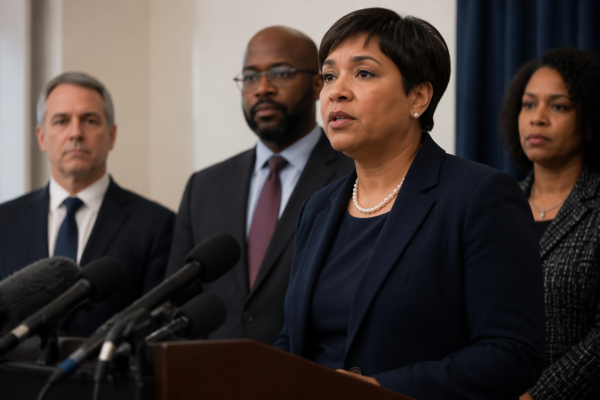
Federal leaders are now under intense pressure to explain how a single telecommunications fault could shut down the entire domestic aviation system without immediate redundancy. US Transportation Secretary Sean Duffy acknowledged the scale of the failure on Friday night, pointing out that tens of thousands of travellers had their plans ruined within a few hours.
“We’re going to have some makeup to do,” Duffy said, conceding that air traffic capacity will need time to recover from the backlog. Duffy stated that the Department of Transportation expects flight operations to stabilize fully before the intense Thanksgiving travel period starts in under two weeks.
Airlines will spend the rest of the weekend working through lingering flight cancellations and repositioning hundreds of displaced planes before standard business schedules resume on Monday morning.
Source: Al Jazeera