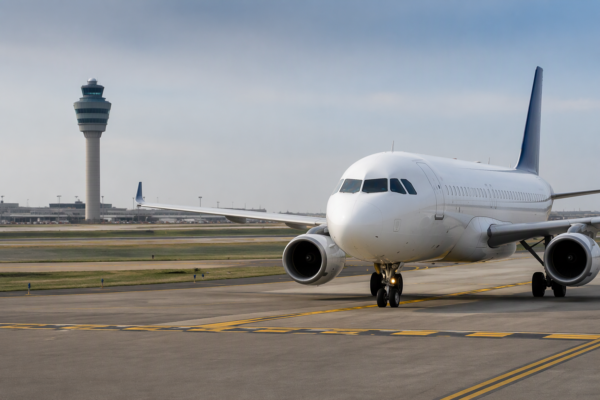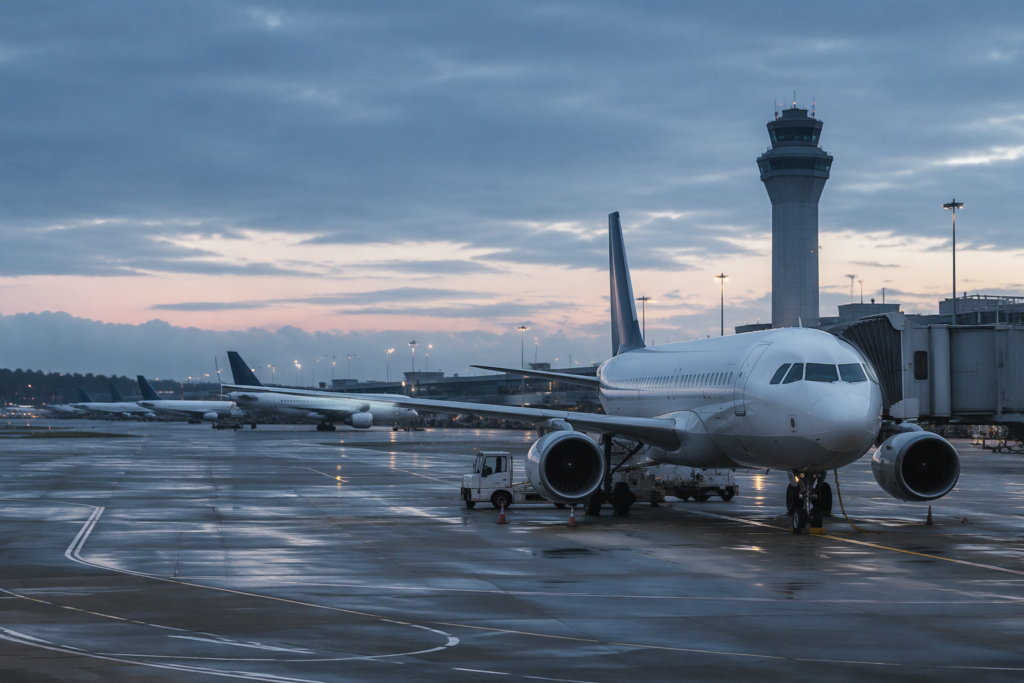

More than 3,500 airplanes were cruising through American airspace on Friday afternoon when federal regulators ordered every departing plane in the country to stay on the tarmac. The resulting US flight ground stop lasted over four hours, causing the most severe nationwide aviation shutdown since the September 11 terrorist attacks.
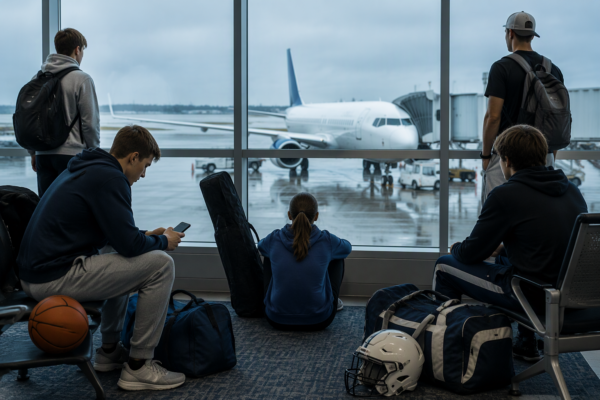
By the time the Federal Aviation Administration lifted the freeze at 20:15 EST, the stoppage had triggered nearly 8,000 flight cancellations and more than 8,500 delays, according to FlightAware data. The disruption left tens of thousands of passengers sleeping in terminals across the country, with travel schedules thrown off for days.
Also read: Nationwide Ground Stop Halts US Flights Over Comms Outage
Federal officials quickly moved to calm fears about terrorism or hostile foreign interference. But the true cause of the breakdown reveals a different kind of vulnerability: decades-old technology struggling to handle modern air traffic.
What triggered the US flight ground stop
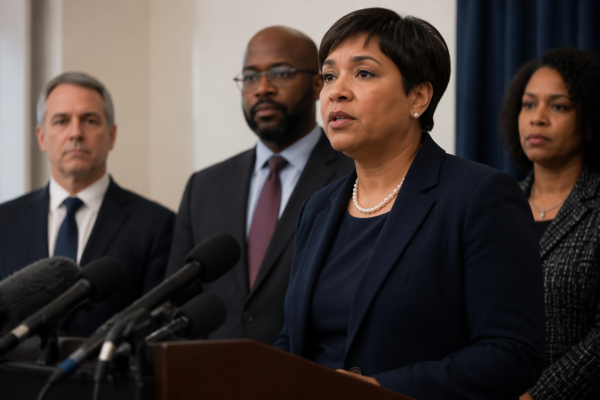
Transportation Secretary Sean Duffy told reporters on Friday evening that the halt stemmed from a massive failure inside the Federal Aviation Administration’s communication backbone. A legacy air traffic control communications system simply crashed under a surge of information.
“So this is analogue telecom. Our switches, our routers actually got overloaded with data and they went down.”
Duffy explained that the crash crippled both radar and voice communications across air traffic control centres nationwide. Fixing the outdated equipment permanently will require a complete overhaul that Duffy estimated could carry a $50 billion price tag.
Homeland Security Secretary Markwayne Mullin clarified that technicians had recently introduced new technology into the aging infrastructure. That combination overwhelmed the older circuits. Mullin emphasized that investigators found “zero evidence” of a cyber-attack and confirmed the incident had no connection to the widespread Microsoft outage that began on Thursday.
Midair diversions and global travel chaos
The FAA issued its initial ground order at 15:54 EST. Flights already aloft were allowed to continue toward their destinations or divert to alternative runways, but nothing new could leave the gate.
The impact rippled far beyond American borders. Across the Atlantic, Eurocontrol suspended all flights bound for the United States at the FAA’s request. The suspension impacted departures across 42 member states, including the United Kingdom, Ukraine, Turkey, and dozens of European Union nations, alongside operations in Morocco and Israel. On the other side of the Pacific, Sydney airport in Australia halted all American-bound flights indefinitely.
A few departures finally began trickling out of San Francisco International airport late in the afternoon before the FAA fully reopened the skies. Even so, the backlog created an operational nightmare for airlines trying to reposition crews and aircraft.
Comparing Friday to past system collapses
A full nationwide stoppage of commercial aviation is extraordinarily rare. Outside of localized weather events or regional facility issues, Friday’s halt represents only the second complete domestic shutdown since 2001.
Aviation specialists pointed out that while the disruption was deep, the system responded differently than during previous crises. Dr. Guy Gratton, an associate professor of aviation at Cranfield University, noted that the event was the worst since 2001 but differed sharply in scope. He compared it to a 2023 breakdown involving the Notice to Air Missions system, known as Notam.
During that January 2023 outage, safety bulletins could not be distributed to pilots, grounding departures for one hour and 52 minutes. That incident generated roughly 9,500 delays and 1,300 flight cancellations. Friday’s US flight ground stop lasted more than twice as long and produced more than six times as many outright cancellations.
A difficult recovery for stranded passengers
Major carriers spent Friday night scrambling to reset their networks. United Airlines and Delta Air Lines announced they had begun resuming flights shortly after the order was lifted. American Airlines said its teams worked to operate as many remaining evening flights as possible, while JetBlue deferred its restart until Saturday morning.
If you were caught in Friday’s mess, relief will not arrive immediately. Duffy warned that unwinding the operational snarl will take days as airlines reposition displaced planes and crews.
Both Duffy and Mullin stressed that travelers were never in physical danger while in the air. Still, nearly 8,000 cancellations in a single afternoon demonstrate how fragile the nation’s air corridors remain when old hardware gives out.
Airlines are working through immense passenger backlogs this weekend as federal investigators review the data logs from the failed routers.
Source: BBC