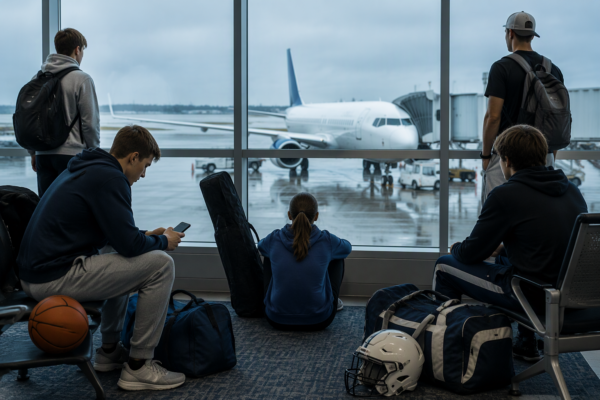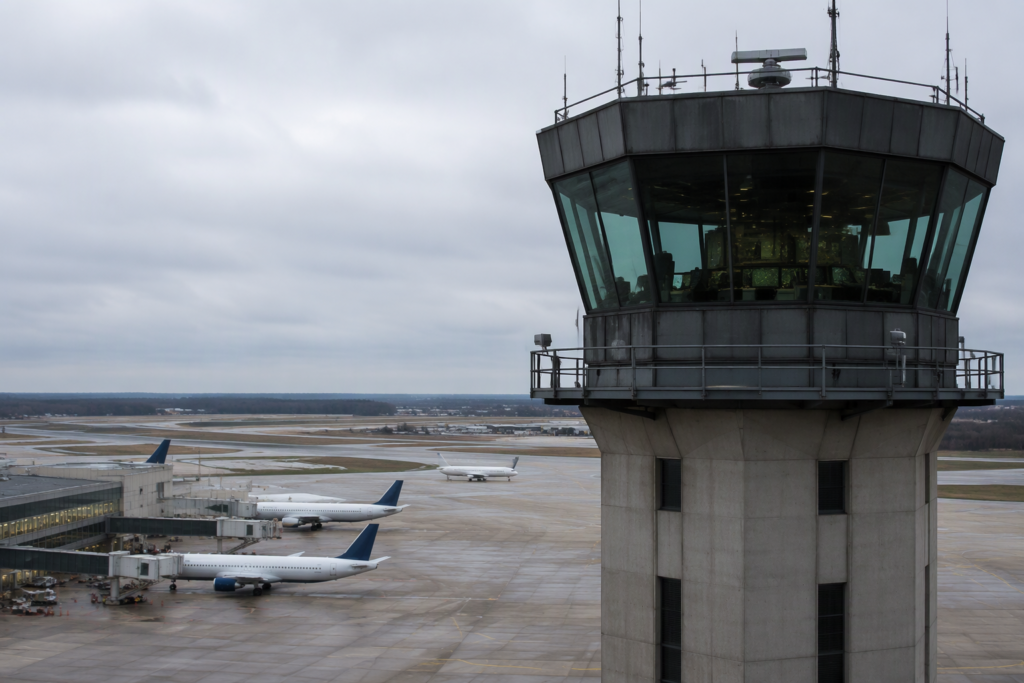

Air traffic controllers across the United States suddenly lost reliable radar and communications data in the middle of a Friday afternoon rush. The breakdown forced federal officials to order a nationwide FAA ground stop that halted departures across the country and exposed just how close the civil aviation network sits to total collapse.
The disruption began around 3:36 p.m. Eastern Time and paralyzed operations for nearly five hours. Transportation Secretary Sean Duffy went to the White House briefing room Friday evening to explain what went wrong and delivered an urgent warning to travelers and lawmakers alike.
Also read: Nationwide Ground Stop Halts US Flights Over Comms Outage
If you found yourself stranded at an airport gate Friday night, the culprit was not bad weather or a security threat. Instead, the failure came down to decaying hardware from decades past that simply could not handle modern volumes of digital traffic.
What triggered the Friday FAA ground stop
Federal regulators issued the nationwide FAA ground stop out of what Duffy described as an abundance of caution. Technicians noticed sudden instability in the agency’s primary radar and communications networks, creating an immediate safety risk.
Air traffic controllers rely on continuous, second-by-second data feeds to keep aircraft separated safely in the skies. Once those data feeds grew unstable, screen displays flickered and inconsistent information reached controller consoles.
Federal officials decided they could not gamble with passenger lives while technicians scrambled to pinpoint the fault. Grounding flights nationwide is a drastic measure, reserved only for catastrophic events or severe systemic failures.
The FAA lifted the order at approximately 8:15 p.m. Eastern Time, reopening American airspace. While flights resumed after the FAA ground stop, Duffy warned that widespread cancellations and rolling delays would persist across domestic carriers throughout the weekend.
Decades-old copper lines and outdated routers
At the White House lectern, Duffy pulled no punches about the physical state of the equipment running American skies. He pointed directly to outdated routers and obsolete network switches that collapsed under heavy data loads.
“We have old, old switches, old routers. We use 1980s little copper lines.”
Much of the federal air traffic control network still relies on telecommunications technology designed before the internet became a household utility. Decades of deferred maintenance have left control facilities dependent on physical copper cables that struggle to process contemporary data flows.
Duffy explained that legacy components became choked with data on Friday, triggering the system-wide instability. He emphasized that the breakdown was completely predictable given the age of the machines in service.
“What went down was old, right? It was the old legacy equipment. It failed,” Duffy told reporters. “And listen, it’s going to continue to fail.”
The secretary noted that modern hardware installed during recent upgrade programs operated without incident during the event. That contrast proved, in his view, that only total replacement can prevent another travel meltdown.
The $50 billion emergency funding demand
To stop recurring failures, Duffy insisted that temporary patches must end immediately. He formally called on Congress to approve $50 billion in emergency funding to rebuild the Federal Aviation Administration’s core systems from the ground up.
The proposed overhaul would replace physical control towers, modernize regional telecommunications links, and rip out obsolete processing hardware. Duffy argued that piecemeal fixes cost taxpayers more over time while leaving passengers exposed to sudden shutdowns.
“This is an emergency. I want Congress to give us emergency funding,” Duffy said. “This is bipartisan. This is American. I want $50 billion.”
The Trump administration previously secured $12.5 billion for modernization initiatives across federal aviation facilities. Duffy acknowledged that initial sum but argued it falls far short of what a full-scale replacement demands.
Can federal lawmakers find common ground on aviation spending after years of political gridlock? Duffy insisted the issue should never turn into a partisan fight between Republicans and Democrats.
“This is not one of those issues,” Duffy told reporters, arguing that passenger safety crosses party lines. “This is an American issue.”
Current switch upgrades and the fight ahead
Modernization projects are already underway, but progress remains slow compared to the scale of the agency’s national network. In April, the FAA awarded a nearly $5 billion contract to Rohde & Schwarz USA to replace up to 462 outdated voice communication switches across the country.
Federal workers have installed more than 40 of those new Rohde & Schwarz switches so far, according to reports from FLYING magazine. Federal officials also confirmed they have replaced roughly half of the aging copper wiring used to send radar and communications data between towers and centers.
While those upgrades are progressing, thousands of legacy parts still remain in active daily service. Duffy warned that every day old components remain online, the system sits one data overload away from another disruption.
Airlines must now clear stranded passengers and reposition misplaced aircraft while Duffy takes his spending request directly to Capitol Hill next week.
Source: Fox News