
Even if Benjamin Netanyahu loses power tomorrow, the bureaucratic machinery built by Israel’s most extreme politicians will keep operating without him. Over three years in government, the Israel far-right has reshaped state institutions, security forces, and the occupied West Bank so deeply that removing the prime minister does almost nothing to reverse their work.
Opposition figures now talk openly about toppling Netanyahu and building a coalition around former military chief-of-staff Gadi Eisenkot. But the real leverage inside Israeli politics remains anchored to Finance Minister Bezalel Smotrich and National Security Minister Itamar Ben-Gvir. Together, they have locked their ideological goals into legal codes, land registries, and police command structures.
Also read: Can Netanyahu Launch a Strike on Iran as Caretaker?
For millions of Palestinians and the wider Middle East, that structural shift matters far more than whoever sits in the prime minister’s office. An election defeat for Netanyahu might swap the faces at the cabinet table, yet the political apparatus of Jewish supremacy stays firmly in place.
How Smotrich and Ben-Gvir reshaped the state
Netanyahu handed Smotrich and Ben-Gvir unprecedented authority in late 2022 to secure his own return to power. Smotrich took over the finance ministry and gained a special post inside the defence ministry, giving him direct control over civilian management in the West Bank. Ben-Gvir gained command of the national police and the prison service.
Smotrich used his post to create a separate Settlement Administration, stripping traditional military oversight from West Bank land decisions. In August 2025, he revived the E1 settlement plan, declaring publicly that the project would bury any prospect of an independent Palestinian state. He also redirected massive public funds toward illegal outposts while settler attacks against Palestinian communities surged.
Ben-Gvir, meanwhile, politicised police command chains and imposed crushing restrictions across prisons holding thousands of Palestinian detainees. He pushed a death penalty bill through parliament that strictly targets Palestinians, turning hardline ideological stances into formal statutes.
Why opposition suits Ben-Gvir but threatens Smotrich
Outside observers often treat the two hardline ministers as an identical pair, but their power rests on entirely different foundations. Arie Perliger, a scholar at the University of Massachusetts Lowell who studies far-right political networks, notes that losing office will hit the two men in opposite ways.
“I would argue that we should not treat Ben-Gvir and Smotrich as a single bloc, since exclusion from government would affect them in opposite ways.”
Ben-Gvir thrives on political combat. His roots lie in the outlawed Kahanist movement, an ideology that long drew energy from being excluded by the political establishment. If pushed out of the cabinet, Ben-Gvir can return to street-level agitation and rally aggrieved voters against a centrist government.
Smotrich, by contrast, operates as a bureaucrat. His achievements depend on controlling treasury purse strings, zoning committees, and defence department appointments. Cut off from public budgets and administrative authority, his influence over day-to-day policy drops immediately.
The entrenched power of the Israel far-right
Removing either man from office does not erase the voter base that put them there. The Religious Zionist movement stretches back to the 1967 war, while Ben-Gvir’s Jewish Power party commands loyal followings across working-class towns and settlements.
According to Roi Zur, an assistant professor of government at Essex University, these factions represent a stable 10 percent of the Israeli electorate. They do not fade when coalitions collapse, because their supporters share deep ideological commitments that mainstream conservative parties spent decades cultivating.
Reversing the policies they planted requires intense political courage that opposition leaders have never demonstrated. Centrist figures hoping to succeed Netanyahu supported the devastating war on Gaza, where more than 74,000 Palestinians were killed, and backed sweeping security crackdowns. None of Netanyahu’s potential successors have pledged to dismantle Smotrich’s settlement bureaucracy or fire Ben-Gvir’s police appointees.
A permanent cultural and political shift
Beyond administrative rules, the coalition pushed public language into open hostility. Aida Touma-Suleiman, a former member of parliament for the left-wing Hadash party, describes a climate where daily racism has become an expected test of national loyalty.
Arabic speakers face suspicion on public transit, while state prosecutors ignore organised mob violence across rural West Bank villages. Western governments, including Ireland and the Netherlands, imposed sanctions and travel bans on Smotrich and Ben-Gvir in June 2025, citing explicit calls for ethnic cleansing. Yet domestic pushback against their agenda remains muted.
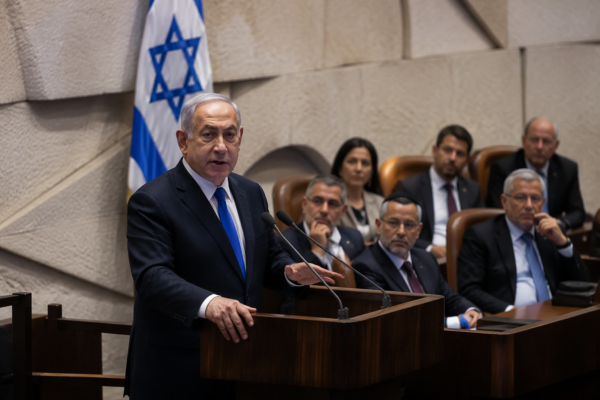
As talks over a possible unity government gather pace in the Knesset, Ben-Gvir and Smotrich are already warning their ultra-Orthodox allies against cutting deals with Eisenkot. Whether Netanyahu survives the coming parliamentary challenge or falls to an opposition vote, the administrative machinery built by the Israel far-right is already locked in place for the next election cycle.
Source: Al Jazeera