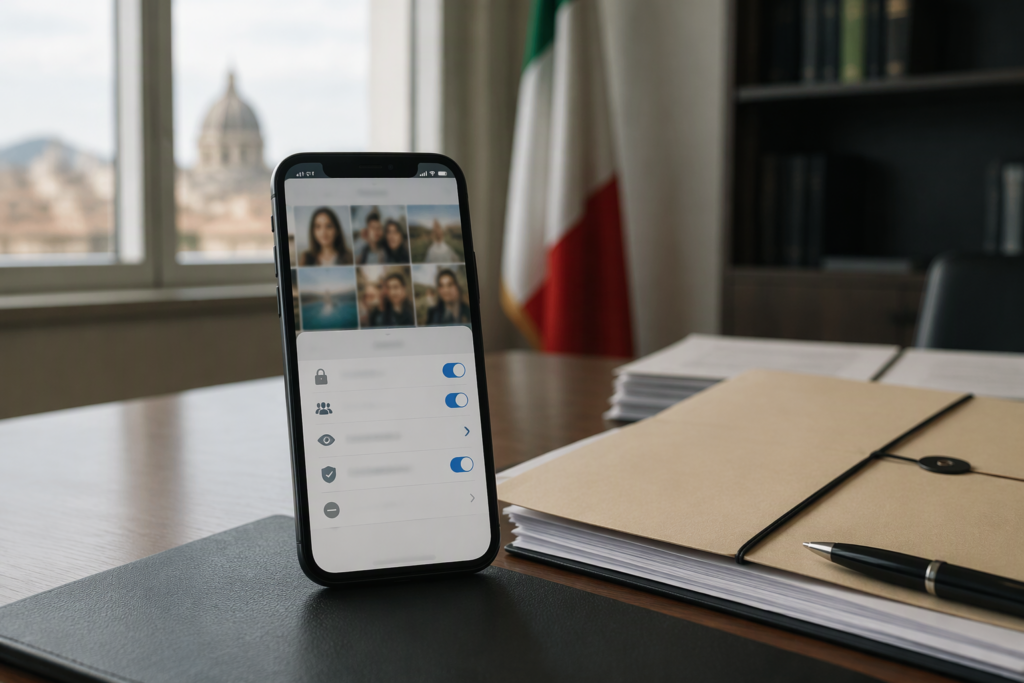

Italian regulators discovered that Facebook quietly rifled through personal phone albums without explicit permission, triggering a penalty that breaks all previous national privacy records. The watchdog hit the tech giant with an 805 million euros ($887m) meta privacy fine after finding that the social network accessed private media stored on local handsets.
The breach strikes directly at basic mobile privacy. If you used the Facebook app on Android devices in Italy, your personal gallery was opened up to the platform by default, leaving roughly 20 million Italian Android users exposed to automatic file access.
Also read: India Bypasses Procurement Rules to Acquire Israeli Phone-Hacking Tech
This penalty amounts to roughly 0.47 percent of Meta’s global turnover. It forces the company to overhaul how it handles photo permissions and immediately halt setting automatic media access on mobile hardware.
How the Facebook gallery scanner operated
The investigation focused on a specific feature named “Get suggestions from gallery when browsing Facebook.” The tool looked through a user’s local phone files to offer automated suggestions of photos and videos to post while people scrolled their feeds.
Garante, the Italian data privacy authority, found that the tool did far more than just look at photos. The application harvested photos, videos, and associated metadata stored directly on smartphones without obtaining specific consent and without informing owners beforehand.
Regulators determined that the feature directly breaches the Italian legislation that implements the European Union’s ePrivacy directive. Inspectors found that the consent dialogue presented to users was far too generic, making it impossible for people to understand which permissions they were granting when they tapped through screens.
How the meta privacy fine set a national record
The 805 million euro sanction stands as by far the largest financial penalty Garante has ever delivered. The regulator pointed to several aggravating factors when deciding on the final sum.
Investigators cited a clear “lack of cooperation” from the tech giant during the proceedings. The authority also noted that an earlier infraction, which led to a regulatory fine in 2019, weighed heavily against the firm as a contributing factor.
Because the prompt was enabled by default across mobile installations, millions surrendered access to their personal libraries without ever making a deliberate choice. Regulators ordered the company to eliminate the default setting and overhaul its consent warnings to clearly state what data the platform seeks to view.
The artificial intelligence question
The investigation remained tightly focused on handset access and consent violations rather than algorithm development. Regulators stated that the case did not address whether user media was scraped to feed artificial intelligence systems, an activity that Meta denies.
The watchdog chose to penalise the unauthorized collection itself, establishing that taking personal media without clear permission breaks European standards regardless of what happens to the files afterward.
What happens next
Meta must now rebuild the consent screens on its mobile software and turn off default gallery access across the country. Meta has not yet commented publicly on the ruling, but the company retains the right to contest the decision before an administrative court.
Source: Al Jazeera