During an interview in a Moscow cafe, one Russian billionaire kept sitting directly on his smartphone because he was terrified secret police were listening through the microphone. That quiet panic reveals how Russia’s business elite lives today: fabulously wealthy, completely powerless, and privately daydreaming about Russia after Putin.
For more than two decades, the Kremlin has demanded absolute obedience from the country’s wealthiest citizens. But behind closed doors, some Russian oligarchs are now quietly talking about a future without Vladimir Putin, longing for a return to the political clout they enjoyed back in the 1990s.
Also read: Russian Casualties Top 450,000 in Leaked State Agency Data
What happens to this immense wealth will shape the world far beyond Moscow’s borders. With international sanctions freezing their luxury yachts and private jets, these tycoons face an uneasy choice: stay silent under state control or maneuver for influence when the presidency eventually changes hands.
Subservient billionaires trapped by sanctions
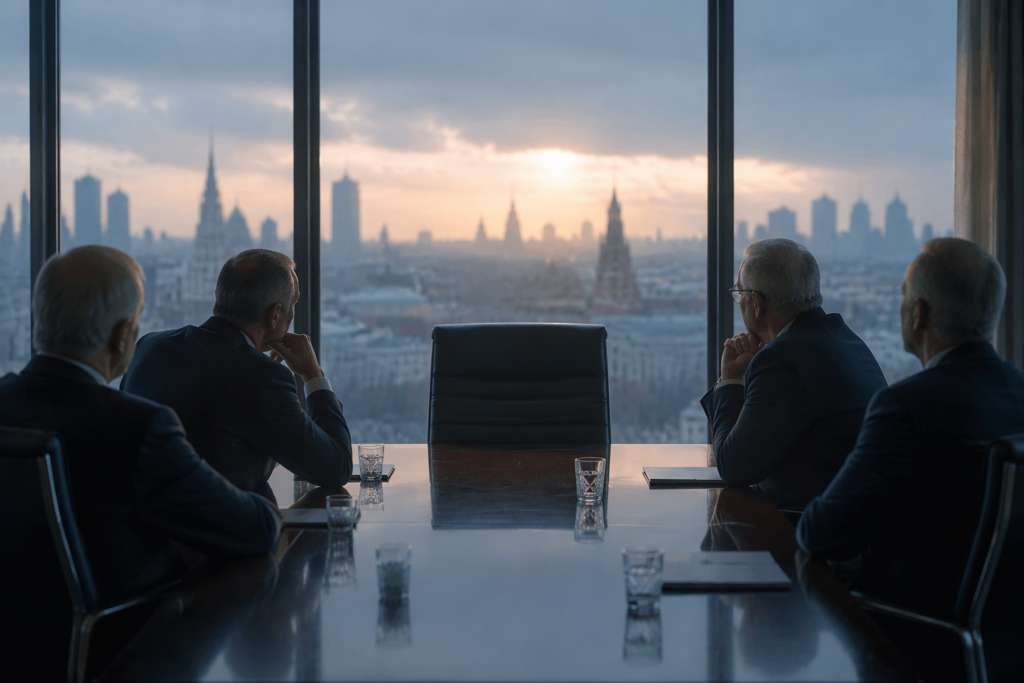
The total submission of Russia’s ultra-wealthy was on full display on 24 February 2022. Hours after launching the full-scale invasion of Ukraine, Putin gathered more than three dozen of the country’s richest men in the Kremlin’s Yekaterininsky Hall.
The businessmen sat huddled against the wall in face masks, looking pale and exhausted. Putin sat alone on the opposite side of the cavernous room, unmasked, telling them he expected full support for the wartime economy. Nobody uttered a word in response.
Memories run deep among the oligarchs. In 2003, oil magnate Mikhail Khodorkovsky challenged Putin over rampant state corruption. Khodorkovsky spent the next decade behind bars on fraud and tax charges, a brutal lesson that silenced any open defiance from business leaders.
Today, Russia has a record 155 billionaires with a combined net worth of nearly $700 billion, according to Forbes. But those billions buy very little real influence at home, and overseas they face total isolation.
“They’re treated like low-level criminals. They can’t fly their private jets. Their yachts can’t park in all the best harbours in Europe. It must be very awful and humiliating for them,” says Browder, the avowed Putin critic.
Why tycoons dream of Russia after Putin
Because their money cannot buy political security, elite conversations have begun drifting toward the eventual post-war order. Analysts see three theoretical paths for Russia after Putin, though not all carry equal weight.
A transition to Western-style democracy remains the least probable outcome, according to analysts like Alexandra Prokopenko. Decades of crackdowns have eroded civic institutions, leaving society unaccustomed to regular electoral norms.
A second path involves another autocrat stepping in, though any successor would initially lack Putin’s personal grip on power. The constitution dictates that Prime Minister Mikhail Mishustin would assume control if the presidency became vacant, yet he has shown no public appetite for supreme power.
That leaves a third option: an oligarchic republic. Exiled analyst Dmitry Nekrasov says many tycoons prefer a return to the late 1990s model, where rival business clans held direct leverage over state policy. Under that system, property rights felt somewhat safer and businessmen had a seat at the table.
From ‘The Boss’ to ‘Granddad’
Signs of shifting attitudes are surfacing in everyday language. Business leaders once referred to Putin with respectful monikers like “Nachalnik” (The Boss) or simply his initials, “VV”.
Now, insiders say tycoons privately refer to him as “Ded”, meaning “granddad” or “oldie”. The phrase carries unmistakable condescension from men tired of carrying the economic costs of state isolation.
Even so, open rebellion remains virtually unthinkable. Those who depend directly on state procurement contracts cannot afford to step out of line, while those sitting on deep cash reserves are simply cultivating quiet ties with security chiefs and ministers.
As Dmitry Nekrasov observed, tycoons currently hold no winning cards. Challenging the Kremlin outright carries deadly consequences, forcing the elite to wait in silence.
Melnichenko’s quiet rebellion and the road ahead
A rare public crack in this facade appeared when Andrey Melnichenko, the billionaire founder of major fertiliser and coal empires, spoke out earlier this year. Speaking to Western journalists, Melnichenko argued that one-man rule must end and urged Moscow to re-engage with global markets.
While Melnichenko echoed standard Kremlin grievances regarding Western foreign policy, his critique of Russia’s political structure caught widespread attention. Most observers believe the Kremlin permitted the interview to project an image of internal debate, but no other oligarch dared echo his remarks publicly.
For now, Putin’s constitutional term runs until 2036, and the 74-year-old leader shows no signs of relinquishing control voluntarily. Investors and foreign diplomats should watch whether the Kremlin reshuffles key economic ministries early next year, as rival factions test their positions behind the scenes.
Source: BBC


