Reports of homophobic abuse in English football jumped by nearly half in a single year, even as top-flight players stopped wearing the rainbow symbols that once defined their public support. Fresh data proves that homophobia in football is surging across stadiums and local parks, exposing a sharp retreat in player participation at the highest level.
Anti-discrimination charity Kick It Out logged a record 1,744 discrimination reports across the 2025-26 season, marking a 25% spike from the prior year. Within that total, reports of homophobic abuse climbed 46% to 203 incidents. Hostile crowd behaviour is spreading quickly, with reports of discriminatory mass chanting leaping 41% to reach an all-time high of 142 incidents.
Also read: Kane Set for England Appearance Record in Nations League
The numbers reveal a worsening environment for fans and players just as English football quietly scales back its most visible inclusion campaigns. While terrace slurs grow louder, the unified front once presented by elite athletes has fractured into silence, religious pushback and club risk aversion.
How homophobia in football surged back onto the terraces
Much of the recent hostility has centred on slurs that authorities spent years trying to stamp out. Reports of the homophobic “rent boy” chant, aimed primarily at Chelsea players and supporters, rose to 24 separate incidents in the 2025-26 campaign. That represents the highest tally in three years, despite prosecutors criminalising the phrase in 2022.
Abuse targeting transgender people has also intensified. Kick It Out tracked a noticeable surge in transphobic vitriol following the Supreme Court ruling on legal gender recognition, which subsequently led the Football Association to ban transgender women from competing in the women’s game.
The toxicity extends far beyond televised arenas. Grassroots football registered the steepest climb in outright bigotry, with Kick It Out recording a 140% rise in discrimination reports compared to 2024-25. Three-quarters of those grassroots complaints occurred in senior matches involving players over 18, leaving amateur referees and local players to absorb escalating hostility without stadium security.
The quiet death of Rainbow Laces and player allyship
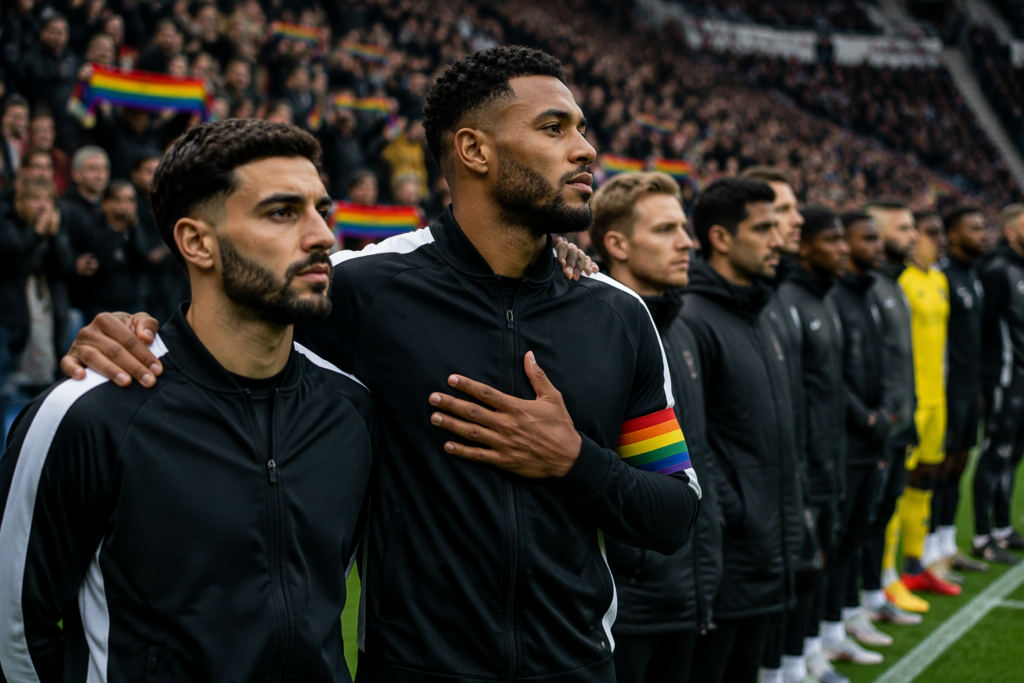
For a decade, the Premier League combated prejudice through its partnership with Stonewall and the Rainbow Laces campaign. Launched in the 2014-15 season alongside Paddy Power, the initiative saw captains wear multi-coloured armbands and players thread vibrant laces into their boots each November.
That high-profile initiative is now gone, terminated ahead of the 2025-26 campaign after a tense final outing in late 2024. During that final activation, former Crystal Palace captain Marc Guehi penned “I Love Jesus” across his armband, while Ipswich Town captain Sam Morsy declined to put it on. Manchester United dropped plans for a rainbow warm-up jacket after defender Noussair Mazraoui objected on religious grounds.
Stonewall chief executive Simon Blake acknowledged that the long-running visual campaign had reached its limit in the professional game.
“When it started, getting a few people to wear the laces was success. When it ended, when a few people didn’t wear them there was criticism.”
Jon Holmes, founder of campaign group Sports Media LGBT, noted that dressing room advocacy has waned dramatically since England internationals like Jordan Henderson and Conor Coady regularly championed inclusion. Clubs now tread cautiously to avoid online storms, leaving player participation at a low ebb.
Empty answers on diversity budgets
Visibility struggles mirror the lack of representation inside club boardrooms. Kick It Out examined senior management figures across 17 top-flight sides and discovered that just 0.3% openly identify as LGBTQ+. National census figures show that roughly 4% of the British population identifies as LGBTQ+, meaning clubs would need to hire more than 100 people from the community into senior roles to reflect society.
The coaching ranks show an even starker reality. Among the 11 clubs that shared staff demographics, not a single senior coach identified as LGBTQ+.
When BBC Sport contacted all 20 top-flight clubs to ask about their diversity budgets and LGBTQ+ policies, only nine replied. None of them disclosed how much money they allocate to inclusion work.
Where LGBTQ+ supporters find hope on matchdays
Despite boardroom silence, match-going fans are carving out their own protections. Every single club in the top division now features officially recognised LGBTQ+ supporters groups for the first time.
Several clubs continue to work closely with their local communities:
- Leeds United have sponsored their city’s Pride parade since 2018, with former captain Luke Ayling marching in 2022.
- Manchester City hold an annual Progress flag ceremony at their ground.
- Manchester United staff marched in the city parade and hung a fan-designed Rainbow Devils banner at Old Trafford.
- Tottenham Hotspur run weekly community football sessions tailored for LGBTQ+ participants.
The league has attempted to replace its old campaign with Premier League With Pride, a lower-profile programme held in February to align with LGBTQ+ History Month. The initiative will stage dedicated match rounds across two weekends in February, giving all 20 clubs a home fixture to demonstrate community support.
Source: BBC