Eating a giant bowl of raw spinach might feel like the ultimate healthy choice, but your body absorbs almost none of the mineral packed inside those leaves. About one in three people across the globe lives with an iron deficiency, making it the most widespread nutritional shortage on the planet. When your stores run dry, weakness, exhaustion and shortness of breath follow quickly because you cannot build enough haemoglobin to carry oxygen through your bloodstream.
Learning how to boost your iron matters immediately if you are cutting back on red meat over environmental footprints, grocery bills or health risks. The UK National Health Service recommends that women aged 19 to 49 get 14.8 milligrams of iron every day, though heavy menstrual cycles push that target even higher. Falling behind can leave you feeling drained for months without realizing why.
Also read: How to Exercise More Without Trying: Science-Backed Ways to Stay Active
You do not need to buy red meat or swallow heavy supplements to hit those numbers. Simple shifts in your kitchen routine can unlock plant-based iron that would otherwise pass straight through you unused.
Why non-heme iron needs a helping hand
Dietary iron arrives in two distinct varieties: heme and non-heme. Heme iron comes from meat and seafood, and your digestive tract absorbs roughly 15 to 30 percent of it without fuss. Non-heme iron fills plant foods, but your gut struggles far more to take it in.
The human body takes up only about 2 percent of the iron found in dried legumes. Leafy greens fare only slightly better, yielding roughly 7 to 9 percent. When people drop meat without adjusting their cooking styles, their iron levels can slide downward fast.
Dr. Yemisi Latunde-Dada, a senior lecturer in nutritional sciences at King’s College London, warns that cutting meat requires deliberate replacement strategies. “It’s best to try and prevent becoming anaemic by eating the right diet,” says Susan Fairweather-Tait, professor of mineral metabolism at the University of East Anglia.
Boil the greens and slice the sourdough
How you cook vegetables directly dictates whether your gut can pull nutrients from them. Spinach, Swiss chard and beetroot greens contain heavy amounts of natural compounds called oxalates. Oxalates bind tightly to iron inside the digestive tract, locking it away from your cells.
Boiling those specific greens breaks that chemical lock. The water leaches out the oxalates, releasing the mineral so your system can absorb it. Other greens, including bok choy, cabbage and ordinary lettuce, carry very few oxalates, meaning they do not require boiling at all.
Grains and seeds feature a different barrier known as phytic acid. This substance clings to non-heme iron and blocks uptake during digestion. Fermentation breaks down phytic acid naturally, which is why switching from standard sliced white loaves to sourdough bread can yield real nutritional benefits from every slice.
Pair vitamin C to boost your iron absorption
The simplest way to upgrade your meals involves pairing plant foods with ascorbic acid. Fresh citrus juice or slices of bell pepper actively transform non-heme iron into a chemical state that intestinal cells absorb far more readily.
“Vitamin C is a potent enhancer of iron absorption from plant food sources.”
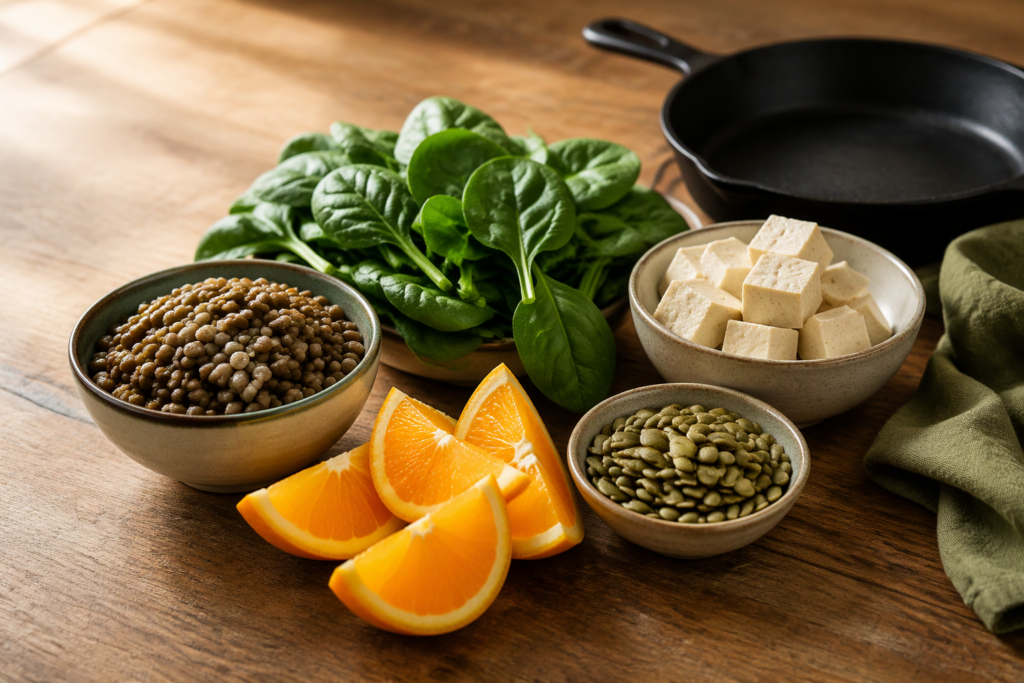
Adding a squeeze of fresh lemon over cooked legumes or drinking a small glass of orange juice with morning oats creates an immediate shift. The combination of vitamin C and iron can multiply the total amount of the mineral that enters your bloodstream from a single meal.
Raw and steamed greens like cabbage and bok choy also keep their natural vitamin C intact. Leaving them crisp gives you both the mineral and the acid required to absorb it in one go.
Rethink breakfast brews and fortified staples
What you drink alongside your food can cancel out your efforts. Coffee and black tea contain polyphenols and tannins that grab onto iron before your intestine can process it. Drinking a hot brew while eating iron-rich seeds or fortified cereal sharply drops the amount you absorb.
Fairweather-Tait recommends waiting at least two hours after finishing a meal before pouring a cup of tea or coffee. That simple window lets your gut finish nutrient absorption without interference.
Processed breakfast foods can also give a false sense of security. Manufacturers often fortify cereals with unreactive forms of iron to protect shelf life and avoid altering the taste or colour. Studies show iron absorption from some infant cereals sinks as low as 0.6 to 2.2 percent, whereas absorption from refined white flour bread rolls can reach 13.6 percent.
“We don’t absorb iron very well from most of the fortified products,” Fairweather-Tait notes. Snacking on whole foods like sunflower seeds, which contain 6.4 milligrams per 100 grams, offers a far more reliable foundation.
Spread your meals to beat deficiency
Your digestive tract only takes in about one to two milligrams of iron per day under normal conditions, precisely matching what the body loses through sweat, cell shedding and menstruation. Flooding your gut with massive doses at once actually backfires because intestinal sensors shut down absorption when overwhelmed.
Eating modest portions of plant-based iron throughout the day gives you the steadiest supply. If fatigue lingers or blood tests show ongoing deficiency, speak with a doctor before buying over-the-counter pills to avoid overloading your internal organs.
Source: BBC