
When Is Premium Economy Worth the Extra Cost? Industry Data and Travel Trends
As commercial airlines expand their cabin configurations to capture rising demand for elevated travel experiences, travelers increasingly question whether booking premium economy is worth the extra cost. Positioned between standard coach and lie-flat business class, premium economy promises wider seats, extra legroom, enhanced dining, and priority airport perks. However, pricing swings and varying cabin standards across carriers mean the value proposition changes significantly depending on route, price point, and passenger needs.
Airlines have reported that premium economy has become their most profitable real estate per square foot. For consumers, determining if the upgrade delivers real value requires analyzing flight duration, price differentials, and the physical benefits delivered during long-haul journeys.
Also read: New 123.4-Proof Whiskey Prompts Expert Warning That Stronger Isn’t Always Better
Understanding the Cabin Gap: Economy vs. Premium Economy
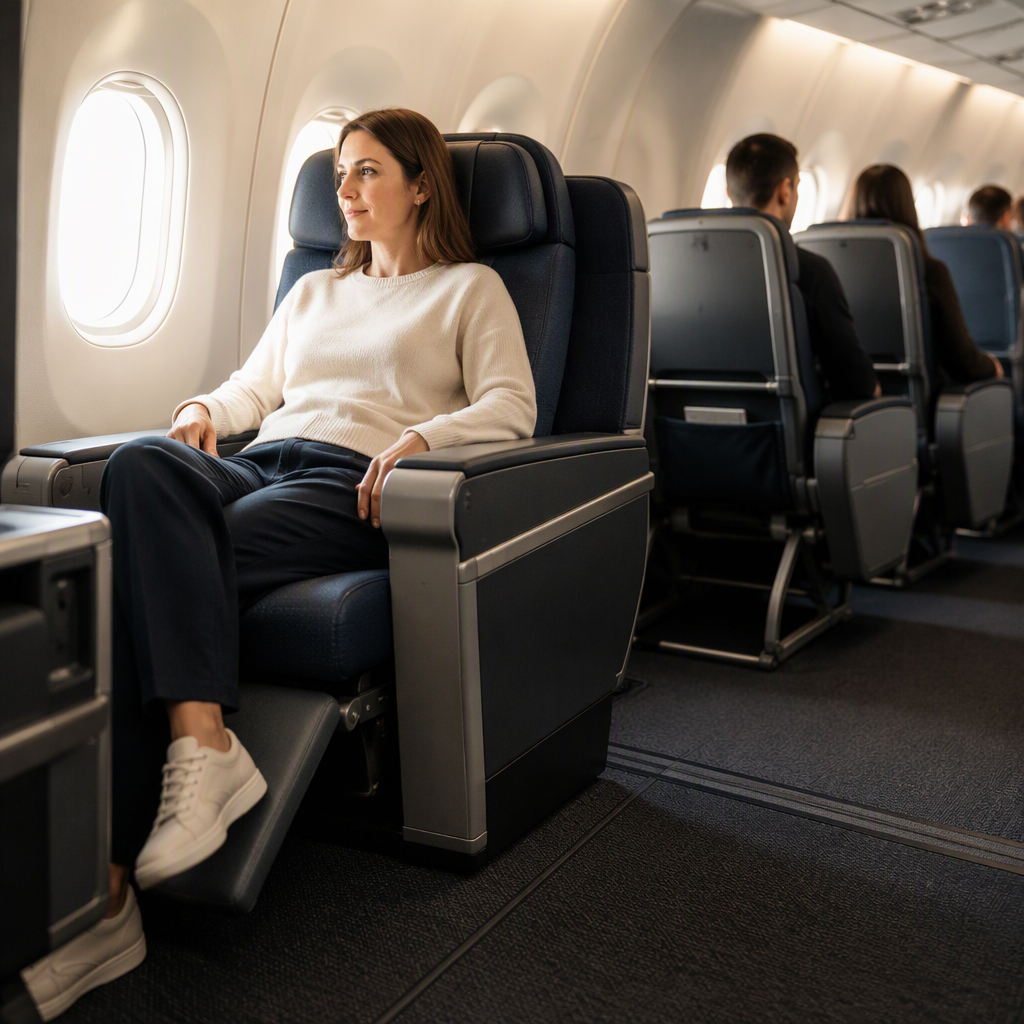
Premium economy is not merely an economy seat with a few additional inches of space. Unlike “extra legroom” seats—frequently sold as Economy Plus or Main Cabin Extra—true international premium economy features a dedicated cabin separated by bulkheads or curtains.
Passengers typically receive five to seven inches of additional legroom, a wider seat with distinct armrests, deeper recline, and footrests. On wide-body aircraft such as the Boeing 777 or Airbus A350, airlines usually configure premium economy with seven to eight seats per row, compared to nine or ten across in standard economy. The cabin also provides dedicated service, elevated meal presentation, and larger in-flight entertainment screens.
Evaluating When Premium Economy Is Worth the Extra Cost
Travel analysts and frequent flyers point to specific thresholds where the upgrade provides tangible returns on investment.
1. Flights Exceeding Seven Hours
Flight duration remains the primary determinant of cabin value. On daylight transcontinental flights under six hours, the physical toll of a standard economy seat is relatively manageable. On overnight transatlantic or transpacific journeys lasting seven to fifteen hours, the additional recline, foot support, and personal space significantly improve the likelihood of restful sleep, reducing jet lag upon arrival.
2. Fare Differentials Under 50 to 80 Percent
Historical fare tracking indicates that premium economy tickets typically cost between 30% and 100% more than standard economy, compared to business class seats, which frequently cost three to five times more. Industry analysts suggest following a simple metric: if the round-trip upgrade cost averages less than $50 to $70 per flight hour, the purchase presents a strong value proposition for international long-haul travel.
3. Hidden Savings: Luggage and Airport Perks
Factoring in ancillary fees often narrows the real price gap between cabins. Most international carriers include two checked bags with a premium economy ticket, alongside priority check-in, dedicated boarding lanes, and expedited security screening at select airports. For travelers who already plan to check multiple bags, these waived fees offset a substantial portion of the ticket premium.
4. Traveling for Business Without a Corporate Lie-Flat Policy
Many corporate travel policies restrict business-class bookings on flights under ten hours or require executive approval. Premium economy serves as a practical compromise for business travelers who must arrive rested and productive the following morning, without exceeding corporate budget caps.
When Travelers Should Skip the Upgrade
Despite its appeal, the fare is not always justifiable. Travel advisors caution against paying a premium in the following situations:
- Short-haul routes: On short regional flights, some airlines sell standard narrow-body coach seats with a blocked middle seat or minor perks as premium economy, offering minimal physical comfort upgrades.
- Excessive price gaps: When high seasonal demand drives premium economy fares closer to business class prices, purchasing the seat becomes cost-ineffective.
- Day flights with open cabins: Daytime flights allow passengers to stay active. If an economy cabin is relatively uncrowded, selecting an exit row seat or securing an empty adjacent seat may offer comparable comfort at a fraction of the price.
What Happens Next: Airline Investment in Intermediate Cabins
Carriers globally are retrofitting existing fleets and ordering new aircraft configured with expanded intermediate cabins. Major airlines including Delta Air Lines, United Airlines, British Airways, and Emirates continue to invest heavily in premium economy products, citing sustained leisure demand from travelers willing to pay out-of-pocket for elevated comfort.
Industry projections suggest premium economy availability will expand across secondary transatlantic and Latin American routes over the coming years, accompanied by dynamic pricing systems designed to maximize cabin yields.
Conclusion
Deciding if premium economy is worth the extra cost comes down to flight length, total price variance, and individual physical needs. On long-haul international routes where quality rest directly impacts traveler well-being, a modest premium offers measurable value without the steep financial burden of business class.