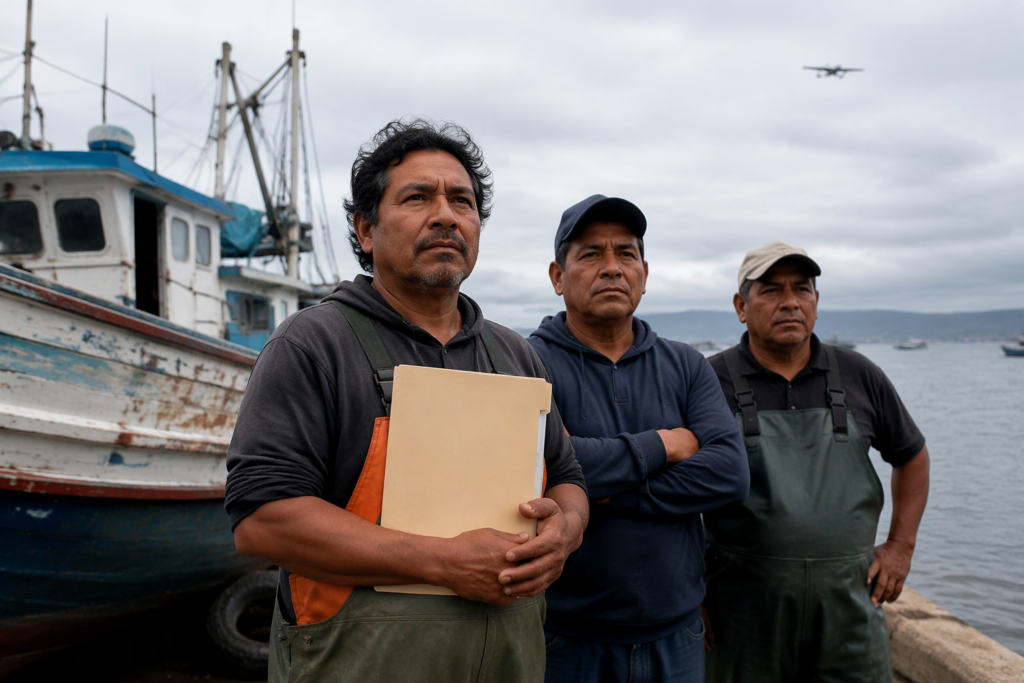
Two drones swooped out of the sky in March, setting an Ecuadorian fishing boat ablaze and forcing 16 terrified crew members to leap into open water. Now, survivors of that fiery attack have taken Washington to court. Their new drone strike lawsuit demands financial restitution and an immediate halt to the White House campaign hitting vessels across the eastern Pacific and Caribbean.
The legal battle places President Donald Trump’s aggressive maritime drug policy under direct legal scrutiny. It gives a voice to coastal laborers who say they were caught in the crosshairs of an undeclared military operation that treated them as combatants without proof.
Also read: Kuwait Drone Attacks Reported as US and Iran Strike Bases
The complaint was filed on Monday in a Pennsylvania federal court, seeking financial damages and an injunction to halt similar attacks. For the crew members who survived, the legal action represents their only path toward justice and survival after losing their livelihood at sea.
What happened to La Negra Francisca Duarte II
The lawsuit details the sudden destruction of the Ecuadorian-based fishing vessel La Negra Francisca Duarte II on March 17. Court documents state that two drones launched from a US-operated ship approached the craft without warning. The resulting explosion engulfed the boat in fire, leaving two of the 16 crew members with severe burns.
Desperate to escape the flames, the entire crew abandoned ship. They scrambled into small emergency boats drifting in the ocean. When they steered toward what appeared to be a nearby tuna vessel for help, they encountered armed, English-speaking personnel dressed in military uniforms.
The vessel sank into the ocean, taking everything the workers owned with it. Ship captain Hernan Flores explained why his crew chose to challenge the US government in court:
“We filed the lawsuit because the boat was all we had. Nobody in Ecuador is helping us. They did all that damage to us, and by the grace of God, we’re alive.”
Inside the Pennsylvania drone strike lawsuit
The legal filing describes the attack on the vessel as part of an unlawful and unprecedented overseas military campaign. Beyond asking for financial compensation, the drone strike lawsuit asks a federal judge to bar the administration from launching future strikes against alleged smuggling boats in the region.
The US government has not publicly claimed responsibility for destroying La Negra Francisca Duarte II. It has also stayed silent on strikes that sank two other Ecuadorian vessels in recent months. However, media reports published in August suggested the CIA targeted those boats during a covert mission.
Other reports indicate the strikes may have involved private contractors or regional partners working with American intelligence. Regardless of which agency ordered the attack, the plaintiffs argue the executive branch violated domestic and international law by targeting civilian ships without due process.
Rising death toll in maritime drug campaign
The strike fits an escalating pattern of lethal actions at sea. Since Trump returned to office in 2025, his administration has pursued hardline measures to disrupt narcotics routes heading toward American borders. This agenda has expanded military operations throughout Latin America, frequently working alongside conservative regional governments.
The Pentagon has openly taken credit for a parallel campaign against suspected narcoterrorists that started in September 2025. That initiative has claimed at least 244 lives. Human rights lawyers and international legal experts describe the boat strikes as extrajudicial killings that violate basic global standards.
The administration has not released the names of the dead or provided evidence linking targeted boats to organized crime syndicates. Strikes have continued unabated, including another lethal hit recorded on October 27.
Other legal challenges mount against Washington
Grieving families across Latin America and the Caribbean have repeatedly stepped forward to contest official claims. Many state their relatives were ordinary fishermen and seasonal workers rather than cartel operatives.
In December 2025, the family of missing Colombian fisherman Alejandro Carranza brought a complaint before the Inter-American Commission on Human Rights, alleging a violation of his fundamental right to life. Just weeks later, in January, relatives of Trinidad and Tobago workers Chad Joseph and Rishi Samaroo launched a wrongful death suit in a Massachusetts federal court. The two men were returning home from job sites in Venezuela when their boat was destroyed.
While the new drone strike lawsuit adds fresh momentum to these efforts, legal experts acknowledge that suing over classified maritime operations remains an uphill fight due to deep government secrecy.
Lack of evidence and intercepted crews
Alongside lethal strikes, joint operations between the US and Ecuador have intercepted dozens of boats at sea on suspicion of supplying traffickers. But records compiled by Human Rights Watch reveal a stark gap between government accusations and courtroom evidence.
Between late August and mid-September, joint forces intercepted at least eight vessels carrying 160 crew members. The legal outcomes show how thin the government’s cases often turn out to be:
- 56 crew members were freed by court order without facing formal charges
- 40 workers were acquitted after prosecutors failed to produce sufficient evidence
- 14 individuals were released without any formal charges filed
- 50 mariners remain in custody awaiting their day in court
The Pennsylvania federal court must now decide whether the Ecuadorian fishermen’s claims can proceed over White House objections, with the first judicial response expected in the coming months.
Source: Al Jazeera


