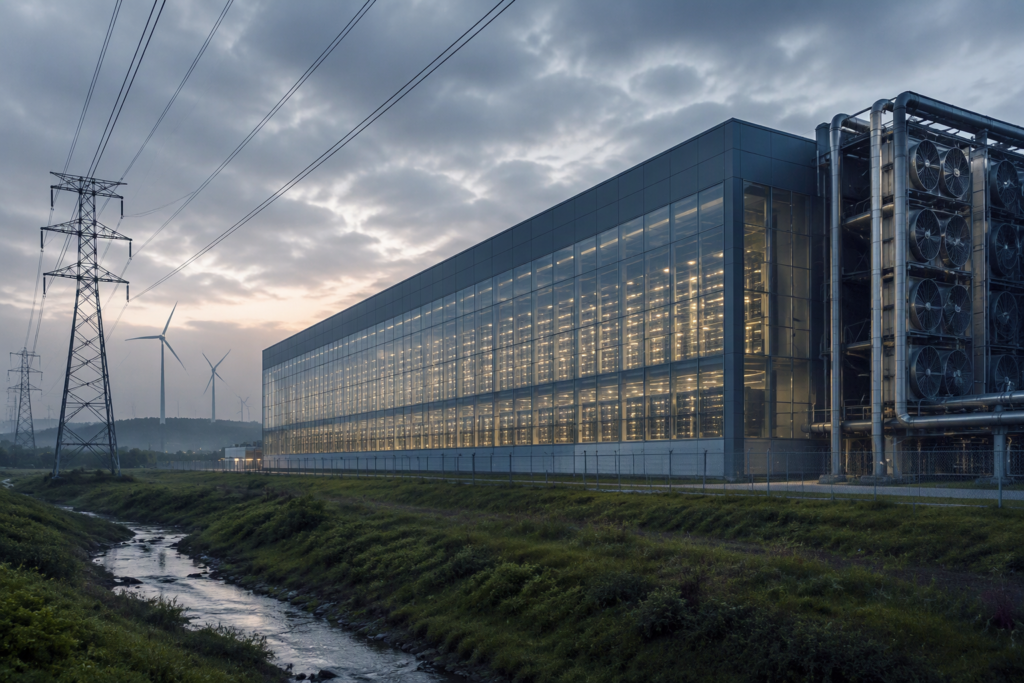
Meta pumped 11.8 million tonnes of carbon into the atmosphere in 2025—a 45 percent jump in a single year—and it is now pointing the finger at its rapid expansion into artificial intelligence.
The company disclosed on Thursday that it is reconsidering its promise to hit net zero by the end of the decade. That shift makes Meta climate goals the latest high-profile commitment to crack under the massive electrical demands of modern computing.
Also read: AI Smart Glasses Face Warning After Alarming Dutch Safety Tests
If you have followed corporate pledges to halt global warming, the takeaway is clear: when cutting emissions clashes with the race to dominate artificial intelligence, computing power wins.
Why Meta climate goals are slipping out of reach
Rachel Peterson, Meta’s vice president of data centres, and Blair Swedeen, the global head of net zero and sustainability, explained the backtrack in the company’s annual sustainability report. They confirmed the business is re-evaluating its timelines, sequencing, and interim milestones, including the 2030 timeframe.
Meta established its benchmark in 2020. That original plan pledged net-zero emissions across its entire value chain by 2030, aligning the business with Paris Agreement targets designed to cap warming at 1.5 degrees Celsius above pre-industrial levels.
Achieving net zero requires eliminating greenhouse gases as much as possible across suppliers, office sites, and hardware, while purchasing carbon removal credits to offset remaining pollution. Company leadership admitted that earlier economic assumptions collapsed under modern technical realities.
“When we set our net zero emissions goal, we anticipated steady growth, falling clean energy costs, and changes in the broader system that would enable progress at the pace we envisioned. The reality has been far more complex.”
The executives wrote that building the infrastructure to support artificial intelligence makes hitting those targets far harder. Climate advocates also view the underlying carbon-accounting methods behind Meta’s 11.8 million-tonne figure with scepticism.
The heavy power draw of AI data centres
Running cutting-edge artificial intelligence requires vast electrical capacity. AI data centres across the United States are absorbing electricity at volumes that rival entire national economies.
A study published in the journal Nature Sustainability assessed 403 of the country’s most powerful computing sites. The researchers determined that those facilities accounted for roughly 2 percent of all electricity used across the nation, generating a carbon footprint comparable to Denmark’s.
Around 1,200 of these hyperscale facilities are operating worldwide, with hundreds more under development. According to the International Energy Agency, data facilities consumed about 415 terawatt hours globally in 2024, or roughly 1.5 percent of total electricity supply. The agency warned that figure could nearly double by 2030.
A broader corporate retreat from climate pledges
The reassessment of Meta climate goals reflects a widening pattern across American enterprise during US President Donald Trump’s second term. Several major corporations have adjusted or discarded previously public environmental milestones.
A corporate retreat from climate pledges has taken hold across multiple industries:
- Google disclosed this year that its emissions are still rising, despite a 2020 commitment to run on carbon-free energy by 2030.
- General Motors backed an initiative by the Trump administration to weaken vehicle fuel-efficiency rules, despite previously pledging to sell only zero-emission vehicles by 2035.
- Walmart acknowledged in 2024 that it would miss its first greenhouse gas milestone.
- Coca-Cola and Pepsi altered their baseline calculation years and scaled down their decarbonisation targets.
What to watch as power grids feel the strain
How can electrical grids support this surge in industrial power demand without firing up more fossil fuel plants? As tech giants rush to deploy larger server clusters, regional utilities and power regulators face immediate pressure to prevent system failures.
Meta has not yet announced a revised target date for its net-zero commitments. Regulators and investors will watch for the company’s next interim environmental filings to see if its emission levels climb even higher through 2026.
Source: Al Jazeera