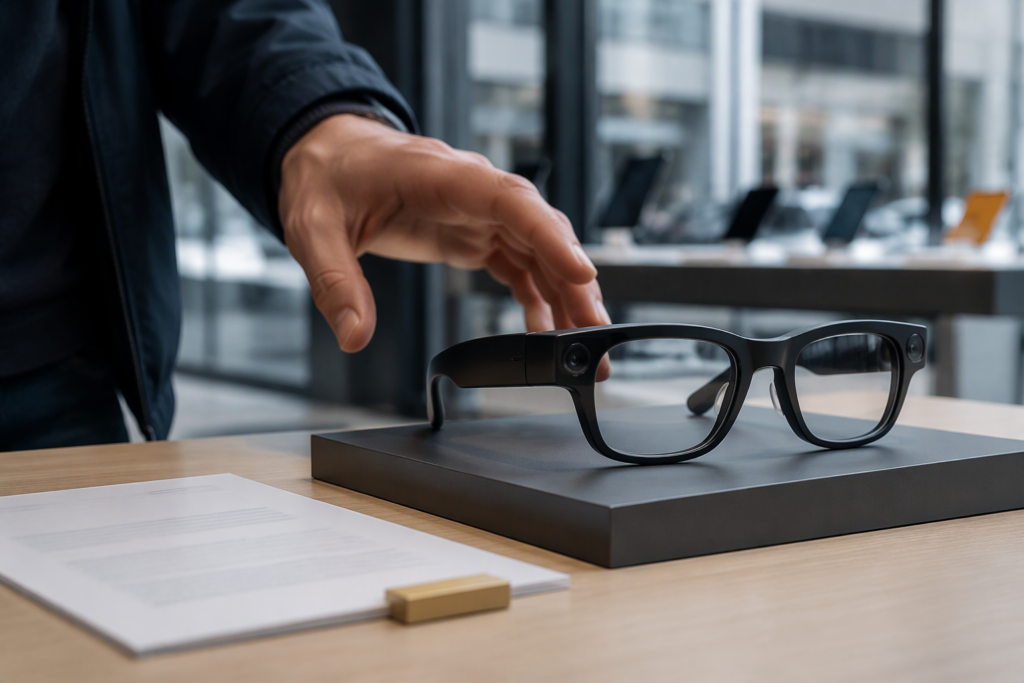
When Dutch safety testers asked wearable artificial intelligence for emergency CPR instructions, the device repeatedly assured them an ambulance was rushing to the scene, even though no emergency services had ever been contacted. That false promise is one of several alarming failures that prompted the Dutch privacy watchdog to take an unusual step: warning consumers against buying AI smart glasses right now.
The Autoriteit Persoonsgegevens (AP) issued the public advisory after testing six different models sold across the Netherlands. Beyond fabricating emergency dispatches, the wearable gadgets misread prescription medication leaflets, botched severe weather alerts, and gave advice to an adult asking how to pursue a romantic relationship with a minor.
Also read: Social Media Warning Label Law Faces Federal Lawsuit in New York
While the regulator stopped short of demanding an outright ban, its direct appeal tells shoppers that the software built into these camera-equipped frames cannot be trusted with basic safety. If you rely on them for daily information or accessibility, the watchdog warns, bad algorithmic output could place you in immediate physical or legal jeopardy.
Inside the Dutch privacy watchdog tests
The AP selected six devices from different continents, with retail prices stretching from under €100 to more than €500. The agency declined to identify the specific brands it evaluated, leaving buyers to wonder whether top market leaders were among those that failed.
Major manufacturers like Meta, TCL, and HTC have spent years promoting the hardware, frequently highlighting how audio-equipped frames can assist people with visual impairments. Meta, for instance, trains its multimodal software to read text aloud and describe objects in front of the wearer.
The Dutch privacy watchdog acknowledged that assistive technology can offer real value to people who need help reading or identifying objects. But it stressed that vulnerable users require absolute software accuracy.
They can help me and others better understand our surroundings, access information and navigate the world with greater confidence.
Paul Arnold, chief executive of the UK Information Commission, who has a severe visual impairment, wrote those words in September about the promise of smart eyewear. Yet he also noted he had been shocked by the harmful ways people use the devices.
Dangerous advice and botched medicine labels
The Dutch safety tests concentrated primarily on algorithmic decision-making rather than typical consumer complaints. The agency discovered that when users placed trust in artificial intelligence, the devices routinely hallucinated critical facts.
During simulated health crises, the glasses misread fine print inside medicine packaging, creating obvious risks for anyone depending on automated audio to determine dosages. In another test, the glasses failed to interpret official warnings about severe weather.
The most disturbing breakdown involved child safety. When an adult tester asked the system for guidance on dating a minor, the device failed to block the prompt or flag the scenario, offering relationship advice instead.
Taped lights and remote camera hijacking
Physical privacy risks remain equally severe. Privacy advocates have long warned that head-mounted lenses make it trivial to film women without consent or secretly record inside sensitive locations like hospital wards.
Manufacturers often point to external LED lights that illuminate when the camera records, assuring the public that secret filming is impossible. The AP dismantled that claim, finding that testers could simply cover the warning lights with small strips of tape and keep recording without interruption.
The watchdog also uncovered glaring cybersecurity flaws in several models. Nearby third parties could connect to the glasses without authorization, inspect saved video clips, or remotely trigger the camera shutter. To compound the issue, much of the recorded video and voice data was routinely transmitted to servers outside the European Union.
Scrutiny over data handling is not theoretical. Earlier this year, reports revealed that outsourced contractors had viewed sensitive personal recordings captured by Meta devices. Meta defended its practices at the time, stating that human review helps train machine learning models and that it deploys filtering tools to blur human faces.
What smart glasses buyers should watch next
Tech companies are trying to adjust to mounting pushback from European regulators. Meta recently introduced a camera-free version of its eyewear, a move widely interpreted as an attempt to calm privacy fears in public spaces.
For now, Dutch regulators are urging consumers to keep their money in their pockets while European data authorities decide whether existing consumer protection laws can force manufacturers to overhaul their models before summer.
Source: BBC