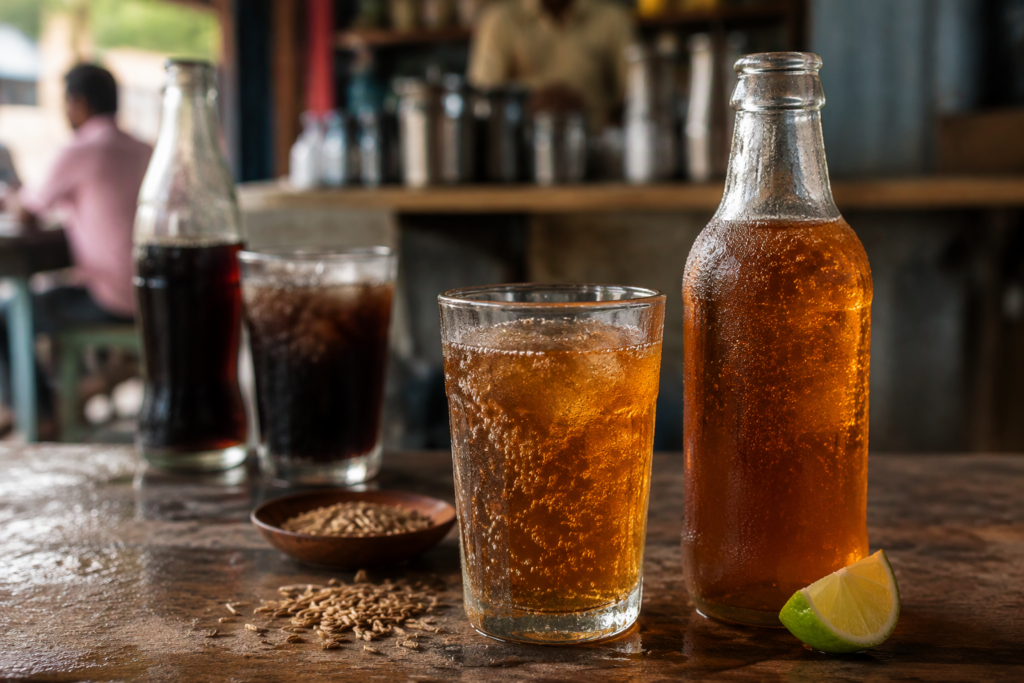
A spicy, tangy mixture whipped up after dinner in a Punjab kitchen has grown into a beverage business pulling in over $115 million a year. Across India, bottles of pungent, fizzy cumin soda are chipping away at the dominance of the world’s biggest soft drink conglomerates.
For decades, Coca-Cola and PepsiCo held an iron grip on what Indians drank to cool down. That duopoly is now cracking as homegrown drinks packed with regional spices take over grocery shelves, local stalls, and digital shopping carts.
Also read: Tech Stocks Tank as AI Panic Triggers Global Market Selloff
The shift represents a rare disruption in India’s $32 billion non-alcoholic drinks industry, where customer loyalty is moving away from Western sodas toward familiar domestic tastes.
How cumin soda took on the global giants
In 2017, three cousins in Punjab—Saurabh Munjal, Nikhil Doda, and Saurabh Bhutna—turned a kitchen experiment into a brand called Lahori Zeera. Cumin, known locally as zeera, had been mixed into carbonated drinks by street vendors for generations, but nobody had turned it into a major packaged soft drink company.
The cousins convinced family members to back them with startup funding. Today, their parent company, Archian Foods, expects to finish the year with between $115 million and $120 million in revenue, driven largely by sales of bottles priced at just 10 rupees ($0.11).
Archian Foods doubled its factory output to 1.2 million bottles a day last year, yet still faces shortages. “We’ve always been in a situation where we are sold out each year,” Munjal said, explaining that demand continues to outpace production lines across the country.
The appeal spreads well beyond northern India. Bindu, a beverage firm based in southern India, launched its Fizz Jeera Masala roughly 25 years ago, but saw sluggish sales for most of that time. Director Megha Shankar stated that cumin-based fizz has suddenly become the fastest growing category in their carbonated beverage lineup, with its share of company revenue jumping from 20% to 40% in just five years.
An eight percent hit to the cola monopoly
The surge is not confined to one or two regional bottlers. In Mumbai, Xotik Frujus sells Jeeru, while billionaire Mukesh Ambani’s retail empire entered the fray with Campa Jeera. Parle Agro, one of the country’s legacy food corporations, took its Dhishoom brand nationwide last year after testing it in rural districts since 2012.
During the peak summer months, one domestic delivery app reported that online customer orders for cumin-flavoured drinks jumped by 900%. That buying frenzy is rewriting market math across the Indian beverage market.
A study by Kotak Mutual Fund revealed that ethnic brands led by Lahori Zeera and Campa expanded their share of the carbonated soft drinks sector to 15% by September last year. Over that same stretch, Coca-Cola and PepsiCo saw their joint market share sink from 93% to roughly 85%.
“In global markets, established duopolies rarely lose more than 1-2% share annually; an 8% swing in less than a year is a structural disruption.”
Kotak analysts likened the sudden shift to the disruption seen in Indian telecommunications when mobile data prices plummeted in 2016, noting that legacy beverage makers are losing outright volume to local upstarts.
Why Indian tastebuds are turning back home
Multinational sodas spent billions over three decades hiring Bollywood stars and sponsoring cricket tournaments to position brown cola as an aspirational modern drink. Homegrown manufacturers took the opposite path, marketing an unabashedly local identity.
Lahori Zeera built its business under the promotional tagline “apna desi thanda,” which translates to India’s own cold drink. Instead of copying Western tastes or trying to adjust Western recipes for local palates, the company put pantry spices front and centre.
Consumers are also reaching for flavours they view as digestive and traditional, including raw mango, tamarind, and kokum fruit. To meet changing health preferences, Bindu recently introduced an unsweetened zero-sugar version of its cumin soda.
The battleground remains focused on the 10-rupee coin. By offering an affordable single-serve bottle at that exact price, regional brands won over working-class buyers and students who wanted a cold, savoury drink on hot afternoons.
The squeeze ahead for spicy sodas
Maintaining this pace of expansion will test every player in the sector. Keeping bottles at 10 rupees leaves wafer-thin margins, especially as packaging materials, plastic resin, and sugar face volatile production costs.
If manufacturers raise retail prices, sales volumes could drop quickly. The only other option is reducing bottle sizes, a tactic the global cola firms have already used to protect their bottom lines.
The multinational giants are also not standing still. Coca-Cola, which purchased the legacy Indian soda label Rimzim back in the 1990s, doubled production of its own spiced variant last year to protect retail shelf space.
Rajiv Agarwal, a professor at Mumbai’s SP Jain Institute of Management, warned that multinational corporations hold superior bottling logistics and distribution networks. Agarwal also cautioned that cumin soda may face a natural ceiling, questioning whether savoury sodas can ever completely match the universal reach of standard colas.
The next big test for these regional drink makers arrives with the upcoming summer bottling season, when expanding distribution networks and managing raw material costs will show whether homegrown sodas can permanently hold their ground against global soda powerhouses.
Source: BBC