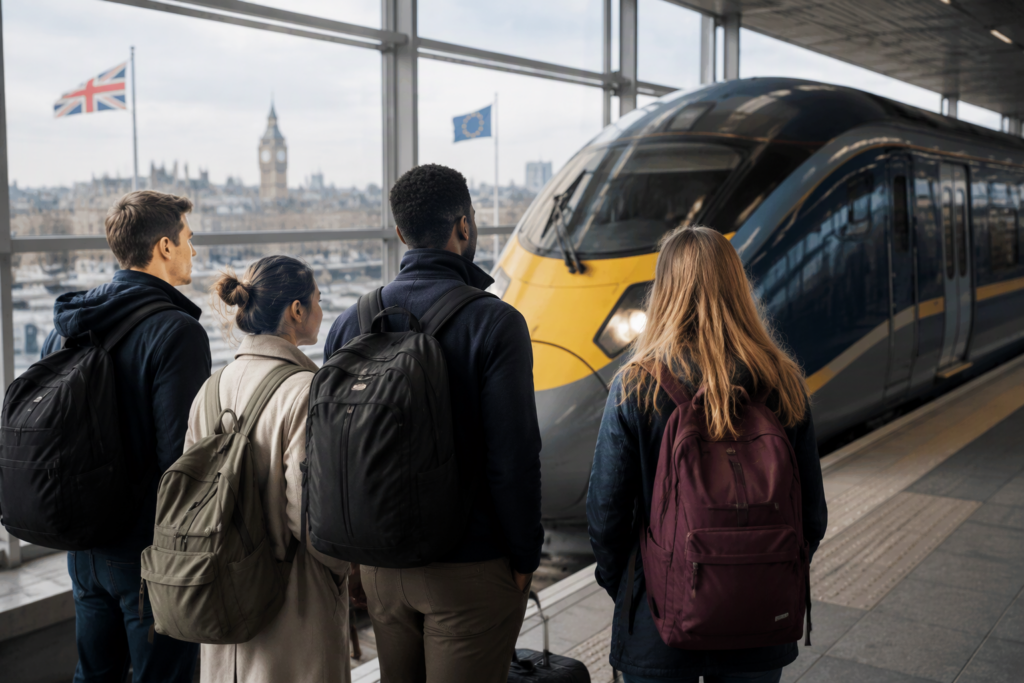
Up to 100,000 young Britons and Europeans could soon live, study, and work across the English Channel under a new youth mobility scheme expected to be signed on Friday. Negotiators in Brussels held late-night sessions on Thursday as talks ran down to the wire ahead of the UK-EU summit.
The proposed deal would establish an equal exchange, giving British and European young adults reciprocal access without returning to unconditional free movement. For thousands of people locked out of European work permits since Brexit, the change represents an unexpected open door.
Also read: Closer EU Alignment: What Burnham Faces at Brussels Summit
Downing Street hopes the summit will settle far more than travel permits. Negotiators are also racing to hammer out agreements on carbon emissions pricing, shared policing, and revised food trade rules.
What the youth mobility scheme actually offers
The draft youth mobility scheme would open fresh avenues for young adults aged 18 to 30. Under the proposal, up to 100,000 people from the bloc could enter Britain each year to study or work, while the same number of British youths could head to EU member states.
The UK already operates reciprocal programs with 13 non-EU countries, including Australia, Canada, and India. Yet rolling out an equivalent system across 27 European nations marks a much broader undertaking.
Brussels first floated the concept in 2024, proposing a four-year visa for young workers and students. Labour quickly shut down that pitch while in opposition, arguing that a four-year window was effectively freedom of movement under another name.
To address domestic political concerns, the revised youth mobility scheme carries strict conditions:
- A hard ceiling of 100,000 permits issued each year on either side
- A defined time limit rather than an open-ended stay
- A total ban barring participants from claiming state welfare benefits
The sticking points over tuition fees and caps
Reaching an accord has forced painful compromises during marathon talks in Brussels. British negotiators drew a hard line on the numerical cap, determined to prevent an uncontrolled rise in net migration.
At the same time, EU diplomats brought their own heavy demands to the bargaining table. Brussels pushed hard for European university students to pay the same domestic tuition fees as local British students, rather than steep international rates.
When asked on Thursday evening whether the UK might walk away from the summit empty-handed, Prime Minister Andy Burnham refused to rule it out.
“There would always be those circumstances because I’m in this to get the best deal for Britain, always,” he said.
Burnham told broadcasters he would not turn his back on lower grocery prices and lower business costs. He argued the compromises are justified by the scale of what Britain could gain.
Food trade rules, borders, and the £5bn question
The diplomatic push stretches well past university students and young travelers. Summit delegates are putting final touches on a “Channel action plan” aimed at curbing unauthorized small-boat crossings through closer intelligence sharing.
Under the security proposals, British and European law enforcement agencies would exchange criminal records and tracking data on foreign nationals. British ministers view this cooperation as vital to securing borders.
Commercial trade represents another major battleground in Brussels. Negotiators want to strip away the mountain of paperwork and veterinary checks that food exporters have faced since leaving the single market.
The government estimates that eliminating export friction could add £5bn to the economy and lower shelf prices for household groceries. But the relief carries regulatory strings.
British food producers might have to fall in line with European Union rules on product labelling and gene-edited crops. Burnham also planned to use the summit to challenge the bloc’s Made in Europe program, an initiative created to shield European industries from state-backed Chinese competition.
Fierce pushback from Westminster rivals
The summit agenda has touched off intense domestic criticism across the political spectrum. Conservative leader Kemi Badenoch accused Burnham on Thursday of reopening the painful divisions of the 2016 Brexit referendum.
Speaking to the BBC’s Today programme, Badenoch said she backed smoother trade but warned against “not trade at any cost.” She warned that small British businesses could find themselves bound by European regulations even if they never export goods to the continent.
Reform UK leader Nigel Farage took aim at the strategy from the right. In comments to The Sun, Farage called the Brussels negotiations a cynical political game designed to siphon off votes from the Liberal Democrats and the Green Party.
Farage insisted he does not believe for a minute that British voters would ever choose to rejoin the bloc. Yet from the other flank, Liberal Democrat leader Sir Ed Davey told BBC Newsnight that Burnham was being far too cautious.
Davey argued the prime minister is refusing to go anywhere near far enough to undo Brexit’s harms. He urged the government to embrace a full return to freedom of movement to revitalize trade and ease labor pressures.
The European debate is even splitting the governing party. Former deputy prime minister David Lammy urged Burnham this week to commit Labour to rejoining the EU at the next general election. Other cabinet ministers pushed back immediately, cautioning against the steep financial and administrative costs of reversing course.
Burnham previously floated the prospect of pursuing closer ties over the long term, including the possibility of full EU membership in the distant future. Even so, he has firmly ruled out major constitutional shifts before the next election, pointing to the 2024 manifesto pledge to stay outside the single market and customs union.
If negotiators lock down the pact on Friday, Downing Street plans to introduce implementing legislation to Parliament next week.
Source: BBC